


Listen to the article
Five Stanford Students Face Rare Trial for Pro-Palestinian Office Occupation
A trial began Friday for five current and former Stanford University students charged with felonies stemming from their occupation of the university president’s offices during a pro-Palestinian protest last year. The case represents one of the few instances where campus demonstrators from the 2024 wave of protests have faced criminal prosecution.
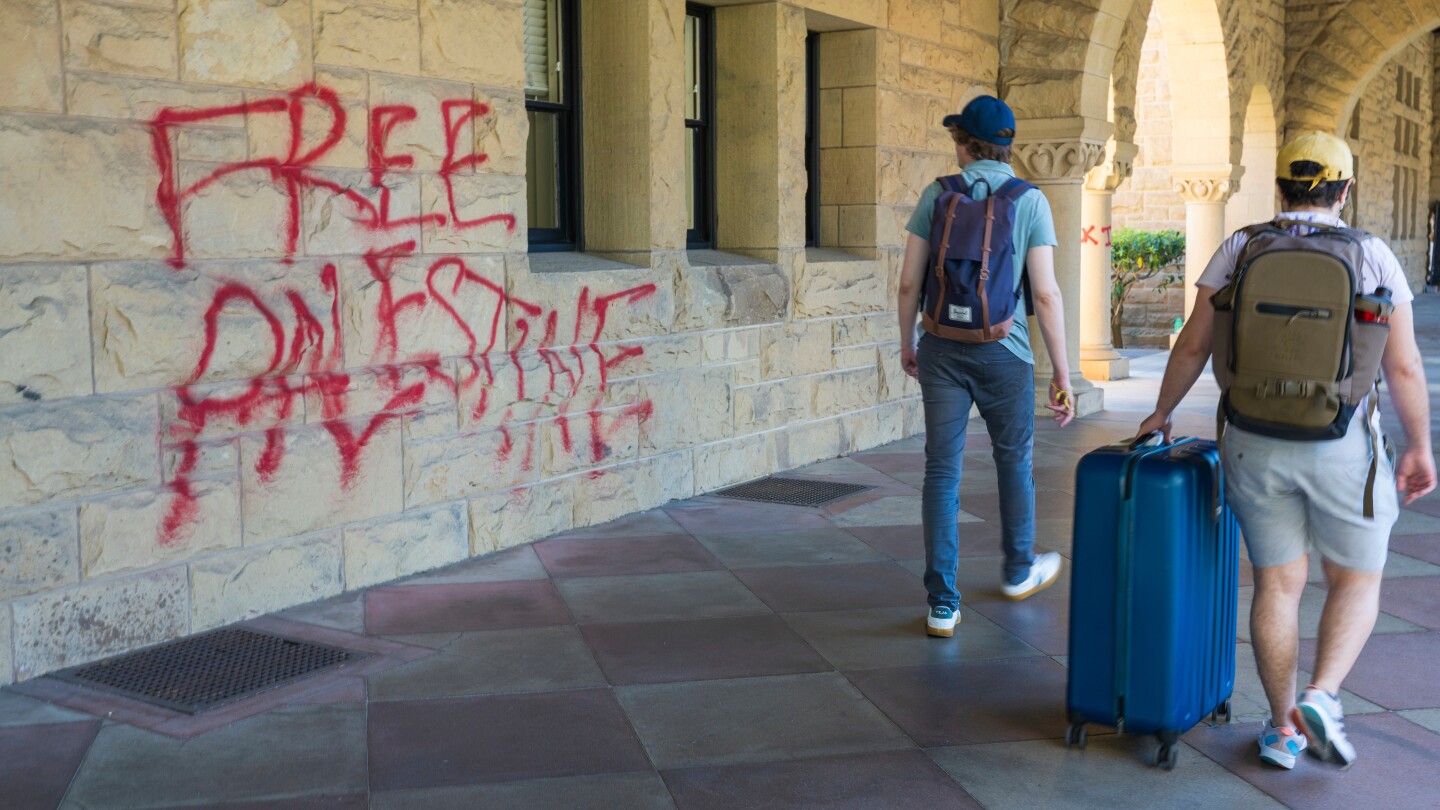
The incident occurred on June 5, 2024—the final day of spring classes at the prestigious Silicon Valley institution—when protestors barricaded themselves inside administrative offices for several hours. According to prosecutors, demonstrators caused extensive damage, including spray-painting the building, breaking windows and furniture, disabling security cameras, and splattering red liquid described as fake blood throughout the offices.
Authorities initially arrested and charged 12 individuals in connection with the protest. One defendant, a 21-year-old man, accepted a plea deal that allows for case dismissal and record sealing upon successful probation completion. His testimony led to a grand jury indictment in October against the remaining 11 protestors on felony vandalism and conspiracy to trespass charges.
Of those 11 individuals, six have accepted pretrial plea agreements or diversion programs, while the five currently standing trial pleaded not guilty to all charges. Stanford University is seeking $329,000 in restitution for damages allegedly caused during the occupation.
Avi Singh, an attorney representing Stanford student Germán González, explained his client’s decision to proceed to trial: “Germán González and the other four defendants are exercising their constitutional right to have a jury trial, and demand the district attorney prove everything that is required for a conviction,” including questions about intent and planning.
Santa Clara County District Attorney Jeff Rosen, who made the decision to prosecute the group, has maintained that the protesters crossed a clear legal line. “Speech is protected by the First Amendment. Vandalism is prosecuted under the penal code,” Rosen stated when announcing the charges last year.
The Stanford case emerges from a broader context of campus activism that swept across American universities in 2024. Students at dozens of institutions established protest encampments and staged demonstrations calling for universities to divest from Israel or companies supporting its military operations in Gaza. The protests reflected growing student concerns about the humanitarian crisis in Gaza and universities’ financial connections to the ongoing conflict.
Nationwide, approximately 3,200 people were arrested during these campus demonstrations. College administrations responded with varying approaches—some negotiated agreements with protesters, others simply waited until demonstrations naturally concluded, while many called in law enforcement when occupations persisted. Most resulting charges against demonstrators were eventually dismissed, making the Stanford prosecution particularly notable.
The Stanford case raises important questions about the boundaries between protected political speech and criminal behavior on university campuses. It also highlights the different approaches taken by legal authorities in responding to last year’s wave of activism. While most protesters faced minimal legal consequences, the Stanford defendants could potentially receive significant penalties if convicted of the felony charges.
The trial continues as universities nationwide grapple with ongoing tensions surrounding the Middle East conflict and navigate challenging questions about academic freedom, campus safety, and institutional neutrality regarding international disputes. The outcome could establish precedent for how similar protests are handled in the future.
Fact Checker
Verify the accuracy of this article using The Disinformation Commission analysis and real-time sources.

9 Comments
Occupying offices and causing damage is a risky tactic that could backfire and undermine the protestors’ message. I’m curious to learn more about the university’s handling of this situation and whether there were opportunities for constructive dialogue before things escalated.
Protests over complex geopolitical issues like this often involve difficult trade-offs. While I don’t condone property damage, I hope the court can find a balanced approach that upholds the rule of law while also recognizing the students’ right to make their voices heard.
Peaceful protest is a fundamental right, but disrupting university operations can cross a line. I hope the court weighs the specifics of this case carefully and finds a balanced resolution that respects free speech while also upholding rules and property rights.
This is a tricky situation with valid arguments on multiple sides. I’m curious to see how the trial unfolds and whether it leads to any policy changes around how universities manage protests on their campuses.
Agreed. These types of cases often become polarized, but nuance and compromise are needed to find a just resolution that respects both free speech and institutional integrity.
This is a complex issue with valid concerns on both sides. While I don’t condone property damage, the students’ passion for their cause is understandable. It will be interesting to see how the trial unfolds and whether the punishment fits the alleged crimes.
Protests around sensitive political issues often involve difficult tradeoffs. While I understand the students’ perspective, the reported property damage is concerning. This trial could set an important precedent for how universities and authorities respond to campus activism.
As an alumnus, I’m closely following this case. Peaceful protest is vital, but the alleged actions seem to cross a line. I hope the court can provide clarity on where that line should be drawn for campus activism.
That’s a fair point. The university likely wants to avoid appearing heavy-handed, but also has a responsibility to protect its facilities and operations. Finding the right balance will be critical.