


Listen to the article
Justice Department Fires Judge-Appointed US Attorney in Northern New York
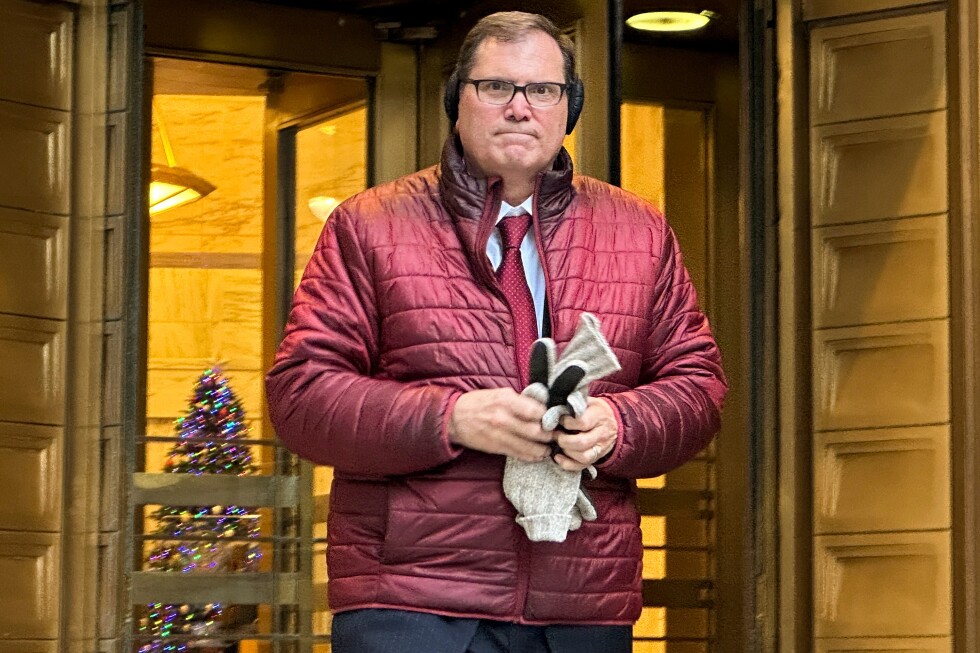
In a dramatic standoff between the judiciary and the Trump administration, Donald Kinsella spent less than a day as the U.S. Attorney for northern New York before being fired by the Justice Department on Wednesday.
Deputy Attorney General Todd Blanche announced the dismissal on social media with a pointed message: “Judges don’t pick U.S. Attorneys,” the president does, adding, “You are fired, Donald Kinsella.”
The firing marks the latest episode in an ongoing conflict over who has authority to appoint top federal prosecutors. Federal district court judges had appointed Kinsella to fill what they perceived as a vacancy in the office, which handles federal prosecutions across a broad region of upstate New York.
On Thursday, the district court judges released a brief statement defending their action, saying they had acted under their legal authority. “The Court thanks Donald T. Kinsella for his willingness to return to public service so that this vacancy could be filled with a qualified, experienced former prosecutor, and for his years of distinguished work on behalf of the citizens of the Northern District of New York,” the statement read.
The conflict arose after President Trump’s pick, John Sarcone, faced challenges to his appointment. Sarcone is among several interim U.S. attorneys installed by the Trump administration whom judges have ruled are serving unlawfully in their positions.
Federal law typically requires Senate confirmation for U.S. attorneys and allows unconfirmed appointees to serve only for limited periods. However, the Trump Justice Department has employed novel personnel strategies to keep unconfirmed prosecutors in place indefinitely, methods that courts have increasingly ruled improper.
U.S. Attorney General Pam Bondi appointed Sarcone as interim U.S. Attorney in March 2025. When his 120-day term expired, district judges declined to extend his appointment. Despite this, Sarcone remained in office and continued his work, which included pursuing an investigation into New York Attorney General Letitia James, a Democrat who has been a persistent legal adversary of Trump.
Last month, Judge Lorna G. Schofield in New York City blocked subpoenas requested by Sarcone in that investigation, ruling he was not lawfully serving as U.S. Attorney. The judge declared that “his past or future acts taken in that capacity are void or voidable as they would rest on authority Mr. Sarcone does not lawfully have.”
On Tuesday, Sarcone changed his title to “first assistant U.S. attorney,” a move that prompted federal judges to attempt filling what they saw as a vacancy by appointing Kinsella the following day.
The situation in northern New York parallels similar controversies across the country. In December, Alina Habba resigned as the top federal prosecutor for New Jersey after an appeals court ruled she had been serving unlawfully. Similarly, Lindsey Halligan left her position as acting U.S. Attorney in Virginia after a judge concluded her appointment was unlawful and dismissed indictments she had brought against James and former FBI Director James Comey.
As of Thursday, it remained unclear who was officially supervising the northern New York office. A staff member at the federal prosecutor’s office in Albany told reporters that Kinsella was “technically not employed with our office anymore.” Meanwhile, the office’s website still displayed Sarcone’s profile, though with the revised title of “First Assistant U.S. Attorney.”
Kinsella, described on his law firm’s website as a 40-year veteran of complex criminal and civil litigation with a “distinguished career,” could not be reached for comment. Sarcone’s office declined to comment on the situation, as did Justice Department headquarters in Washington.
The ongoing dispute highlights the tension between the judiciary and executive branches over the appointment process for federal prosecutors, a conflict that has intensified during the current administration.
Fact Checker
Verify the accuracy of this article using The Disinformation Commission analysis and real-time sources.

9 Comments
This seems like a concerning overreach by the executive branch, undermining the independence of the judiciary. The President’s authority to appoint US Attorneys should be balanced by the courts’ role in providing oversight and checks on that power.
The swift dismissal of the judge-appointed US Attorney in New York is a surprising move that highlights the tension between the judicial and executive branches. I’m curious to hear more about the legal justifications on both sides of this issue.
Yes, it will be important to see how this plays out and whether it sets any precedents for future appointments and removals of federal prosecutors.
This seems like a concerning power struggle between the judicial and executive branches. It’s important for the independence of the justice system to be maintained, but the President does have the authority to appoint US Attorneys. I’m curious to learn more about the legal arguments on both sides.
Agreed, it’s a complex issue without a clear right answer. I hope they can find a resolution that upholds the rule of law and checks and balances.
This is a complex issue with valid arguments on both sides. While the President has the authority to appoint US Attorneys, the courts also have a role in providing oversight and maintaining the independence of the justice system. I’m interested to see how this situation is resolved.
This is an interesting development in the ongoing debate over the appointment of federal prosecutors. It raises questions about the balance of power between the judiciary and the executive branch. I’ll be following this story closely to see how it unfolds.
The firing of the judge-appointed US Attorney in New York is a troubling development that raises questions about the separation of powers. I hope both sides can work to find a resolution that upholds the integrity of the justice system.
Agreed, this situation highlights the ongoing tensions between the branches of government. It will be important to closely follow how this plays out and the legal precedents it may set.