


Listen to the article
National Counterterrorism Director Resigns Over Iran War Stance
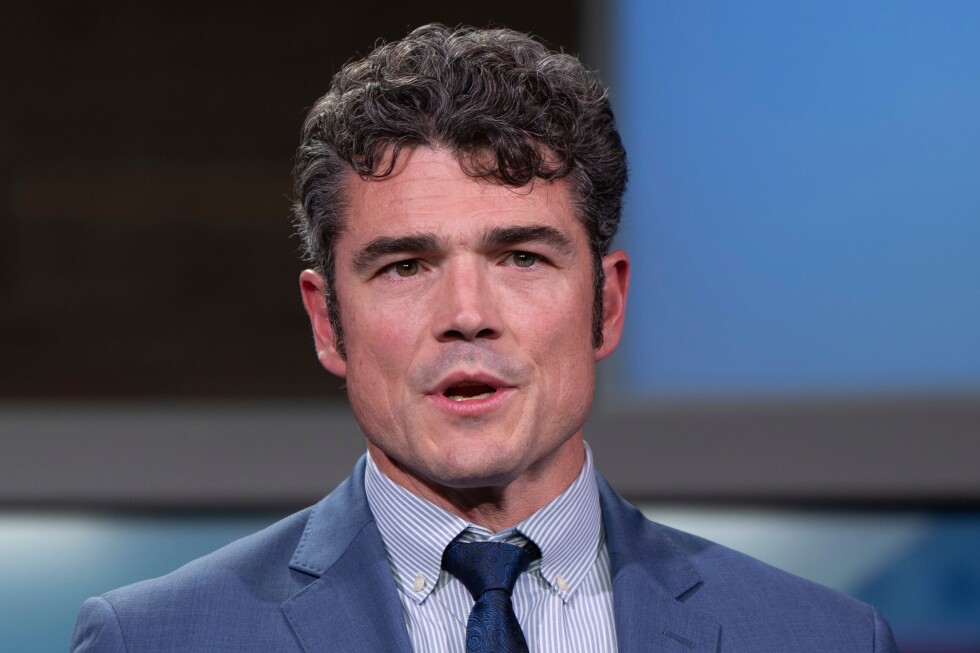
Joe Kent, director of the National Counterterrorism Center, submitted his resignation on Tuesday, citing deep concerns over the Trump administration’s military actions in Iran. In his departure announcement, Kent made the remarkable statement that he “cannot in good conscience” support the administration’s war efforts.
Kent’s resignation comes with a pointed critique of U.S. foreign policy. In his social media statement, he claimed that Iran “posed no imminent threat to our nation, and it is clear that we started this war due to pressure from Israel and its powerful American lobby.” The statement represents an unusual break from a high-ranking national security official with the administration’s Middle East policy.
The timing of Kent’s resignation adds complexity to an already volatile situation in the Middle East, where tensions have been escalating for months. His departure removes a key figure from America’s counterterrorism apparatus during a period of heightened international instability.
Kent had been serving as head of the National Counterterrorism Center since his confirmation in July, which passed the Senate by a narrow 52-44 vote. In this role, he was responsible for analyzing and integrating intelligence to identify and disrupt terrorist threats against the United States and its interests abroad.
His path to government service followed an unusual trajectory. Before joining the Trump administration, Kent mounted two unsuccessful congressional campaigns in Washington state. His professional background includes significant military experience, having served 11 deployments as a Green Beret, followed by work at the CIA.
Kent’s confirmation last year was contentious, with Democrats raising significant concerns about his associations with far-right figures and his embrace of conspiracy theories. During his 2022 congressional campaign, he hired Graham Jorgensen, a member of the Proud Boys, as a consultant. The Proud Boys, a far-right organization, has been classified by some law enforcement agencies as an extremist group with ties to white nationalism.
Critics also pointed to Kent’s close collaboration with Joey Gibson, founder of Patriot Prayer, a Christian nationalist organization known for provocative rallies that have sometimes turned violent. Kent’s campaigns attracted support from various far-right figures, raising questions about his ideological affiliations.
During his Senate confirmation hearings, Kent refused to distance himself from conspiracy theories surrounding the January 6, 2021, Capitol attack. He declined to reject the false claim that federal agents had instigated the violence. He also would not disavow debunked assertions that Donald Trump had won the 2020 presidential election against Joe Biden.
Democratic senators further pressed Kent about his participation in a Signal group chat used by Trump’s national security team to discuss sensitive military plans. This questioning reflected broader concerns about Kent’s judgment and discretion in handling classified information.
Despite these controversies, Republican supporters emphasized Kent’s counterterrorism credentials, particularly his extensive military and intelligence experience. Senator Tom Cotton, who chairs the intelligence committee, defended Kent’s nomination, stating that he had “dedicated his career to fighting terrorism and keeping Americans safe.”
The resignation marks yet another staffing disruption in national security circles under the Trump administration, which has experienced significant turnover in key positions. National security experts note that such instability can hamper policy consistency and institutional knowledge, particularly in specialized areas like counterterrorism.
The White House has not yet announced a replacement for Kent. His departure creates a leadership vacuum at an agency that plays a crucial role in coordinating intelligence efforts to prevent terrorist attacks against American targets both domestically and abroad.
Kent’s explicit criticism of U.S. policy toward Iran also highlights internal divisions within the administration regarding Middle East strategy and the influence of external actors on American foreign policy decisions.
Fact Checker
Verify the accuracy of this article using The Disinformation Commission analysis and real-time sources.

18 Comments
While I appreciate Kent’s principled stance, I’m not fully convinced by his assertion that Iran posed no imminent threat. The regional dynamics are complex, and reasonable people can disagree on the appropriate policy response.
That said, the resignation of a top counterterrorism official is certainly a notable development that warrants further scrutiny and analysis. I’ll be curious to see how it impacts the administration’s decision-making going forward.
This resignation speaks to the ongoing debates and divisions within the administration over its Iran policy. Kent’s comments about the influence of the ‘Israel lobby’ are particularly noteworthy and warrant further investigation.
Regardless of one’s political leanings, the departure of a senior security official like this is a significant event that deserves close attention from the media and the public.
Kent’s claim that the administration’s actions were influenced by pressure from Israel and its lobby is a bold and controversial assertion. I’d be interested to see if he provides any further evidence to support that allegation.
Regardless of one’s views on the Iran issue, the resignation of a top counterterrorism official is a significant development that deserves close scrutiny and analysis.
This is certainly an interesting development in the ongoing saga of U.S.-Iran relations. I’m curious to learn more about Kent’s specific concerns and whether they are shared by others in the administration.
The resignation of a senior security official like this is not something to be taken lightly. It will be important to monitor the fallout and potential policy shifts in the weeks ahead.
This resignation speaks to the complex and divisive nature of U.S. policy toward Iran. Kent’s claim that Iran posed no imminent threat is a significant rebuke of the administration’s rationale for military action.
I wonder if Kent’s departure will impact the administration’s decision-making going forward. This certainly adds an interesting wrinkle to the already tense situation in the Middle East.
This is a concerning development. I’m curious to hear more details on Kent’s specific concerns about the administration’s Iran policy and whether he believes the threat was overstated.
It’s rare for a senior security official to publicly criticize the administration’s foreign policy stance like this. His departure is certainly a setback for the counterterrorism team.
While I respect Kent’s decision to step down on principle, I’m not sure I fully agree with his assessment that Iran posed no threat. The regional dynamics are complex, and reasonable people can disagree on the level of risk.
That said, the loss of an experienced counterterrorism expert like Kent is certainly a blow to the administration’s national security team during a volatile period. His replacement will have big shoes to fill.
The timing of this resignation is quite noteworthy, as tensions remain high in the region. Kent’s statement about the influence of the ‘Israel lobby’ is a provocative allegation that deserves further scrutiny.
It will be interesting to see if other officials come forward with similar concerns about the administration’s Iran policy in the wake of Kent’s departure.
While I respect Kent’s decision to resign on principle, I’m not sure I fully agree with his assessment that Iran posed no threat. The situation seems more complex than that.
Regardless, his departure is a significant loss for the counterterrorism team during a volatile time. I hope his replacement can provide balanced and objective analysis on this critical issue.