


Listen to the article
In a groundbreaking agreement, the Pacific island nation of Palau has reached a deal with the United States to accept up to 75 deportees from American soil in exchange for $7.5 million in foreign aid. The memorandum of understanding, announced Wednesday by President Surangel Whipps Jr.’s office and the U.S. Embassy in Koror, marks a significant step in the Trump administration’s immigration enforcement strategy.
The agreement specifically targets “third-country nationals” who have never been charged with crimes, allowing them to live and work in Palau, a nation with approximately 18,000 residents. This arrangement comes as Palau faces local labor shortages in key occupational sectors.
“The United States deeply appreciates Palau’s cooperation in enforcing U.S. immigration laws, which remains a top priority for the Trump Administration,” the U.S. Embassy in Koror said in its statement. The embassy confirmed that the $7.5 million grant would address needs within Palau’s public services.
The deal includes additional financial support beyond the initial $7.5 million. The Trump administration has committed $6 million to bolster Palau’s struggling civil service pension system and another $2 million for new law enforcement initiatives, according to President Whipps Jr.’s office.
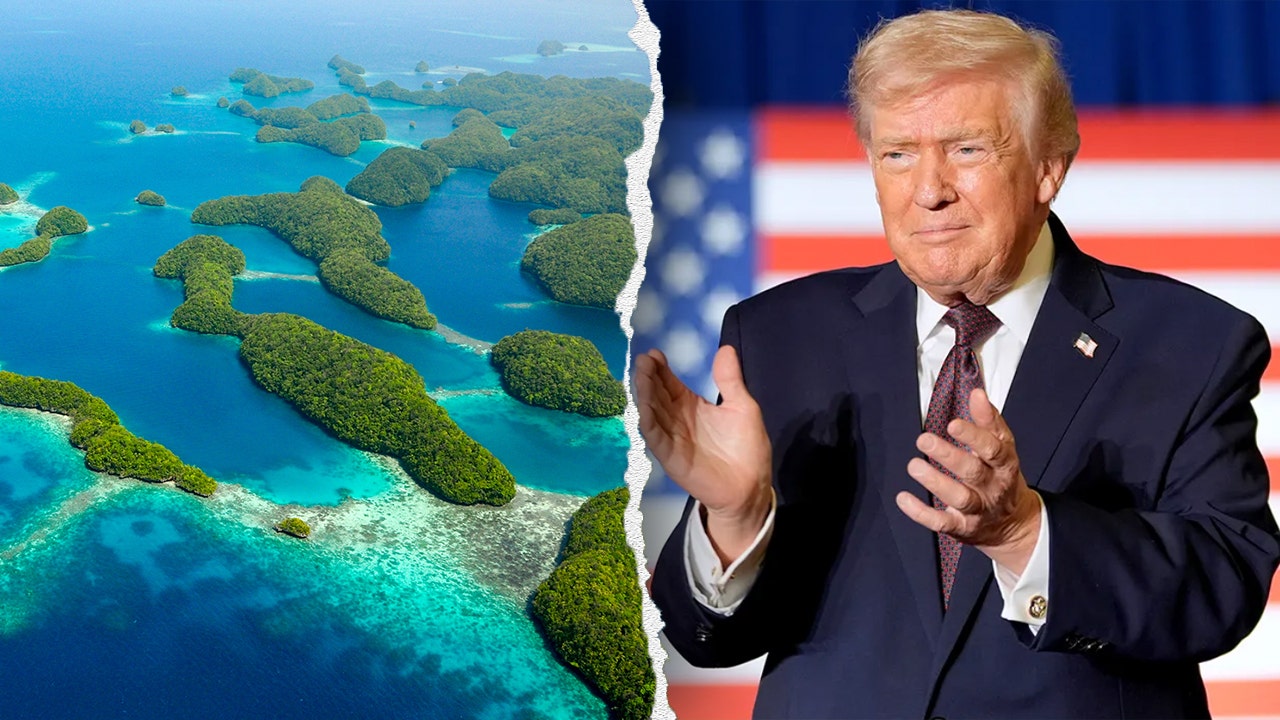
Palau, a scenic archipelago in the western Pacific, has historically maintained close ties with the United States and depends significantly on foreign aid. The island nation gained international recognition as a filming location for the reality television series “Survivor.” Under the previous Biden administration, the United States had already pledged $889 million in aid to Palau over a 20-year period, according to State Department records.
This agreement represents part of a broader pattern in the Trump administration’s immigration strategy. As the administration intensifies its deportation efforts, it has secured similar arrangements with several nations across multiple continents. Uganda, Rwanda, Eswatini, and South Sudan in Africa, along with Costa Rica, Panama, and El Salvador in Central America, have all established agreements to accept deported individuals from the United States.
For Palau, the deal offers dual benefits: addressing critical labor shortages while securing valuable foreign aid and support for essential government services. The country’s pension system has faced financial challenges, and the additional $6 million could provide crucial stability.
The arrangement highlights the Trump administration’s multi-faceted approach to immigration enforcement, combining domestic policy changes with international diplomacy to achieve its objectives. By establishing formal agreements with countries willing to accept deportees, the administration aims to streamline the removal process for individuals without legal status in the United States.
Critics of such arrangements often question the long-term impacts on receiving countries and whether deportees’ rights will be adequately protected. However, Palau’s government has emphasized the economic benefits of the agreement, particularly in addressing workforce needs.
The Pacific region has gained increasing strategic importance to the United States in recent years, particularly as China expands its influence throughout the area. Maintaining strong relationships with Pacific island nations like Palau serves both diplomatic and security interests for the U.S.
As implementation begins, attention will focus on which sectors of Palau’s economy will receive these workers and how they will integrate into the small island society. The agreement’s success could potentially establish a model for similar arrangements with other countries as the Trump administration continues its immigration enforcement priorities.
Fact Checker
Verify the accuracy of this article using The Disinformation Commission analysis and real-time sources.

9 Comments
It’s interesting to see the Trump administration looking to smaller nations like Palau to assist with their immigration enforcement goals. I’m curious to learn more about the specific criteria for the ‘third-country nationals’ that will be deported there.
The financial support package seems like an important incentive for Palau to agree to this deal. It will be worth following how the funds are utilized and the overall impacts on Palau’s economy and society.
This is a rather unusual agreement between the U.S. and such a small Pacific nation. I wonder what the motivations are on both sides – is Palau simply in need of the financial assistance, or are there other strategic considerations at play?
The labor shortages in Palau could be a factor in their willingness to accept the deportees, if they see it as a potential source of workers. But the integration and social impacts will be critical to monitor.
This seems like a rather unorthodox approach to immigration enforcement by the Trump administration. I wonder how Palau’s government and citizens will respond to having to accommodate these deportees, and if there will be any pushback or unforeseen challenges.
This deal with Palau seems like an interesting solution to the Trump administration’s immigration enforcement goals. I wonder how it will impact Palau’s local labor market and public services with the influx of deportees.
The financial support provided by the U.S. could help Palau manage the increased demands on their public services. It will be important to monitor the integration and impacts on the local community.
Curious to see how this arrangement plays out. Palau is a small nation, so accepting up to 75 deportees seems like it could be a significant challenge, both logistically and socially. I hope the financial aid helps them manage the situation effectively.
The additional $6 million for Palau’s pension system is an interesting piece of the deal. Seems like the U.S. is trying to sweeten the pot to get Palau to cooperate on this.