


Listen to the article
Former Colorado Clerk Appeals to Court on Trump’s Pardon of State Crimes
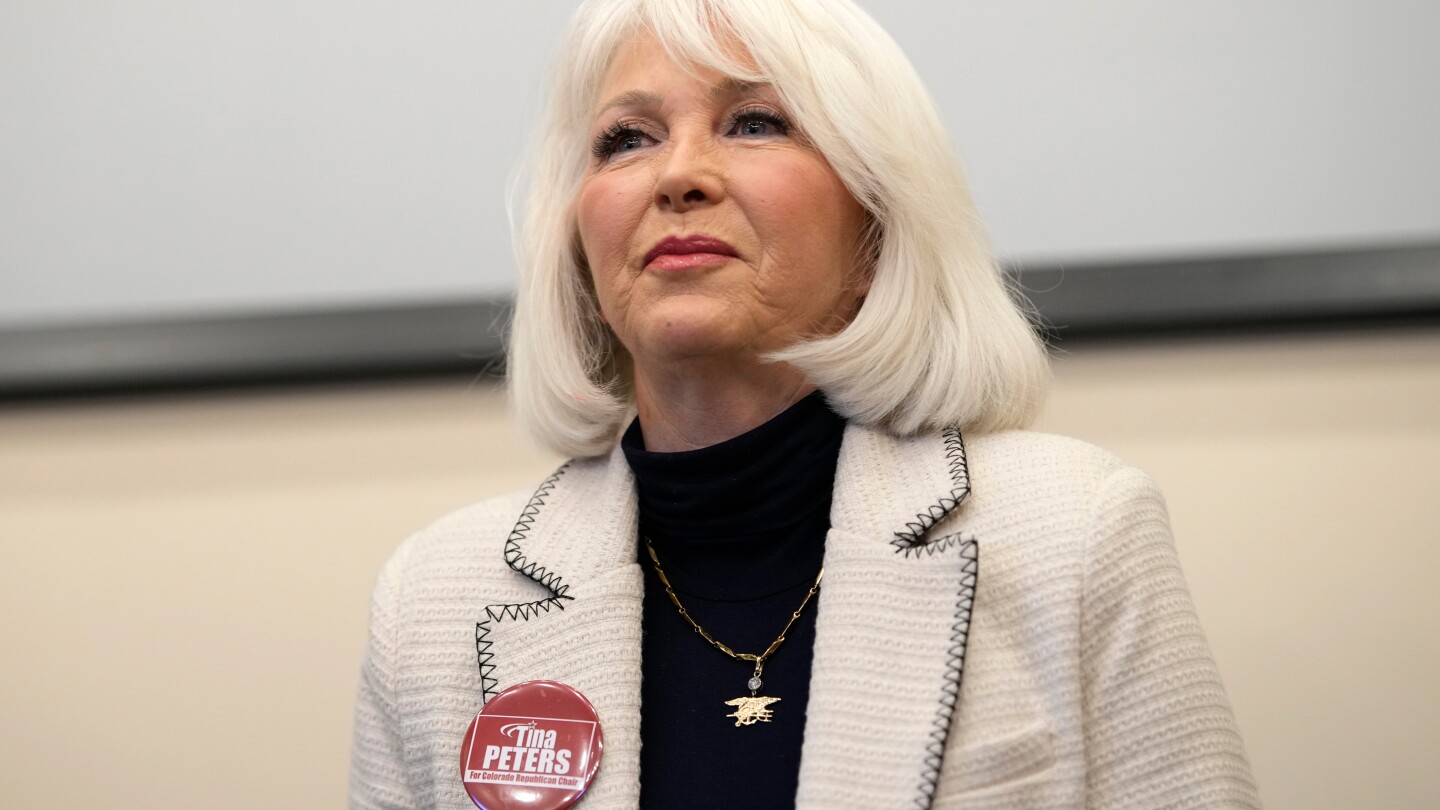
Former Mesa County, Colorado elections clerk Tina Peters has filed a motion with the state appeals court arguing that President Donald Trump’s December 5 pardon effectively ends the state’s jurisdiction over her case. The unusual legal maneuver challenges the longstanding constitutional separation between federal and state criminal justice systems.
Peters, who was convicted of orchestrating a data breach scheme driven by false claims about voting machine fraud in the 2020 presidential election, is currently serving a nine-year prison sentence. Her attorneys are asking the court to recognize Trump’s pardon and release her from custody, despite the widespread legal understanding that presidential pardons apply only to federal offenses.
In their Tuesday filing, Peters’ legal team points to historical precedent, claiming that President George Washington issued pardons for both state and federal crimes during the 1795 Whiskey Rebellion. The court is scheduled to hear arguments in Peters’ appeal of her conviction on January 14, but her attorneys have requested an expedited ruling on the pardon question.
The Colorado Court of Appeals has given the state attorney general’s office until January 8 to respond to Peters’ arguments. While Attorney General Phil Weiser’s office declined to comment on the recent filing, Weiser previously dismissed Trump’s pardon attempt when it was announced on December 11.
“The idea that a president could pardon someone tried and convicted in state court has no precedent in American law, would be an outrageous departure from what our constitution requires, and will not hold up,” Weiser stated at that time.
Peters’ attorney Peter Ticktin indicated that if the appeals court rules against the validity of the presidential pardon, they plan to appeal that issue to the U.S. Supreme Court while simultaneously pursuing their appeal of the original conviction in state court. Another member of Peters’ legal team, John Case, has already petitioned the state prison system to release Peters based on Trump’s pardon, but that request was denied, according to emails included in the court filing.
This latest maneuver follows Peters’ unsuccessful attempt earlier this month to secure release from prison through federal court while her state appeal proceeds. Her legal team argues that Mesa County Judge Matthew Barrett violated her First Amendment rights when he sentenced her in October 2024, punishing her for making allegations about election fraud.
During the sentencing, Judge Barrett characterized Peters as a “charlatan” who endangered the community by spreading falsehoods about voting systems and undermining democratic processes. Peters remained defiant throughout the proceedings, insisting her actions were justified by what she perceived as election fraud that needed to be exposed.
Peters’ conviction stemmed from allowing unauthorized access to secure election systems and being deceptive about the identity of the person involved. That individual was linked to MyPillow CEO Mike Lindell, a prominent promoter of debunked claims that voting machines were manipulated to deny Trump victory in the 2020 election.
The case highlights ongoing tensions between federal and state authority in the American legal system and raises questions about the limits of presidential pardon power. Legal experts generally maintain that the U.S. Constitution’s separation of powers framework prevents presidents from pardoning state-level convictions, but Peters’ unusual challenge may test that understanding in court.
Fact Checker
Verify the accuracy of this article using The Disinformation Commission analysis and real-time sources.

7 Comments
The Tina Peters case highlights the ongoing tensions between federal and state authority, especially when it comes to criminal justice. While presidential pardons are a significant executive power, their scope has traditionally been limited to federal offenses. It will be intriguing to see how the Colorado court addresses this novel legal challenge.
This is an unusual legal move, challenging the separation of federal and state criminal justice. While presidential pardons typically only apply to federal offenses, Peters’ team cites historical precedent to argue Trump’s pardon should override her state conviction. It will be interesting to see how the court rules on this.
Tina Peters’ appeal to the Colorado court to recognize Trump’s pardon is a novel legal strategy, but it faces an uphill battle given the longstanding separation of federal and state criminal justice. The court will have to weigh the extent of presidential pardon powers against the sovereignty of state criminal proceedings.
The Tina Peters case presents an interesting legal quandary. While a presidential pardon is a powerful tool, its application to state-level crimes is highly debatable. The court will need to carefully weigh the constitutional issues at play in deciding whether to recognize Trump’s pardon and release Peters from her state conviction.
The Tina Peters case highlights the complex interplay between federal and state criminal justice systems. While the president has broad pardon powers, the legal consensus is that these only apply to federal crimes. Curious to see how the appeals court navigates this tricky jurisdictional issue.
It will be fascinating to see how the Colorado appeals court handles this unusual case involving a clash between federal and state criminal justice. While presidential pardons are powerful, their scope is generally limited to federal offenses. The court’s ruling could have significant implications for the balance of power between different levels of government.
This is a high-stakes legal gambit by Tina Peters and her attorneys. Arguing that a presidential pardon should overrule a state conviction is an unconventional approach that could have far-reaching implications if successful. The court’s ruling will be closely watched by legal scholars and political observers alike.