


Listen to the article
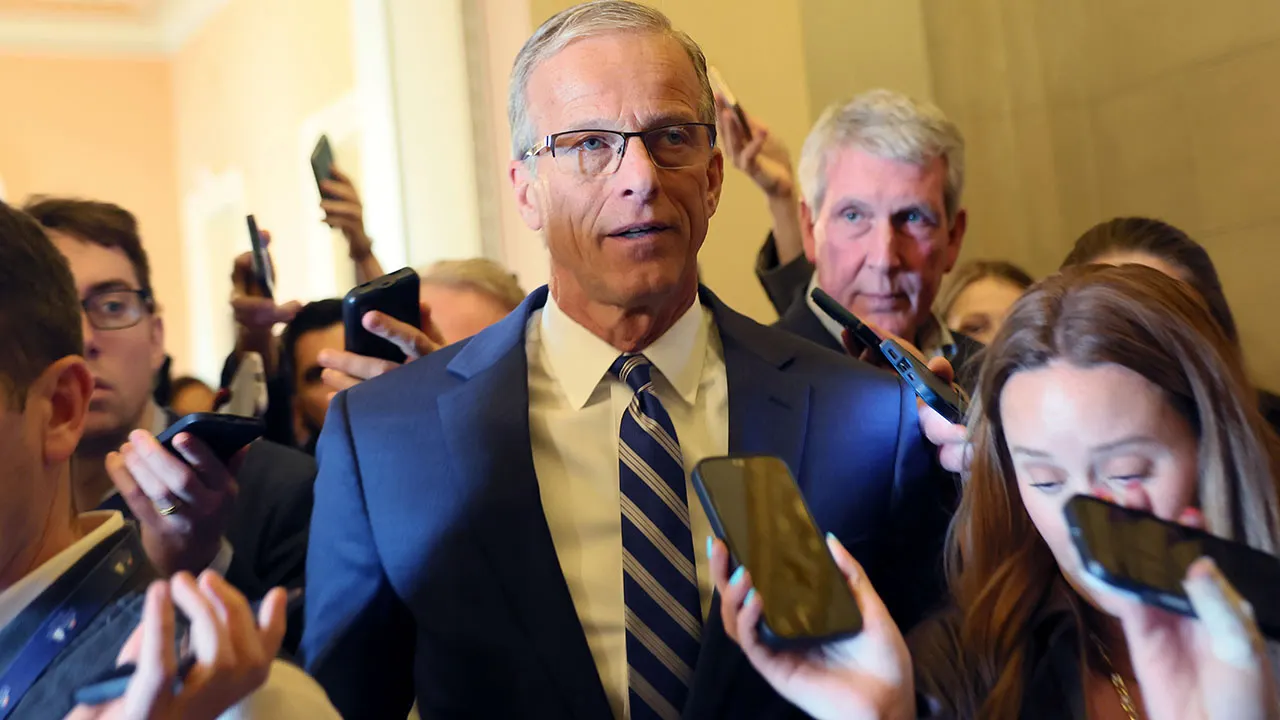
Senate Majority Leader John Thune is challenging Democrats to take a public stance on national voter ID legislation as midterm elections approach. The South Dakota Republican told Fox News Digital that the Safeguarding American Voter Eligibility (SAVE) America Act—which has secured backing from 50 Senate Republicans—will receive a floor vote in the upper chamber.
“We will make sure that everybody’s on the record, and if they want to be against ensuring that only American citizens vote in our elections, they can defend that when they have to go out and campaign against Republicans this fall,” Thune said while campaigning in his home state.
The SAVE America Act, which recently passed the House, would federally mandate voter ID requirements and proof of citizenship to register to vote. The legislation represents a key policy priority for President Donald Trump’s administration and has become a rallying point for Republicans heading into the election season.
Despite having enough Republican support to bring the bill forward, the legislation faces significant hurdles in the Senate. Without at least 10 Democratic votes, the bill cannot overcome the 60-vote threshold required by the Senate filibuster rules—a seemingly unlikely prospect given Democratic opposition to the measure.
Senate Minority Leader Chuck Schumer and most Senate Democrats have consistently characterized voter ID legislation as a form of voter suppression that disproportionately affects low-income Americans and minority communities. This opposition has forced Republicans to consider alternative parliamentary strategies.
One option would be to eliminate the filibuster entirely, a move Thune has already dismissed. Another possibility would be reverting to a “talking filibuster,” which would require opponents to physically hold the Senate floor through continuous debate to block the bill.
However, Thune acknowledged this approach comes with significant risks. “A lot of people focus on unlimited debate, and yes, it is something that could drag on for weeks or literally, for that matter, months,” Thune explained. “But it’s also unlimited amendments, meaning that there’s no rules—so every amendment will be 51 votes.”
The majority leader warned this could open the door to politically challenging amendments that might put vulnerable senators in difficult positions and potentially alter the bill in unintended ways. “There could be a lot of ancillary damage along the way,” he cautioned.
The push for voter ID requirements has created some fractures within the Democratic Party. While most Democratic lawmakers remain opposed to the legislation, some moderate Democrats have distanced themselves from party rhetoric that compares voter ID requirements to Jim Crow-era restrictions.
The Republican strategy appears focused on forcing Democrats into a potentially uncomfortable position ahead of November’s elections. By bringing the measure to a vote, Republicans aim to highlight what they see as a winning issue with voters concerned about election security, while putting Democrats on record opposing a measure that polls suggest has broad public support.
The debate underscores the increasingly partisan nature of election administration issues and highlights the strategic calculations both parties are making as they position themselves for the upcoming midterm elections. For Republicans, election integrity measures have become a central campaign theme, while Democrats continue to emphasize voter access and participation.
As primary season approaches, Thune and Republican colleagues are traveling their home states to promote their legislative achievements, with the voter ID push becoming a signature issue. Whether the SAVE America Act ultimately advances through the Senate remains uncertain, but its consideration guarantees that election administration will remain a divisive and prominent issue throughout the 2026 campaign cycle.
Fact Checker
Verify the accuracy of this article using The Disinformation Commission analysis and real-time sources.

18 Comments
Voter ID laws are a complex issue with valid concerns on both sides. I encourage everyone to research the facts and evidence objectively, rather than getting caught up in the partisan rhetoric. The integrity of our elections is crucial, regardless of political affiliation.
Well said. Maintaining the credibility of our democratic processes should be the top priority, not scoring political points. I hope lawmakers can find common ground on reasonable measures to secure elections.
I’m skeptical of claims that voter fraud is a widespread issue requiring federal intervention. Seems more like an attempt to erect barriers to the democratic process. But I’m open to hearing the other side’s perspective on this.
I share your skepticism. Robust evidence of voter fraud impacting elections at scale is lacking. However, I recognize the desire to ensure electoral integrity. An objective, data-driven approach is needed here.
As a mining and energy investor, I’m less focused on the partisan politics around this bill and more interested in understanding the potential impacts on the industry. How might stricter voter ID requirements affect participation and outcomes in resource-heavy states?
That’s a great point. Voter ID laws could have downstream effects on the extractive industries depending on where they are implemented. Careful analysis of the economic implications would be warranted.
As an investor in the gold, silver, and copper mining sectors, I’m interested in understanding how this voter ID legislation could impact the political landscape in resource-producing states. Changes to voter participation could shift the balance of power and influence policy decisions that affect our industry.
That’s a good point. The downstream effects of voter ID laws on the mining industry’s political clout are an important consideration. Careful analysis of potential impacts on regulations, permitting, and resource access would be warranted.
Voter ID requirements are a complex and contentious issue. While the goal of election integrity is laudable, we must be vigilant that new measures don’t unfairly disenfranchise legitimate voters. As an investor, I’m most interested in understanding the potential economic impacts on resource-rich states and industries.
I agree, the economic ramifications are a crucial angle that often gets overlooked in the heated political debate. Objective, data-driven analysis of how voter ID laws could affect participation and electoral outcomes in key mining and energy regions would be valuable for investors.
Interesting to see the focus on voter ID legislation ahead of the midterms. Reasonable measures to secure elections seem prudent, but the partisan dynamics here are concerning. Curious to see how Democrats respond.
I agree, this is a complex and politically charged issue. Balancing election integrity with voter access will require nuance and good-faith compromise.
I’m concerned that this voter ID bill, while well-intentioned, could end up disenfranchising legitimate voters and skewing election results. Maintaining the integrity of our democratic process is crucial, but we must be vigilant against measures that unfairly restrict access to voting.
I share your concerns. Protecting the integrity of elections is important, but it must be balanced against preserving the fundamental right to vote. Any new restrictions should be thoroughly vetted to ensure they don’t create undue barriers to participation.
As an investor focused on the uranium and lithium sectors, I’m curious how this legislation could affect the mining industry’s political influence and access to policymakers. Voter ID requirements may shift the balance of power in resource-rich states.
That’s an insightful point. Changes to voter participation could have ripple effects across the natural resources space, both in terms of regulatory environment and political representation. Worth keeping a close eye on.
As someone invested in the mining and metals sectors, I’m more interested in the potential economic impacts of this legislation than the partisan politics. How might stricter voter ID requirements affect turnout and electoral outcomes in resource-rich states? That could have important implications for the industry.
That’s a great question. The economic ramifications of changes to the voting process are an important consideration that often gets overlooked in the heated political debate. Careful analysis of the potential impacts would be warranted.