


Listen to the article
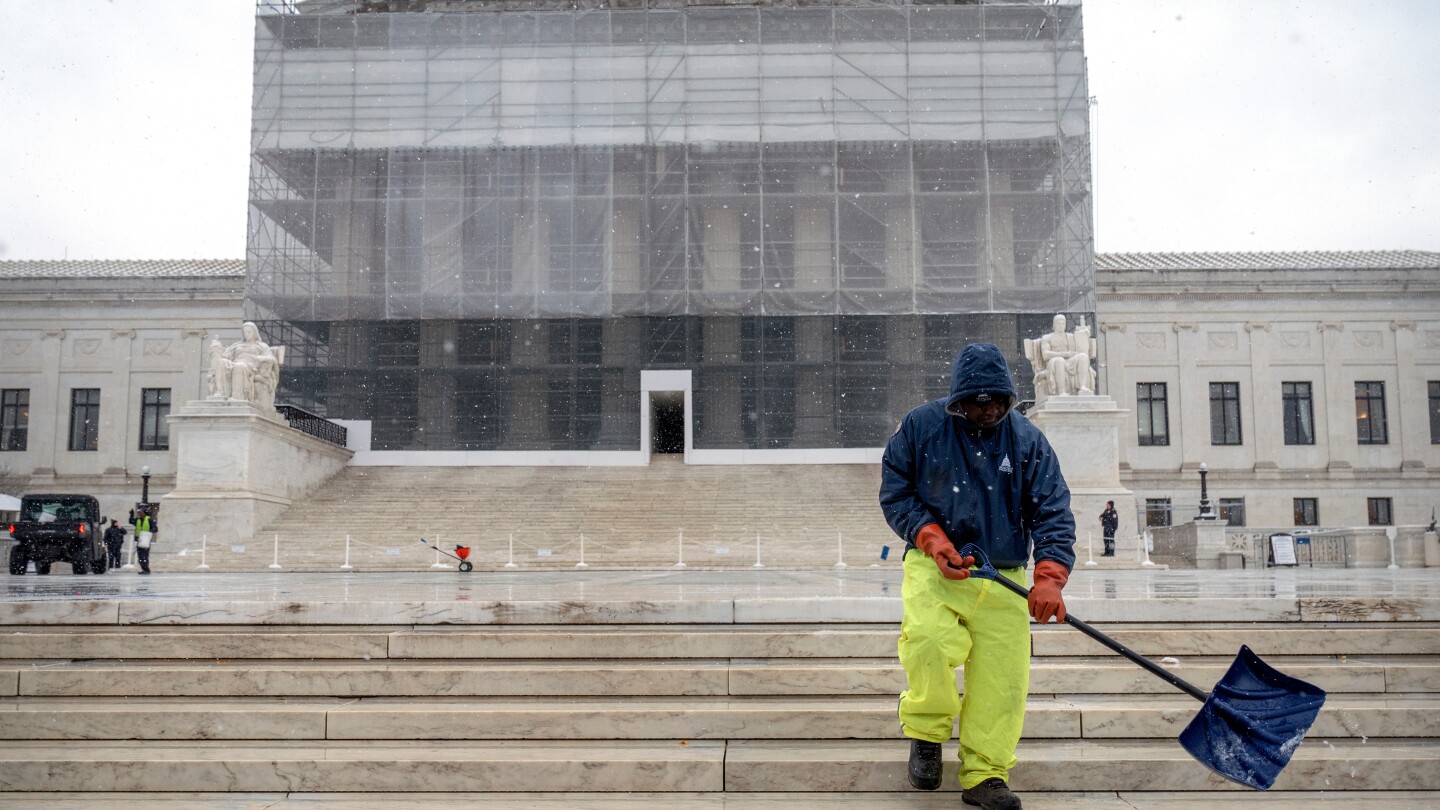
The Trump administration’s effort to expand presidential authority over independent federal agencies faced the Supreme Court on Monday, in a case that could potentially overturn a landmark 1935 ruling that has limited executive power for nearly a century.
At issue is President Donald Trump’s decision to fire Federal Trade Commission member Rebecca Slaughter without cause, a move that directly challenges the precedent established in Humphrey’s Executor v. United States. That unanimous 1935 decision restricted presidents from removing commissioners of independent agencies except for specific reasons such as “inefficiency, neglect of duty, or malfeasance in office.”
The current conservative-majority Supreme Court has already demonstrated sympathy toward the administration’s position. The justices have permitted Slaughter and board members from other independent agencies to be removed from their positions while their legal challenges continue through the courts.
Trump’s recent dismissals have extended beyond the FTC to include members of the National Labor Relations Board, the Merit Systems Protection Board, and the Consumer Product Safety Commission. The administration’s legal team is now explicitly calling on the Court to discard the Humphrey’s Executor precedent entirely.
Only two officials have thus far weathered removal attempts: Lisa Cook, a Federal Reserve governor, and Shira Perlmutter, a copyright official with the Library of Congress. The Court has indicated it may view the Federal Reserve differently from other independent agencies due to its unique role in economic stability. Trump has stated he wants Cook removed based on allegations of mortgage fraud, which Cook denies.
The case also raises a secondary question that could affect Cook’s position: whether courts have the authority to reinstate officials who were illegally terminated. Justice Neil Gorsuch wrote earlier this year that such officials might be entitled to back pay but not necessarily reinstatement to their positions.
This distinction could prove crucial for Cook’s ability to remain in her post. The justices appear cautious about potential economic uncertainty that could result if Trump gains the power to fire Federal Reserve leaders at will. The Court has scheduled separate arguments in January specifically addressing Cook’s status while her legal challenge proceeds.
The conservative shift in the Court’s approach to presidential removal powers began years ago under Chief Justice John Roberts. Since 2010, Roberts has authored a series of opinions that have gradually reduced restrictions on presidential authority to terminate officials.
In a significant 2020 decision, Roberts wrote that “the President’s removal power is the rule, not the exception,” when the Court upheld Trump’s dismissal of the Consumer Financial Protection Bureau director despite statutory job protections similar to those at issue in the Humphrey’s case.
More recently, in the 2024 presidential immunity decision that shielded Trump from prosecution related to his efforts to overturn the 2020 election, Roberts characterized the power to fire as among the president’s “conclusive and preclusive” powers that Congress cannot restrict.
The historical parallels to the current case are striking. The 1935 Humphrey’s Executor case also involved an FTC commissioner fired by a president – Franklin D. Roosevelt – who wanted to install his own choice at an agency with significant regulatory authority during the New Deal era. William Humphrey refused Roosevelt’s resignation request, and after Humphrey’s death, his estate administrator sued for back pay.
The Supreme Court’s unanimous ruling at that time established the principle that Congress could create independent agencies with commissioners protected from at-will removal by the president. That precedent has shaped the structure of numerous federal agencies for decades – a framework that now hangs in the balance as the Court reconsiders the scope of presidential power.
The case represents a potential inflection point in the separation of powers between the executive branch and independent regulatory agencies that have long operated with some insulation from direct presidential control.
Fact Checker
Verify the accuracy of this article using The Disinformation Commission analysis and real-time sources.

12 Comments
Interesting update on The Supreme Court weighs Trump’s bid to fire independent agency board members. Curious how the grades will trend next quarter.
Good point. Watching costs and grades closely.
Interesting update on The Supreme Court weighs Trump’s bid to fire independent agency board members. Curious how the grades will trend next quarter.
The cost guidance is better than expected. If they deliver, the stock could rerate.
Good point. Watching costs and grades closely.
Uranium names keep pushing higher—supply still tight into 2026.
Good point. Watching costs and grades closely.
Good point. Watching costs and grades closely.
Uranium names keep pushing higher—supply still tight into 2026.
Good point. Watching costs and grades closely.
Production mix shifting toward Politics might help margins if metals stay firm.
Good point. Watching costs and grades closely.