


Listen to the article
Music’s Biggest Stars Join Cultural Revolt Against Immigration Crackdowns
As the Grammy Awards unfolded Sunday night, the glitz and glamour of music’s biggest night became intertwined with growing protests against the Trump administration’s immigration policies. Artists attending the ceremony faced mounting pressure to take a stand against recent Immigration and Customs Enforcement (ICE) operations in Minneapolis and across the country.
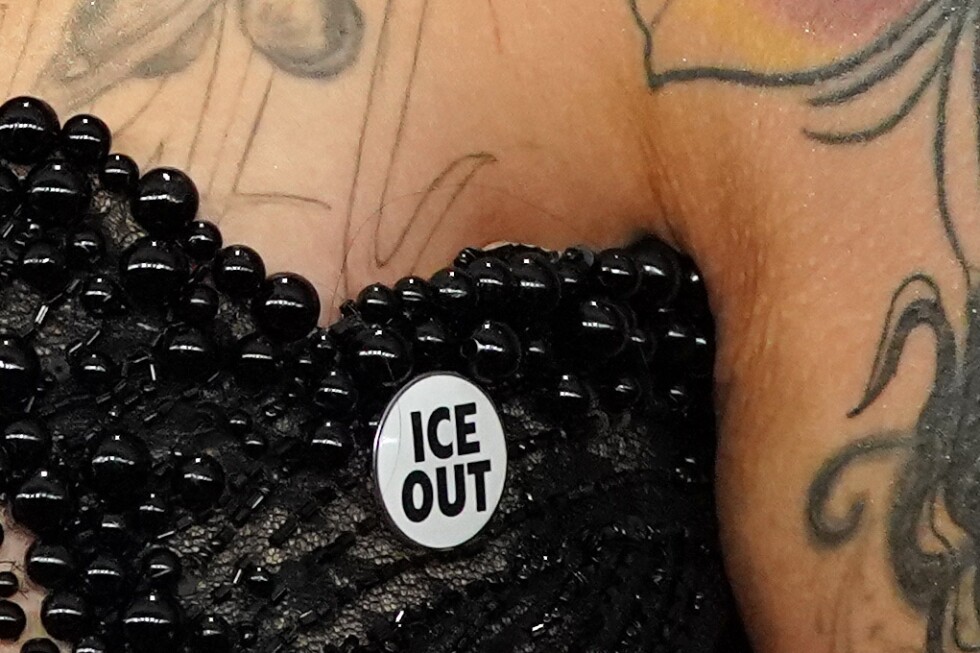
The red carpet became a platform for political statements, with several prominent musicians wearing protest pins and apparel condemning ICE actions. Jason Isbell, Margo Price, Kehlani, and Rhiannon Giddens were among those who visibly supported the cause. Kehlani took her protest a step further, denouncing ICE during her acceptance speech for best R&B performance.
Justin Vernon of Bon Iver, nominated for best alternative music album, wore a whistle to honor legal observers documenting federal agents’ activities. “I think there’s a reason that music exists and it’s to heal and to bring people together,” Vernon told The Associated Press. “But the real work are those observers on the ground in Minneapolis. We just want to shout them out.”
The demonstrations follow a series of controversial incidents that have intensified public outrage. A Border Patrol officer recently shot and killed 37-year-old nurse Alex Pretti, while federal agents detained 5-year-old Liam Conejo Ramos. The arrest of journalist Don Lemon further fueled the growing backlash against immigration enforcement tactics.
Jess Morales Rocketto, Executive Director of Latino advocacy group Maremoto, noted that musicians tend to be more willing to make political statements than their counterparts in other entertainment fields. “These are folks who are known for six-stage shows, crazy costumes, being kind of rebellious, punk rock — that’s the music industry,” she explained. “These pins are about so much more than a red carpet moment. It’s about people taking a stand and doing what they can to show up to say that ICE should be out of our communities.”
The movement gained momentum earlier in the week when Mexican American singer Becky G displayed an explicit anti-ICE message on her nails during the MusiCares Person of the Year gala. Similar demonstrations occurred at the Sundance Film Festival, where celebrities including Natalie Portman, Olivia Wilde, and Zoey Deutch wore “ICE OUT” pins during red carpet appearances.
Wilde expressed her concerns to the AP, saying she was “horrified by this string of murders that we are somehow legitimizing and normalizing.” She added, “It’s really difficult to be here and to be celebrating something so joyous and beautiful and positive when we know what’s happening on the streets. Americans are out on the streets marching and demanding justice, and we’re there with them.”
Portman became emotional when discussing her decision to wear the pin at the premiere of her film “The Gallerist.” “I’m so lucky to be here in a joyful, creative community celebrating a movie we’re really proud of. But it’s impossible to ignore what ICE is doing to our country,” she said, fighting back tears.
Despite the visible support, Rocketto acknowledged that many artists face significant pressure not to make political statements. Record companies, managers, and corporate partners may discourage such expressions. Even practical considerations can intervene—she noted that “maybe the design house that did their fashion deal for the red carpet didn’t want them to literally poke holes in the dress.”
Latino artists face additional concerns. The Trump administration has reportedly threatened to place ICE agents at upcoming performances, including Bad Bunny’s Super Bowl halftime show. “Just because Latino artists are rich and famous doesn’t mean that they are exempt from the lack of safety that permeates so many Latinos and Latino families,” Rocketto explained. “They themselves may be undocumented or only have a green card or have mixed status families.”
As awards season continues amid escalating immigration enforcement actions, the entertainment industry’s response reflects the broader national debate over immigration policies. For many artists, the decision to speak out represents a delicate balance between professional considerations and personal convictions in an increasingly polarized political climate.
Fact Checker
Verify the accuracy of this article using The Disinformation Commission analysis and real-time sources.

10 Comments
Music has often been intertwined with social and political movements. It’s not surprising to see artists using the Grammys stage to protest the Trump administration’s immigration policies.
I’m curious to see if this trend of politically-charged Grammy performances and statements will continue in the future. The entertainment industry seems increasingly willing to wade into these debates.
The Grammys have always been about more than just the music. It’s interesting to see how the event has become a platform for political activism, especially around hot-button issues like immigration.
I wonder if this trend will continue or if the Grammys will try to rein in the political messaging in future broadcasts. It could start to feel overly partisan if not handled carefully.
While I respect the artists’ right to free speech, I’m not sure how effective these sorts of protests at awards shows really are in driving policy changes. But it does reflect the broader cultural divide on immigration.
You raise a fair point. These types of celebrity-driven protests may generate headlines, but their real-world impact on policymaking is debatable.
While I appreciate the artists’ passion, I’m not sure that using an awards show as a soapbox for political causes is the most effective strategy. These types of protests may play well with certain audiences, but they’re unlikely to sway many hearts and minds.
You make a fair point. These types of celebrity-driven political statements often end up preaching to the choir rather than engaging with those who may have different views on the issues.
The Grammys have become a platform for musicians to voice their political views on immigration. It’s interesting to see how the entertainment industry is getting involved in these heated debates.
Celebrities using their platform to speak up on social issues is nothing new, but the intensity of the anti-ICE messaging at the Grammys was notable.