


Listen to the article
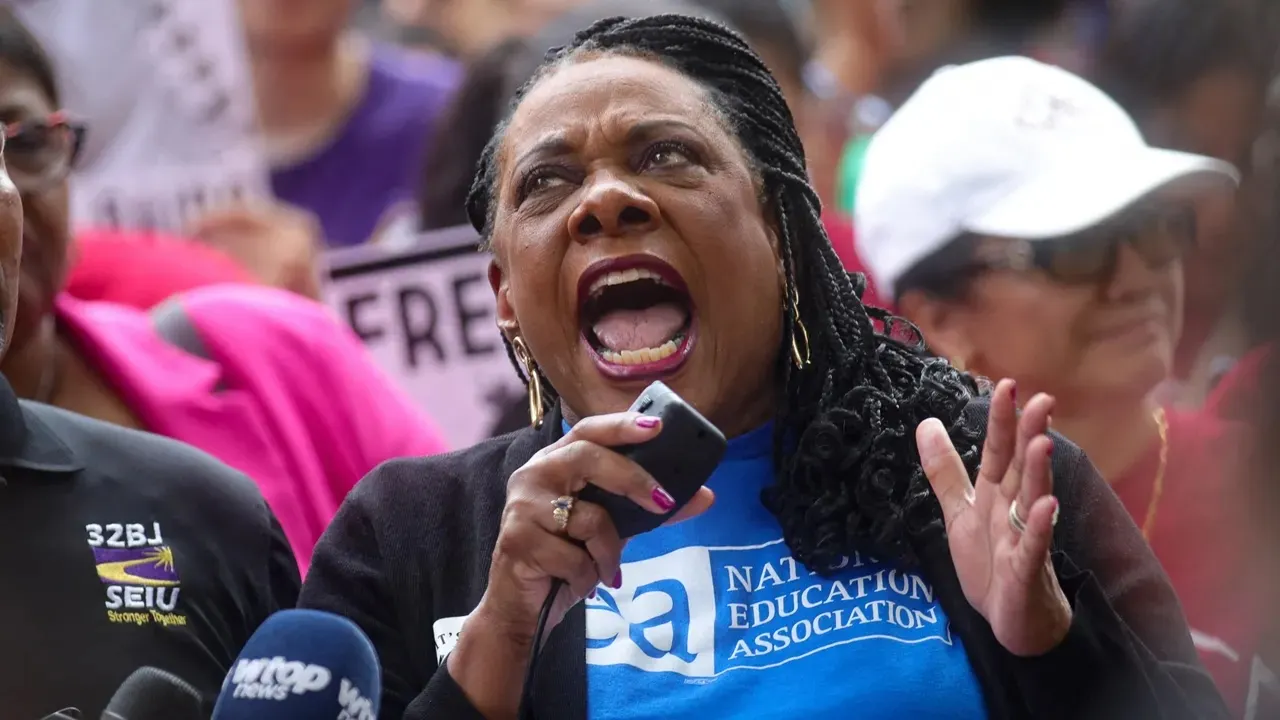
The president of the National Education Association (NEA), the largest teachers union in the United States, is scheduled to appear at a virtual event titled “Roadmap to Political Revolution,” hosted by the climate activist organization Sunrise Movement. The announcement comes at a time when teachers unions are facing increased scrutiny and criticism from lawmakers and education advocates.
The NEA, which represents approximately 3 million educators nationwide, has recently found itself at the center of several controversies. Lawmakers are currently pushing to strip the union of its unique federal charter, with critics arguing the organization has “lost its way” from its original educational mission and become increasingly politicized.
This development follows revelations about other teachers union officials engaging in political activism. In Minneapolis, a teachers union chief recently admitted that elected officials participated in anti-Immigration and Customs Enforcement (ICE) Signal chats, raising questions about the appropriate boundaries between education advocacy and political activism.
The growing intersection of education and politics has become particularly contentious in recent months. In Rhode Island, an activist criticized an adult-run nonprofit for promoting what was described as a “student-led” anti-ICE school walkout, suggesting that students were being used as political tools rather than autonomous advocates.
These controversies reflect broader tensions in the education landscape, where teachers unions have increasingly taken positions on issues beyond traditional workplace concerns like wages and working conditions. Critics argue this represents mission drift, while supporters maintain that education policy is inherently connected to broader social and political issues.
The announcement of the NEA president’s participation in an event explicitly framed around “political revolution” is likely to intensify debate about the proper role of teachers unions in American society. The Sunrise Movement, which is hosting the event, is known for its advocacy of the Green New Deal and progressive climate policies.
Meanwhile, other education-related controversies continue to make headlines across the country. Notre Dame University faced staff resignations after hiring an abortion advocate to lead a center, while an elementary school teacher in another state has taken a stand against their union over a parental rights ballot measure.
In San Diego, a first-grade teacher sparked an investigation after flipping an American flag upside down in a classroom. At Texas A&M University, administrators have decided to wind down the Women’s and Gender Studies certificate program following what they described as a “comprehensive course review,” a move praised by some education advocates.
Religious schools have not been immune to controversy either. Leaders of a Catholic school urged prayer for perpetrators after vandals destroyed a statue of Mary and the school’s tabernacle. Meanwhile, a Temple University student who reportedly assisted media personality Don Lemon is now facing charges in a federal church-storming case.
Education experts have also raised concerns about a plan in New York City that critics say could undermine gifted programs and potentially harm low-income students, adding another dimension to ongoing debates about equity and excellence in public education.
The timing of these developments is particularly significant as education continues to be a major political battleground heading into future elections. Teachers unions, which traditionally wield significant influence in education policy discussions, appear to be embracing more overtly political positions, as evidenced by recent reports of a teachers union president referring to former President Trump as a “dictator” during a call with an allegedly Antifa-linked group.
These controversies highlight the complex relationship between education, politics, and civic life in contemporary America, where schools often serve as flashpoints for broader cultural and ideological disputes.
Fact Checker
Verify the accuracy of this article using The Disinformation Commission analysis and real-time sources.

13 Comments
I’m curious to see how this plays out and what it means for the future of the teachers’ union. There are valid concerns about political bias, but the union also plays an important role in supporting educators. Finding the right balance will be critical.
The teachers’ union’s involvement in political activism is a complex issue. While I respect their right to engage in advocacy, I hope they can find a way to do so without compromising their core mission of supporting educators and students. Maintaining public trust will be crucial.
Agreed. It’s a delicate balance that will require thoughtful leadership and clear communication.
The teachers’ union faces a delicate balancing act. On one hand, they need to advocate for their members. But on the other, they must avoid the perception of being overly politicized. Navigating this will require thoughtful leadership and clear boundaries.
Agreed. Maintaining public trust while also effectively representing teachers will be the key challenge.
The teachers’ union’s involvement in anti-ICE activism raises legitimate questions about the appropriate scope of their activities. While I understand the desire to take political stances, it’s crucial that they don’t become overly partisan and alienate those they’re meant to serve.
Well said. Maintaining a nonpartisan, professional approach is crucial for the union’s credibility.
This situation highlights the complexities of the relationship between education, politics, and activism. While I respect the union’s right to engage in advocacy, it’s important that they don’t lose sight of their primary mission to support teachers and students.
I’m interested to see how this situation evolves and what it means for the future relationship between the teachers’ union, lawmakers, and the public. Finding the right balance between advocacy and political neutrality will be a key challenge.
The revelation about anti-ICE activism among union officials is concerning. While I support free speech, educators should be careful about blurring the lines between their professional roles and political views. Maintaining public trust is crucial for the union.
Well said. Unions need to navigate this carefully to avoid further erosion of their credibility.
Interesting developments with the teachers’ union. This seems to highlight the growing tension between education advocacy and political activism. It will be important to find the right balance and ensure the union stays focused on its core mission of supporting teachers and students.
I agree, the line between the two can be blurry at times. Transparency and accountability will be key as this issue plays out.