


Listen to the article
US Rushes ISIS Detainees Out of Syria Amid Growing Security Concerns
Chaos engulfing northeastern Syria has sparked fresh security fears after Syria’s new governing authorities moved against U.S.-backed Kurdish forces, forcing the U.S. military to rush ISIS detainees out of Syria and into Iraq.
The U.S. military launched an operation Wednesday to relocate ISIS detainees amid fears that instability could trigger mass prison breaks. So far, about 150 detainees have been transferred from a detention center in Hasakah, Syria, with plans to move up to 7,000 of the roughly 9,000 to 10,000 ISIS detainees held in the country, according to U.S. officials.
The emergency operation comes as Syria’s new government, led by President Ahmed al-Sharaa, ordered the Kurdish-led Syrian Democratic Forces (SDF) — Washington’s longtime partner in the fight against ISIS — to disband following a rapid offensive over the weekend that severely weakened the group.
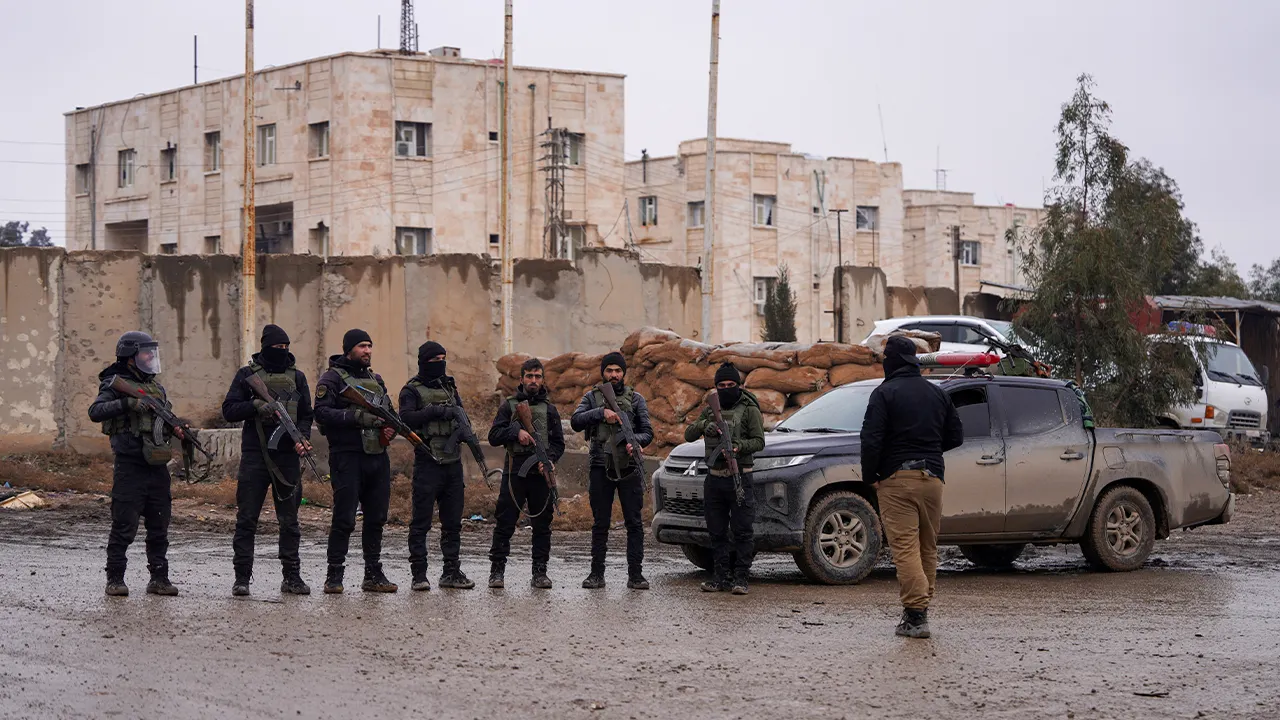
Syrian government forces have since assumed control of several detention facilities previously guarded by the SDF. At least 120 ISIS detainees escaped during a breakout at the al-Shaddadi prison in Hasakah this week, according to Syrian authorities. While officials claim many have been recaptured, U.S. and regional officials caution that an unknown number of escapees remain at large, posing a significant security threat.
The deteriorating situation has also raised alarms around al-Hol camp, a sprawling detention site housing the families of ISIS fighters. The camp, which Western intelligence agencies have long viewed as a breeding ground for radicalization, currently holds about 24,000 people, mostly women and children linked to ISIS fighters from across the Middle East and Europe.
Kurdish forces announced they would withdraw from overseeing the camp, citing what they described as international indifference to the ISIS threat. “Due to the international community’s indifference towards the ISIS issue and its failure to assume its responsibilities in addressing this serious matter, our forces were compelled to withdraw from al-Hol camp and redeploy,” the SDF said in a statement.
Many residents have no formal charges, according to aid groups, and humanitarian organizations have long warned that extremist networks operate inside the camp. The SDF said guards were redeployed to confront the threat posed by Syrian government forces advancing into Kurdish-held territory.
On Tuesday evening, Kurdish forces and Syrian government troops agreed to a four-day ceasefire, though officials warned the truce remains fragile. The temporary agreement provides a brief window for diplomatic efforts, but regional analysts express skepticism about its durability given the deep-seated tensions between the groups.
Meanwhile, The Wall Street Journal reported that U.S. officials are weighing whether to withdraw the roughly 1,000 American troops still stationed in Syria. This potential shift raises serious questions about Washington’s long-term ability to secure ISIS detainees as local alliances continue to evolve in the volatile region.
The threat from ISIS remains real despite the group’s territorial defeat in 2019, when U.S. forces and their SDF partners overran the group’s final enclave in Baghouz. Two U.S. Army soldiers were killed in Syria in December 2025 by a lone ISIS gunman, underscoring the persistent danger posed by the organization.
While the defeat ended ISIS’s self-declared caliphate, U.S. and allied officials say the group has since regrouped as a decentralized insurgency, repeatedly targeting prisons and detention camps in Syria and Iraq. Security experts warn that prison breaks remain a central strategy in ISIS’s efforts to rebuild its fighting force.
Western governments have cautiously backed al-Sharaa — a former militant once designated as a terrorist — since his forces overthrew longtime Syrian leader Bashar al-Assad. This support is framed as a pragmatic security calculation rather than an endorsement of his past affiliations, highlighting the complex geopolitical considerations at play.
U.S. envoy to Syria Tom Barrack urged Kurdish leaders to reach a permanent deal with the new Syrian government, emphasizing Washington’s focus on preventing an ISIS resurgence rather than maintaining an indefinite military presence.
“The United States has no interest in a long-term military presence,” Barrack said, adding that U.S. priorities include securing ISIS detention facilities and facilitating talks between the SDF and the Syrian government.
Fact Checker
Verify the accuracy of this article using The Disinformation Commission analysis and real-time sources.

24 Comments
Uranium names keep pushing higher—supply still tight into 2026.
I like the balance sheet here—less leverage than peers.
Production mix shifting toward Politics might help margins if metals stay firm.
Good point. Watching costs and grades closely.
Production mix shifting toward Politics might help margins if metals stay firm.
Good point. Watching costs and grades closely.
I like the balance sheet here—less leverage than peers.
Good point. Watching costs and grades closely.
Nice to see insider buying—usually a good signal in this space.
Interesting update on Syria Chaos Fuels Fears of ISIS Prison Breaks as US Transfers Detainees to Iraq. Curious how the grades will trend next quarter.
Good point. Watching costs and grades closely.
Good point. Watching costs and grades closely.
Interesting update on Syria Chaos Fuels Fears of ISIS Prison Breaks as US Transfers Detainees to Iraq. Curious how the grades will trend next quarter.
Uranium names keep pushing higher—supply still tight into 2026.
Interesting update on Syria Chaos Fuels Fears of ISIS Prison Breaks as US Transfers Detainees to Iraq. Curious how the grades will trend next quarter.
Good point. Watching costs and grades closely.
Interesting update on Syria Chaos Fuels Fears of ISIS Prison Breaks as US Transfers Detainees to Iraq. Curious how the grades will trend next quarter.
Good point. Watching costs and grades closely.
Good point. Watching costs and grades closely.
Nice to see insider buying—usually a good signal in this space.
Good point. Watching costs and grades closely.
Interesting update on Syria Chaos Fuels Fears of ISIS Prison Breaks as US Transfers Detainees to Iraq. Curious how the grades will trend next quarter.
The cost guidance is better than expected. If they deliver, the stock could rerate.
The cost guidance is better than expected. If they deliver, the stock could rerate.