


Listen to the article
The Supreme Court is set to address a fundamental constitutional question that has remained largely untouched for over a century: Who qualifies as an American citizen?
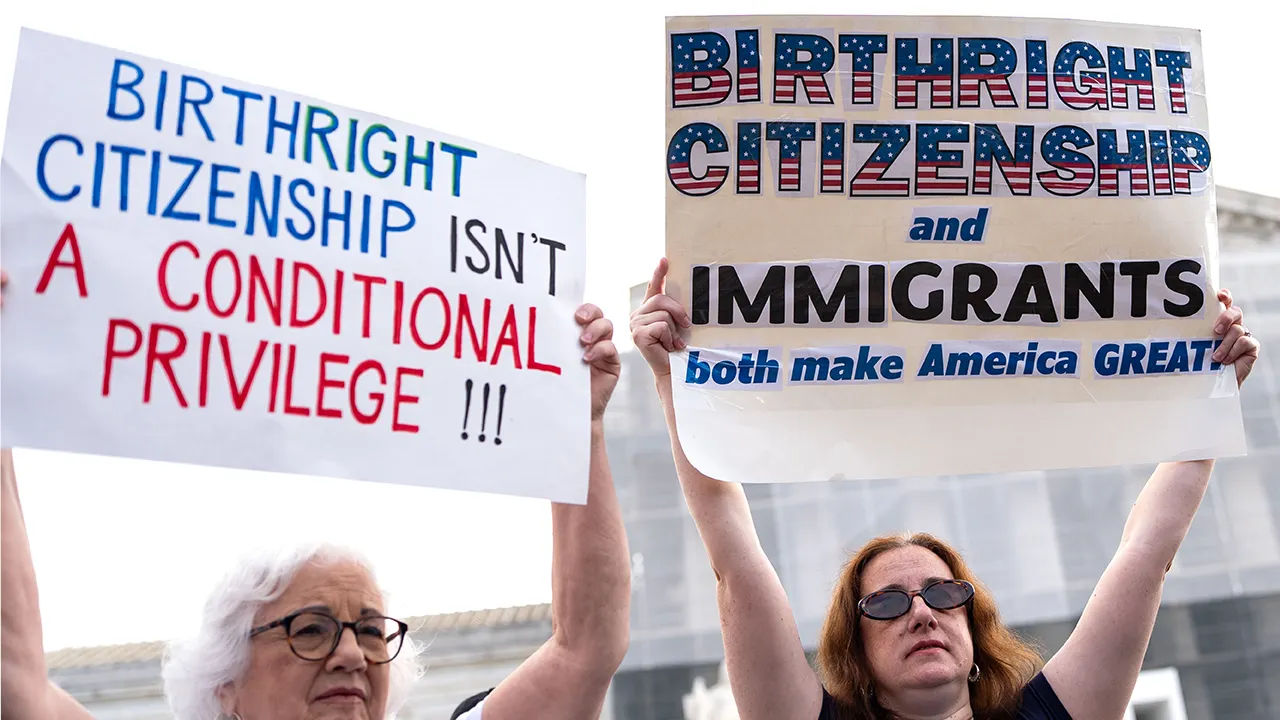
On Wednesday, the justices will hear oral arguments reviewing President Donald Trump’s efforts to limit birthright citizenship in the United States, a case with profound implications that could affect millions of Americans and lawful residents.
At the heart of the dispute is Trump’s executive order, signed on his first day back in office, which would end automatic citizenship for nearly all persons born in the U.S. to undocumented parents or parents with lawful temporary status. Critics argue this change would break with more than 150 years of legal precedent. While a ruling is expected within three months, Trump’s plans remain on hold pending the Court’s decision.
This case represents the fourth in a series of five appeals the Supreme Court is considering this term regarding Trump’s executive agenda. The Court has already invalidated his reciprocal tariffs program that relied on an economic emergency law, and will soon hear arguments about ending protections for migrants with temporary protected status. Still pending are rulings on the president’s ability to fire members of independent agencies, including Federal Reserve governors.
Trump’s order would reinterpret the 14th Amendment, which states, “All persons born or naturalized in the United States, and subject to the jurisdiction thereof, are citizens of the United States and of the State wherein they reside.” Executive Order 14160, entitled “Protecting the Meaning and Value of American Citizenship,” would deny citizenship to those born after February 19, 2025, whose parents are undocumented immigrants or those legally present on temporary non-immigrant visas. It would also prohibit federal agencies from issuing or accepting documents recognizing citizenship for these children.
“The privilege of United States citizenship is a priceless and profound gift,” states the order, which continues, “But the Fourteenth Amendment has never been interpreted to extend citizenship universally to everyone born within the United States.”
The stakes are enormous. According to data from the Pew Research Center, the policy shift could affect approximately 150,000 children born annually in the U.S. to non-citizen parents, as well as an estimated 4.6 million American-born children under 18 who currently live with an undocumented immigrant parent.
U.S. Solicitor General John Sauer, who will represent the administration in court, argues that lower court rulings striking down the executive order relied on a “mistaken view” with potentially “destructive consequences.” He claims these decisions “confer, without lawful justification, the privilege of American citizenship on hundreds of thousands of unqualified people.”
Opponents, including coalitions of about two dozen states, immigrant rights groups, and private individuals, have filed a class-action lawsuit challenging the order. The plaintiffs—including pregnant women from Taiwan and Brazil—seek to preserve access to citizenship-related benefits such as Social Security, SNAP, and Medicaid. To date, no court has supported the Trump administration’s interpretation of the 14th Amendment.
“The federal courts have unanimously held that President Trump’s executive order is contrary to the Constitution, a Supreme Court decision from 1898, and a law enacted by Congress,” said ACLU legal director Cecillia Wang, who will argue for the plaintiffs.
Much of the oral arguments are expected to focus on the phrase “subject to the jurisdiction thereof,” which the Trump administration interprets as “being subject to U.S. law”—giving the government discretion to exclude children of those in the country illegally. However, plaintiffs argue that a century-old Supreme Court ruling established that this phrase only excluded automatic citizenship for children born to foreign diplomats or hostile forces.
Supporters of a broader interpretation point to the 14th Amendment’s post-Civil War origins, which aimed to ensure citizenship rights for individuals of African descent, including formerly enslaved people.
The Supreme Court first addressed the citizenship status of children born in the U.S. to non-citizen parents in 1898, in the case of Wong Kim Ark, who was born in San Francisco to Chinese parents but denied reentry to the U.S. after a trip abroad. The Court ruled that he was a U.S. citizen by virtue of his birth on American soil.
The potential impact of the Court’s ruling is far-reaching. A recent Pew Research poll found that 94% of Americans support citizenship for children of immigrants lawfully present in the United States.
Critics warn that the administration’s plan could create a chaotic patchwork of enforcement. Amanda Frost, director of the Immigration, Migration and Human Rights Program at the University of Virginia School of Law, notes that under the executive order, affected children would be “denied all the benefits and privileges of citizenship and theoretically deportable on day one of their life.”
Immigration reform advocates, however, point to what they view as abuses in the system, such as “birth tourism,” particularly from China. Peter Schweizer, president of the Government Accountability Institute, describes an industry that provides concierge services for foreign nationals to give birth in the U.S., securing citizenship for their children.
During previous arguments, several justices expressed skepticism about the administration’s position. Justice Sonia Sotomayor said it “makes no sense whatsoever” and could leave some children “stateless,” while Justice Brett Kavanaugh raised practical questions about implementation.
The case, Trump v. Barbara, involves a Honduran citizen whose child was born in the U.S. months after she joined the lawsuit as the named plaintiff. The Court’s decision could fundamentally reshape American citizenship policy for generations to come.
Fact Checker
Verify the accuracy of this article using The Disinformation Commission analysis and real-time sources.

12 Comments
Birthright citizenship is a bedrock principle of American identity. I hope the Court upholds this fundamental right, regardless of the President’s political agenda.
Well said. Citizenship should not be subject to the whims of any one administration. The Court must protect this core constitutional guarantee.
As a student of constitutional law, I’m fascinated to see how the Court navigates this complex issue. Birthright citizenship is a cornerstone of American identity.
I agree, this case goes to the heart of what it means to be an American citizen. The Court’s ruling could have far-reaching implications.
This executive order seems like a politically-motivated attempt to limit birthright citizenship. I hope the Court upholds the long-standing legal precedent on this fundamental right.
You raise a fair point. The Court will need to carefully consider whether the President has the authority to unilaterally change such a core tenet of citizenship law.
Fascinating case with profound implications for citizenship. The Supreme Court has a tough job balancing precedent and executive authority here. I’m curious to see how they rule on this thorny issue.
Agreed, this is a complex case that could set an important precedent. The Court will need to carefully weigh the legal arguments and constitutional principles at stake.
Limiting birthright citizenship would be a drastic step with major consequences. I hope the Court upholds the 14th Amendment’s guarantee of citizenship for all born in the US.
You make a fair point. The 14th Amendment has been interpreted to grant citizenship to all born in the US for over 150 years. Overturning that precedent would be highly controversial.
This case highlights the ongoing tension between executive power and settled constitutional law. The Court will need to weigh these competing interests carefully.
Exactly. The Court must balance the President’s claims of authority against the clear language and intent of the 14th Amendment. A delicate balancing act lies ahead.