


Listen to the article
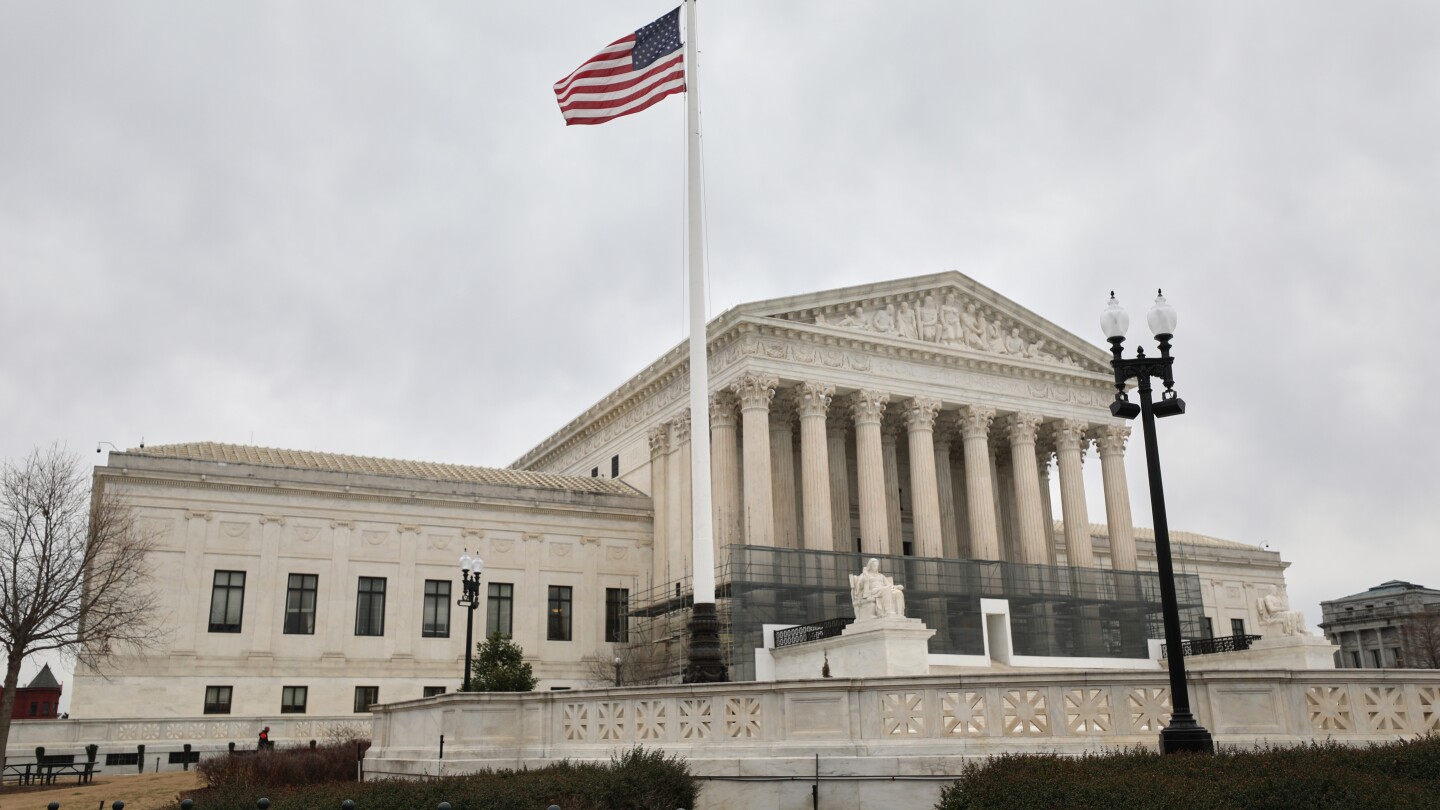
President Trump’s unprecedented bid to remove a Fed governor has reached the Supreme Court, raising critical questions about central bank independence and executive power. The high court is hearing arguments Wednesday over Trump’s effort to oust Federal Reserve governor Lisa Cook based on allegations of mortgage fraud—charges she firmly denies.
This case marks the first time in the Federal Reserve’s 112-year history that a president has attempted to fire a sitting Fed governor. Critics suggest Trump’s true motivation is to gain greater control over U.S. monetary policy, aiming to force interest rates lower to reduce government borrowing costs and address voter concerns about economic affordability.
The timing is significant as Fed Chair Jerome Powell and the board cut a key interest rate three times consecutively in the final months of 2025, though at a pace slower than Trump desires. The Fed has indicated it may pause rate cuts in coming months, citing inflation concerns—a stance that has reportedly frustrated the president.
Powell himself is expected to attend the Supreme Court proceedings as justices consider the Trump administration’s emergency request to remove Cook while her legal challenge plays out. Lower courts have thus far allowed her to remain in her position as one of seven central bank governors.
The stakes are particularly high for Fed governance. If Trump succeeds in removing Cook, the first Black woman to serve on the Fed’s governing board, and appoints her replacement, he would have installed four of the seven board members. Cook was appointed in 2022 by President Joe Biden.
“This case is about much more than Cook,” said Columbia University law professor Lev Menand, who has joined a brief supporting Cook. “It’s about whether President Trump will be able to take over the Federal Reserve board in the coming months.”
The potential threat to Fed independence has prompted unprecedented intervention from former Fed chairs Alan Greenspan, Ben Bernanke, and Janet Yellen, who joined five former Treasury secretaries from both political parties in warning that Cook’s immediate removal “would expose the Federal Reserve to political influences, thereby eroding public confidence in the Fed’s independence and jeopardizing the credibility and efficacy of U.S. monetary policy.”
Economists caution that a politicized Fed responding to presidential pressure would undermine its anti-inflation credibility, potentially forcing investors to demand higher rates before investing in U.S. Treasuries.
The tension between Trump and the Fed has escalated dramatically in recent months. The Justice Department has opened a criminal investigation of Powell and served the central bank with subpoenas. Powell took the unusual step of publicly responding, characterizing the threat of criminal charges as “pretexts” masking Trump’s frustration over interest rate policy.
In Cook’s case, Trump isn’t asserting he can fire Fed governors at will. The allegations stem from claims that Cook declared two properties—one in Michigan and another in Georgia—as “primary residences” in mid-2021 before joining the Fed. Such declarations can result in lower mortgage rates and down payments than for rental or vacation properties.
Cook has vigorously denied wrongdoing. Her lawyer, Abbe Lowell, wrote that the case largely rests on “one stray reference” in a mortgage document that was “plainly innocuous in light of the several other truthful and more specific disclosures” about her properties.
U.S. District Judge Jia Cobb ruled the Trump administration failed to satisfy the legal requirement that Fed governors can only be fired “for cause,” which she interpreted as limited to misconduct while in office. A federal appeals court in Washington upheld this decision with a 2-1 vote.
The Supreme Court now faces a consequential decision weighing executive authority against central bank independence. Solicitor General D. John Sauer argues Cook was lawfully fired after Trump concluded “the American people should not have their interest rates determined by someone who made misrepresentations” regarding her mortgages.
Cook’s legal team, led by conservative lawyer Paul Clement, contends her fate shouldn’t be determined by “untested allegations” before any facts are established, and that she should remain in her position while her case proceeds.
As the justices deliberate, their decision will have far-reaching implications for monetary policy independence and the delicate balance of power between the presidency and supposedly independent government institutions.
Fact Checker
Verify the accuracy of this article using The Disinformation Commission analysis and real-time sources.

10 Comments
This case raises complex issues around the appropriate limits of presidential authority. While the President should have some oversight, outright dismissal of Fed governors for political reasons could dangerously undermine the Fed’s ability to fulfill its mandate.
I agree, the Fed’s independence is critical. Allowing the President to remove governors at will could open the door to undue influence over monetary policy decisions, which could have severe economic consequences for the country.
I’m curious to see how the Supreme Court rules on this case. The President’s attempt to oust a Fed governor over alleged mortgage fraud seems like a politically motivated move to exert more control over monetary policy. Will the justices uphold the Fed’s independence?
That’s a good question. The decision could have far-reaching implications for the future of central bank autonomy in the US. It will be interesting to see how the Court navigates this delicate balance between executive power and institutional independence.
While the President may be frustrated with the Fed’s pace of interest rate adjustments, attempting to remove a governor over unsubstantiated allegations of mortgage fraud seems like a clear attempt to exert political control. The Supreme Court must carefully weigh the separation of powers at stake.
The timing of this case is noteworthy, coming as the Fed is navigating a tricky path of interest rate adjustments to address inflation concerns. Preserving the central bank’s autonomy is essential, even as the President may seek to influence its actions for political gain.
This case highlights the importance of the Fed’s independence from political influence. Maintaining the central bank’s ability to set monetary policy based on economic factors, rather than electoral concerns, is crucial for stability and public trust.
You raise a good point. Allowing the executive branch to remove Fed governors at will could undermine the Fed’s credibility and its ability to make tough but necessary decisions for the country’s long-term economic health.
This is a significant test for the Supreme Court in upholding the integrity of the Federal Reserve system. Their ruling will set an important precedent regarding the limits of presidential power over the central bank’s decision-making.
Absolutely. The Court’s decision will have far-reaching implications for the future of monetary policy and the ability of the Fed to function as an independent institution, free from undue political interference.