


Listen to the article
Supreme Court Signals Support for Federal Reserve’s Independence in Trump Removal Case
The Supreme Court appeared ready to deliver a significant legal setback to President Donald Trump on Wednesday, as justices expressed strong support for Federal Reserve Governor Lisa Cook remaining in her position despite presidential efforts to remove her.
During nearly two hours of oral arguments in a packed courtroom, a majority of justices seemed to agree that the Federal Reserve’s unique public-private hybrid structure limits presidential removal powers to situations with clear “cause” — a standard they suggested Trump had not met in his attempt to dismiss Cook over alleged mortgage fraud.
“Let’s talk about the real-world downstream effects of this,” said Justice Brett Kavanaugh, who has typically been a strong defender of executive power. “If this were set as a precedent, it seems to me just thinking big picture, what goes around, comes around. All the current president’s appointees would likely be removed for cause on January 20th, 2029 — if there’s a Democratic president or January 20th, 2033. And then, we’re really at at-will removal.”
The case centers on whether Trump has broad unilateral executive authority to fire Federal Reserve leadership despite the central bank’s special status as an independent federal agency designed to be insulated from political pressure.
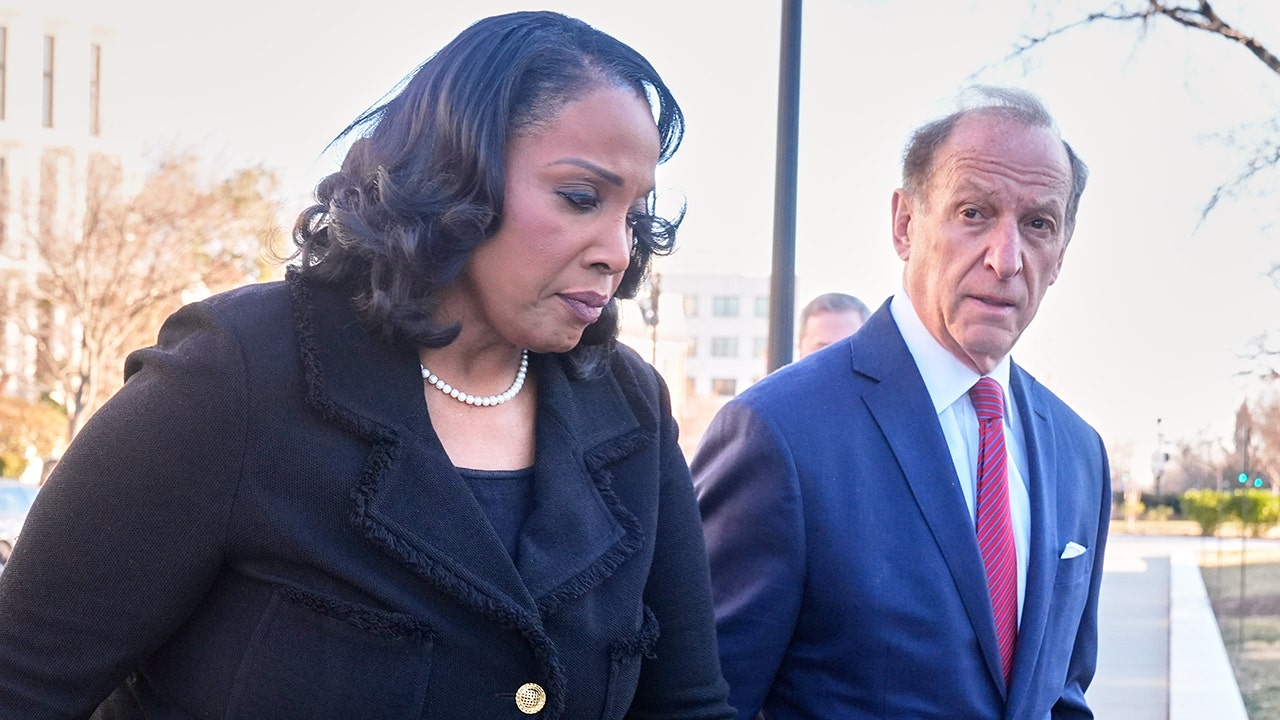
Fed Chairman Jerome Powell attended the hearing in a show of support for Cook, as Trump has also sought to remove him in what many observers describe as a broader feud with the agency over the pace of interest rate cuts. Cook, the first Black woman to serve as a Fed governor, claims to be a political pawn in Trump’s public efforts to dictate the board’s monetary policy.
The government has asked the Supreme Court to allow Cook’s dismissal on an emergency basis while the full case proceeds through the courts — a process that could take months. However, multiple justices questioned why the case was being handled “in such a hurried manner” and expressed concern that allegations against Cook had not been properly adjudicated.
“Why are you afraid of a hearing?” Justice Amy Coney Barrett asked the government’s lawyers at one point.
The justices also focused extensively on what constitutes legitimate “cause” for removal under the Federal Reserve Act, with several suggesting that making mistakes on a mortgage application might not meet the threshold of “inefficiency, neglect or malfeasance” required by law.
“The question becomes, is it grossly negligent to make a mistake on a mortgage application?” asked Justice Sonia Sotomayor.
Cook strongly denies accusations that she falsely claimed two homes in Georgia and Michigan as primary residences to secure better mortgage terms. She has not been charged with any crime and sued the administration last August to retain her position.
The Federal Reserve’s unique structure featured prominently in the court’s considerations. Created by Congress in 1913 as an independent entity, the Fed was specifically designed to operate free from political influence. Though its leaders are appointed by the president and confirmed by the Senate, the seven-member board makes monetary policy decisions without requiring presidential or legislative approval.
The central bank also does not receive federal funding and operates with 12 regional Federal Reserve Banks set up as private corporations across the country. Fed governors serve 14-year terms that span multiple presidential administrations, further insulating them from political pressure.
No president has fired a sitting Fed governor in the law’s 112-year history, making this case a potential landmark in defining presidential powers over independent agencies.
In a statement after the hearing, Cook said her case is “about whether the Federal Reserve will set key interest rates guided by evidence and independent judgment or will succumb to political pressure.”
Financial markets and the broader business community are closely watching the outcome, as it could have significant implications for the Fed’s independence and monetary policy. The next Federal Open Market Committee meeting, where both Powell and Cook are expected to participate, is scheduled for January 27-28.
The Supreme Court could either settle the constitutional questions now or provide guidance to lower courts while allowing the case to continue. A decision could come within weeks or potentially as late as June or July.
Fact Checker
Verify the accuracy of this article using The Disinformation Commission analysis and real-time sources.

16 Comments
The potential downstream effects of weakening Fed independence, as Justice Kavanaugh noted, are concerning. This ruling could have far-reaching implications for economic policymaking.
Exactly, maintaining the Fed’s nonpartisan status is critical. Kudos to the court for recognizing the importance of that principle.
This case is a test of the boundaries of presidential power over independent agencies. The court’s apparent reluctance to side with Trump suggests they value the Fed’s unique role.
Agreed. Upholding the Fed’s independence is crucial for preserving public trust in monetary policy decisions.
Interesting to see the Supreme Court lean towards preserving the Fed’s independence. This could have major implications for future presidential powers and the overall stability of economic institutions.
I agree, the court seems intent on limiting partisan influence over the Fed. This is an important precedent to uphold the central bank’s credibility.
The court’s skepticism towards Trump’s attempt to remove a Fed governor is a positive sign for the central bank’s continued independence. This could have ripple effects across the economy.
Absolutely. The justices seem to recognize the importance of maintaining the Fed’s nonpartisan status, which is essential for sound economic policymaking.
This case highlights the delicate balance between executive power and independent institutions. The court appears to be signaling it will defend the Fed’s autonomy.
Yes, the justices seem wary of setting a precedent that could lead to at-will removal of Fed governors by future administrations.
It will be interesting to see how this case is ultimately decided. The court’s skepticism towards Trump’s removal attempt suggests they value the Fed’s unique institutional role.
Agreed. The justices seem to understand the need to insulate the central bank from political pressures, even in challenging times.
The Fed’s unique structure does seem to warrant a higher bar for removal of its governors. Maintaining that insulation from politics is crucial for sound monetary policy.
Absolutely. The justices recognize the need to protect the Fed’s independence, even from presidential power swings.
This case highlights the ongoing tension between executive power and independent agencies. The court’s apparent stance is a win for the Fed’s credibility.
Definitely. Preserving the Fed’s autonomy is crucial for effective monetary policy and financial stability.