


Listen to the article
Supreme Court Rejects Trump’s Bid to Deploy National Guard in Chicago
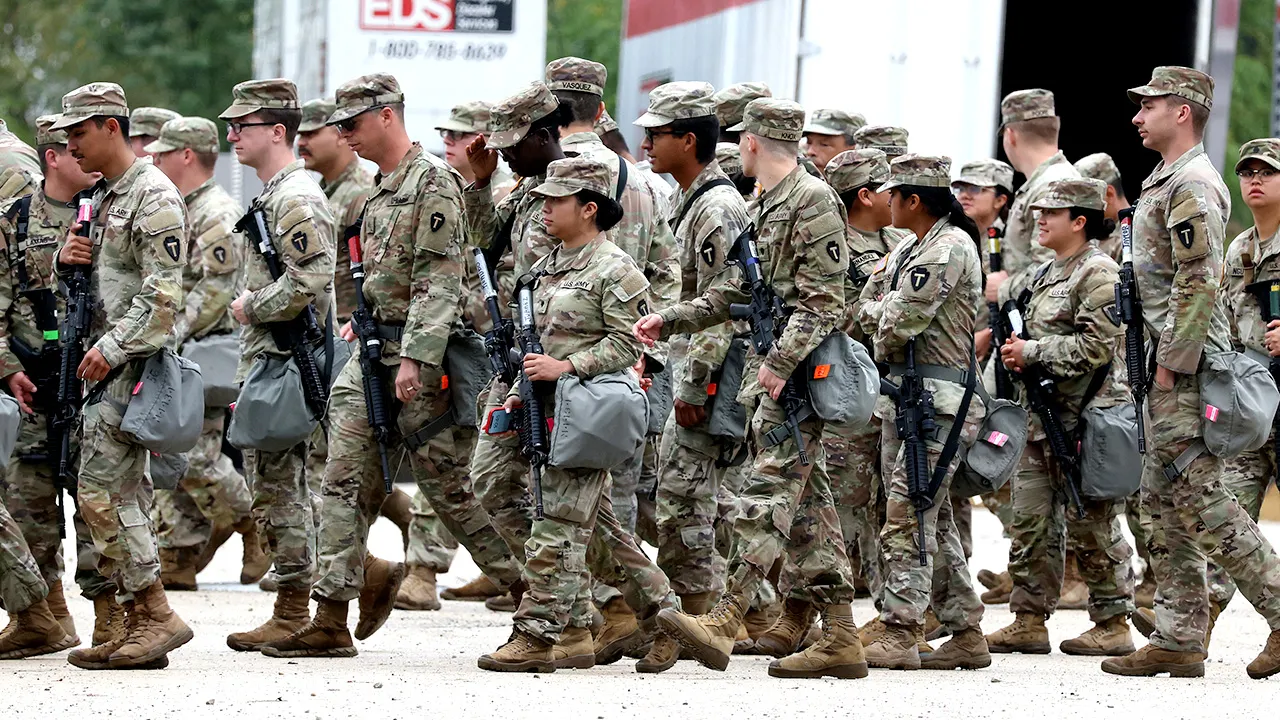
The Supreme Court has denied the Trump administration’s emergency request to deploy National Guard troops to Chicago, delivering a significant setback to the president’s efforts to expand federal military presence in Democratic-led cities.
In their ruling, the justices stated: “At this preliminary stage, the Government has failed to identify a source of authority that would allow the military to execute the laws in Illinois.” Three justices—Samuel Alito, Clarence Thomas, and Neil Gorsuch—publicly dissented from the majority opinion.
The high court’s decision upholds earlier rulings by U.S. District Judge April Perry and the 7th Circuit Court of Appeals, both of which had blocked the deployment. The Supreme Court took more than two months to issue its decision, marking a rare emergency appeal defeat for Trump since his return to office in January.
White House spokesperson Abigail Jackson indicated the administration would continue its broader enforcement agenda despite the ruling: “The President promised the American people he would work tirelessly to enforce our immigration laws and protect federal personnel from violent rioters. Nothing in today’s ruling detracts from that core agenda.”
Illinois Attorney General Kwame Raoul welcomed the court’s decision, noting the constitutional principles at stake: “Nearly 250 years ago, the framers of our nation’s Constitution carefully divided responsibility over the country’s militia, today’s U.S. National Guard, between the federal government and the states – believing it impossible that a president would use one state’s militia against another state.”
The administration’s Solicitor General D. John Sauer had argued in court filings that blocking the deployment risked “jeopardizing the lives and safety of DHS officers” and prevented officials from taking “reasonable and lawful measures” to protect federal agents from what he characterized as “violent resistance” in Chicago.
Illinois officials countered that the administration’s claims grossly overstated the situation on the ground. Their legal filings pointed to the lower court judge’s finding that the administration’s declarations about protests in Chicago and nearby Broadview were “unreliable” and exaggerated both the violence and difficulties law enforcement faced.
“As the district court found, state and local law enforcement officers have handled isolated protest activities in Illinois, and there is no credible evidence to the contrary,” Illinois lawyers argued in their Supreme Court filing.
The Supreme Court case is part of a broader pattern of Trump’s attempts to deploy National Guard troops in Democratic-led cities. This federalization push has encountered legal resistance in multiple jurisdictions, including Oregon, where U.S. District Judge Karin Immergut, a Trump appointee, described the president’s actions as “untethered to reality.” However, a three-judge panel of the 9th Circuit later stayed her order, allowing deployments to proceed in Portland.
Hina Shamsi, director of ACLU’s National Security Project, characterized the ruling as reinforcing that “domestic deployment of troops is rare and exceptional, and it was absolutely unjustified in Illinois.”
The legal disputes center on the interpretation of federal law governing the nationalization of state National Guard troops. Under 10 USC § 12406, presidents may federalize Guard units in cases of foreign invasion, “danger of a rebellion,” or when regular officers cannot enforce the law. Democrats contend Trump has failed to meet these criteria and is instead using exaggerated claims of violence as pretext to impose federal control in Democratic jurisdictions.
In Washington, D.C., where Trump has already deployed National Guard troops, the city’s attorney general suggested in a court filing that troops might remain through summer 2026. A federal judge is scheduled to hear updates on the status of these deployments on Friday.
The deployments have become a flashpoint in the ongoing national debate over federal versus state authority, law enforcement approaches, and appropriate responses to public demonstrations.
Fact Checker
Verify the accuracy of this article using The Disinformation Commission analysis and real-time sources.

12 Comments
This Supreme Court decision is a noteworthy check on the President’s ability to unilaterally deploy military forces for domestic law enforcement purposes. It will be interesting to see how the administration responds to this setback.
The dissenting justices’ views suggest there may still be legal avenues for the administration to explore, but the majority opinion has clearly established that the current proposal exceeds the President’s authority.
While I appreciate the administration’s stated goals of enforcing immigration laws and protecting federal personnel, the Supreme Court has rightly determined that the proposed National Guard deployment exceeds the President’s constitutional authority. A nuanced issue with valid concerns on both sides.
The administration seems undeterred and vows to continue pursuing its broader enforcement agenda. It will be interesting to see how they navigate this setback and adapt their strategies going forward.
The Supreme Court has drawn a firm line here, asserting that the President lacks the legal authority to send in the National Guard without a clear statutory basis. A significant check on executive power.
This ruling underscores the importance of the separation of powers and the courts’ role in scrutinizing claims of federal overreach, even in sensitive matters of national security and public order.
Interesting Supreme Court decision on the National Guard deployment to Chicago. I’m curious to see how this impacts the administration’s broader efforts to expand federal presence in Democratic-led cities.
The court’s ruling seems to uphold earlier decisions limiting the President’s ability to unilaterally deploy the military for law enforcement purposes. A noteworthy setback for the administration.
The Supreme Court’s rejection of the administration’s emergency request to deploy the National Guard in Chicago is a significant development. It underscores the importance of maintaining clear legal boundaries, even in matters of national security.
While the administration may continue pursuing its broader enforcement agenda, this ruling serves as a reminder that the President’s powers are not limitless and will be subject to judicial scrutiny.
This Supreme Court decision upholds the rule of law and the system of checks and balances, even in the face of a President seeking to expand federal power. A victory for constitutional principles.
The dissenting justices’ views suggest there may still be avenues for the administration to pursue similar deployments, though the majority opinion has firmly closed this particular door for now.