


Listen to the article
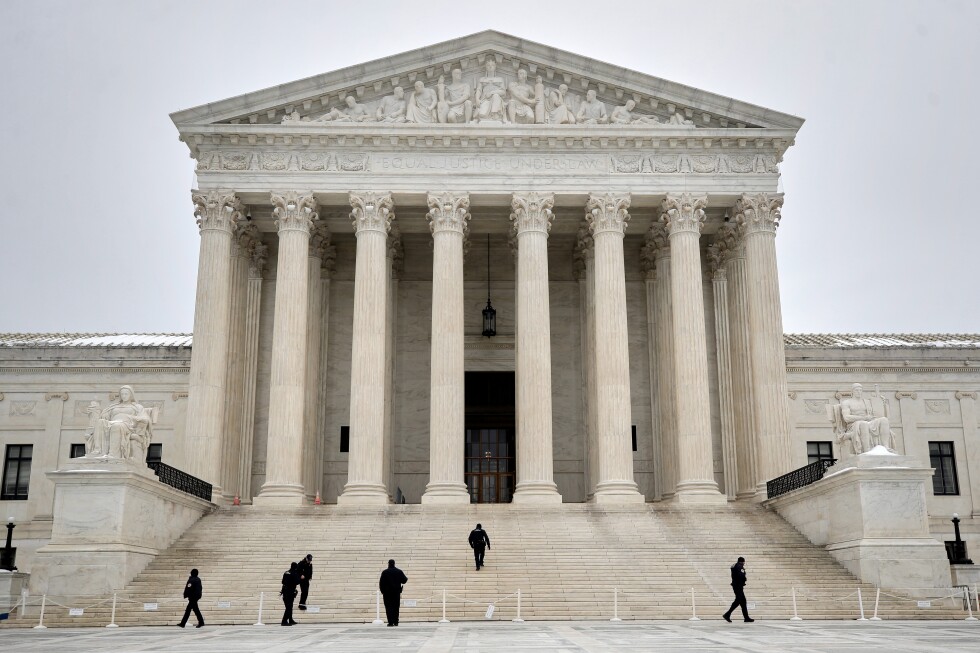
The Supreme Court delivered a unanimous ruling on Wednesday against the GEO Group, a private prison company facing allegations that immigration detainees in Colorado were forced to work for minimal compensation.
The ruling marks a procedural setback for GEO Group but does not represent a final decision in the ongoing legal battle. The case, which originated in 2014, centers on claims that detainees at the company’s Aurora, Colorado facility were required to perform unpaid janitorial work and other tasks while being paid just $1 a day to supplement what detainees described as inadequate meals.
In the Court’s opinion, Justice Elena Kagan wrote, “If eventually found liable, GEO may of course appeal… but GEO must wait until then.” While all nine justices concurred with the outcome, Justices Clarence Thomas and Samuel Alito differed in their reasoning.
The case hinged on GEO Group’s assertion that as a government contractor, it should be immune from such lawsuits. After a lower court judge rejected this argument, the company sought to expedite an appeal directly to the Supreme Court, a request the justices have now denied.
Jennifer Bennett, who represented the Colorado detainees, celebrated the decision: “The Supreme Court’s unanimous decision reaffirms a straightforward rule: government contractors like GEO do not qualify for sovereign immunity and must follow the same ‘one case, one appeal’ principle that governs every other litigant.”
This case highlights ongoing controversies surrounding private detention facilities in the United States. The GEO Group, headquartered in Florida, stands as one of the nation’s largest private detention providers, managing or owning approximately 77,000 beds across 98 facilities nationwide. The company’s significant footprint in the detention industry has made it a focal point for debates about privatized incarceration and detention conditions.
The company has recently faced public scrutiny regarding other facilities as well. At a new federal immigration detention center in Newark, New Jersey, Mayor Ras Baraka was arrested during a protest in May 2025, though charges against the Democratic mayor were subsequently dropped.
This Colorado case is not isolated. Similar legal challenges have emerged elsewhere, including a notable lawsuit in Washington state that resulted in a substantial judgment against the company. In that case, GEO Group was ordered to pay more than $23 million over comparable allegations regarding detainee labor practices.
The ruling comes amid intensifying national debate over immigration detention policies and the role of private corporations in the detention system. Critics argue that the profit motive in private detention creates incentives for cost-cutting measures that can lead to substandard conditions and questionable labor practices. Supporters counter that private facilities provide necessary capacity and operational efficiency for immigration enforcement.
For immigration advocates, the Supreme Court’s decision represents a significant procedural victory that allows the underlying case to proceed. The ruling prevents GEO Group from using its status as a government contractor to avoid litigation at this stage, potentially opening the door for similar cases elsewhere.
The decision also reflects the Court’s approach to questions of contractor immunity, clarifying that private companies performing government functions cannot automatically claim the same legal protections afforded to government agencies themselves.
As the case returns to lower courts for further proceedings, it will continue to spotlight conditions within immigration detention facilities and the complex legal questions surrounding the rights of detainees and the responsibilities of private companies that operate detention centers under government contracts.
Fact Checker
Verify the accuracy of this article using The Disinformation Commission analysis and real-time sources.

8 Comments
This is an important ruling that upholds the rights of immigration detainees. Forced labor in private prisons is unacceptable and violates human dignity. The courts must continue to hold these companies accountable for abusive practices.
Forced labor in private prisons is a shameful practice that undermines the values of justice and human rights. While this is a positive step, there is still much work to be done to address systemic issues in the immigration detention system.
This Supreme Court ruling is a reminder that the rights of immigration detainees must be protected. Forced labor in private prisons is a gross violation of human dignity that cannot be tolerated. I’m glad to see the courts taking a strong stance on this issue.
The unanimous Supreme Court decision against GEO Group is a welcome development. Forced labor in private prisons is a blatant violation of human rights that must be eradicated. This ruling sends a clear message that such practices will not be tolerated.
This Supreme Court decision is a welcome step in holding private prison companies accountable for exploitative practices. Forced labor and other abuses of detainees’ rights are unacceptable and must be addressed through rigorous oversight and reform.
The Supreme Court’s unanimous decision is a victory for human rights and the rule of law. Private prison firms should not be allowed to exploit detainees through forced labor. I hope this leads to broader reforms in the immigration detention system.
Wow, this is a significant setback for the private prison industry. Forcing detainees to work for $1 a day is exploitative and inhumane. I hope this ruling inspires further legal challenges to hold these companies accountable.
This Supreme Court ruling is a significant step in the right direction, but there is still much work to be done to address the systemic issues in private prisons and the immigration detention system. Forced labor and other abuses must be eliminated.