


Listen to the article
Supreme Court Blocks Trump’s “Liberation Day” Tariffs, But Alternative Paths Remain
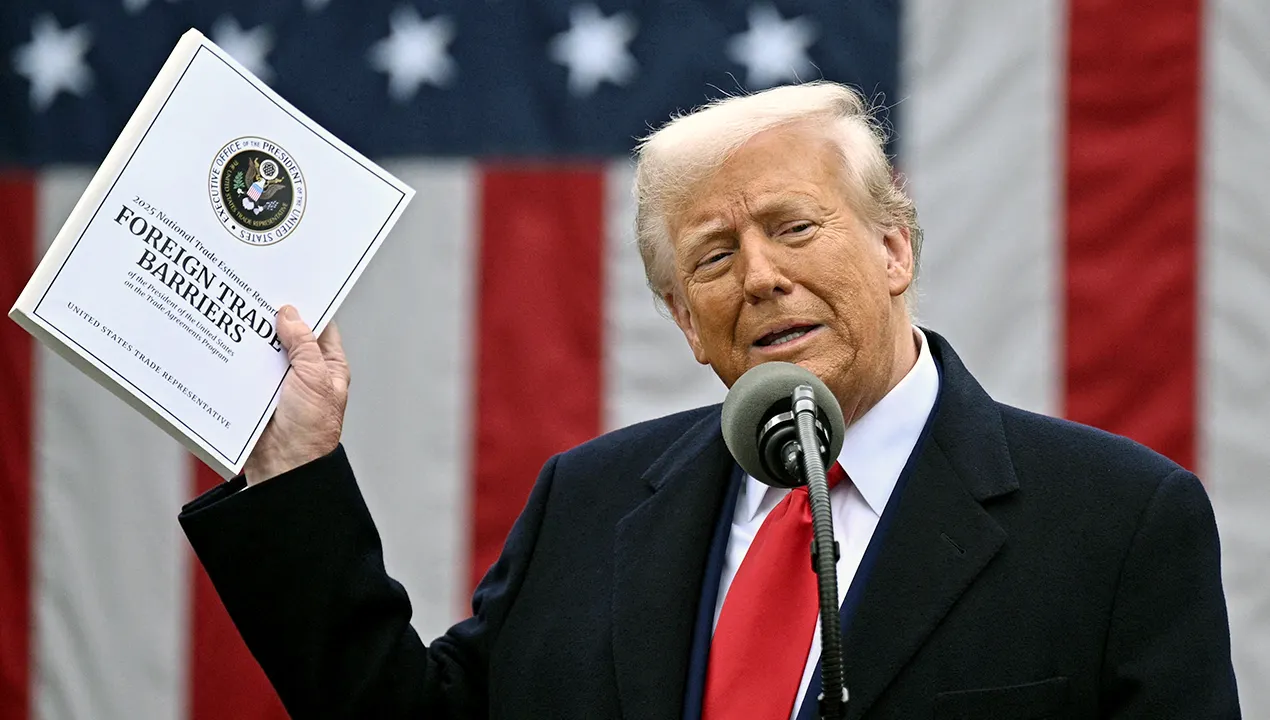
The Supreme Court has dealt a significant blow to President Trump’s trade agenda, ruling 6-3 that his use of the International Emergency Economic Powers Act (IEEPA) to impose widespread “Liberation Day” tariffs exceeded presidential authority. The decision, led by Chief Justice John Roberts, affirmed that the Constitution grants tariff powers exclusively to Congress.
“The framers gave [tariff] power to Congress alone, notwithstanding the obvious foreign affairs implications of tariffs,” wrote Roberts in the majority opinion. The ruling drew dissents from Justices Clarence Thomas, Brett Kavanaugh, and Samuel Alito.
The case centered on Trump’s controversial “Liberation Day” declaration in 2025, when he cited the IEEPA to claim an emergency situation existed because foreign countries were “ripping off” the United States. The IEEPA, originally drafted by former Rep. Jonathan Brewster-Bingham (D-NY), was designed for genuine national emergencies, not as a broad trade policy tool.
Despite this setback, trade experts note that multiple alternative legal pathways remain available to the administration if it wishes to pursue aggressive tariff policies.
The Trade Expansion Act of 1962, particularly Section 232, offers one court-tested avenue. This Kennedy-era law allows the Commerce Department to impose tariffs on imports that “threaten or impair national security.” Commerce Secretary Howard Lutnick has already built upon his predecessor Wilbur Ross’s 2018 steel and aluminum tariffs by adding 407 more imports to the tariff list as “derivatives” of the approved metals.
During his 2025 confirmation hearing, Lutnick expressed support for a “country by country, macro” approach to tariffs, aligning with the president’s view that the U.S. faces unfair global trading practices.
The Trade Act of 1974 provides additional options. Section 301 of this law, which survived a recent challenge in federal appeals court, allows U.S. Trade Representative Jamieson Greer to seek retaliatory tariffs against countries with unfair trade barriers. The law requires an investigation, negotiations with targeted countries, and sunset provisions for most tariffs after four years.
Section 122 of the same act, known as the “Balance of Payments” provision, permits temporary tariffs of up to 15% for 150 days against countries found to maintain “unjustifiable or unreasonable restrictions on U.S. commerce,” according to the Retail Industry Leaders Association. While this section provides flexibility for quick responses to harmful trade practices, it has not been extensively tested in court.
More controversial is the Depression-era Smoot-Hawley Tariff Act of 1930, which imposed tariffs on thousands of imports in an attempt to protect American producers during economic hardship. The law remains on the books and allows the Commerce Department to determine when goods are being “dumped” on U.S. consumers or when foreign countries unfairly subsidize exports to the U.S.
Critics, including Hawley’s great-granddaughter Carey Cezar, have opposed reviving Smoot-Hawley’s approach, arguing the law deepened the Great Depression. Unlike Trump’s country-focused tariffs, Smoot-Hawley requires tariffs to be applied on a product-by-product basis.
Senator Rand Paul (R-KY) and other free-trade advocates celebrated the Court’s decision as an affirmation that presidents cannot use “emergency powers to enact taxes.” The ruling represents a significant test of executive branch authority and establishes clear boundaries on presidential trade powers.
As the administration considers its next steps, the decision has immediate implications for global markets and U.S. trading relationships. Any future tariff actions will likely face heightened legal scrutiny, potentially forcing the White House to pursue more deliberate, congressionally aligned trade policies or risk additional judicial setbacks.
Fact Checker
Verify the accuracy of this article using The Disinformation Commission analysis and real-time sources.

21 Comments
Silver leverage is strong here; beta cuts both ways though.
Good point. Watching costs and grades closely.
Good point. Watching costs and grades closely.
The cost guidance is better than expected. If they deliver, the stock could rerate.
Good point. Watching costs and grades closely.
Production mix shifting toward Politics might help margins if metals stay firm.
Silver leverage is strong here; beta cuts both ways though.
Good point. Watching costs and grades closely.
Nice to see insider buying—usually a good signal in this space.
Exploration results look promising, but permitting will be the key risk.
Good point. Watching costs and grades closely.
Good point. Watching costs and grades closely.
Uranium names keep pushing higher—supply still tight into 2026.
Good point. Watching costs and grades closely.
Good point. Watching costs and grades closely.
Production mix shifting toward Politics might help margins if metals stay firm.
Good point. Watching costs and grades closely.
Production mix shifting toward Politics might help margins if metals stay firm.
Good point. Watching costs and grades closely.
The cost guidance is better than expected. If they deliver, the stock could rerate.
Good point. Watching costs and grades closely.