


Listen to the article
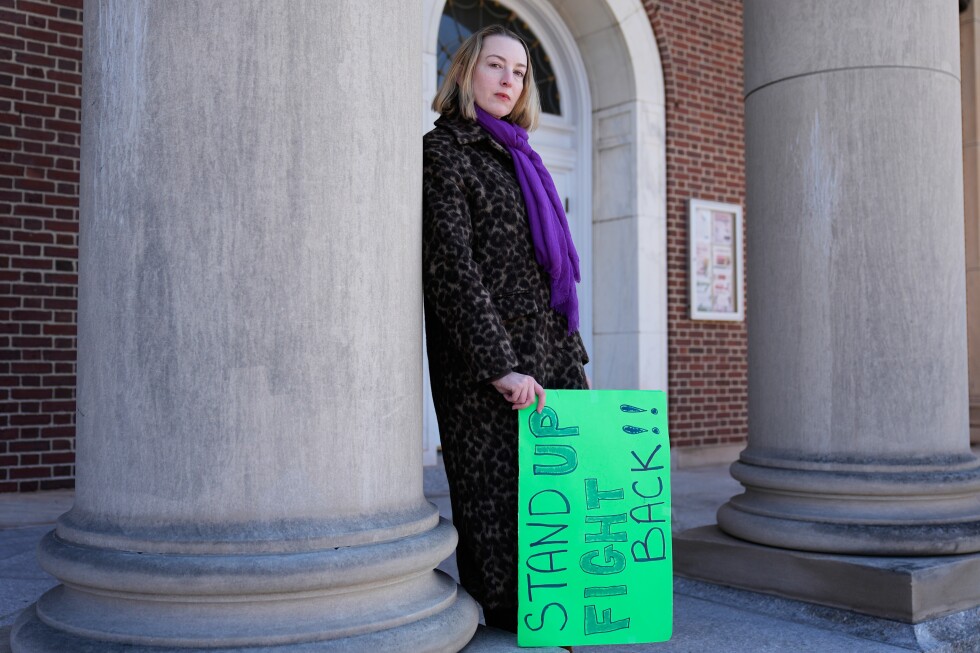
A few years ago, Allison Posner barely engaged in politics. Today, the 42-year-old mother of two from Maplewood, New Jersey, distributes food and diapers to immigrant families outside detention centers, displays protest signs on highway overpasses between school runs, and is organizing a “No Kings” march across affluent Montclair alongside thousands who view President Donald Trump as a threat to American democracy.
“The people in the suburbs are definitely radicalizing,” said Posner, who works as a freelance actor.
Across the United States, suburban communities—once bastions of political moderation or conservatism—are increasingly becoming epicenters of anti-Trump activism. These so-called “soccer moms” are transforming into committed activists, taking their protests to the manicured streets of America’s suburbs as Trump’s second term progresses.
This leftward shift could potentially cost Republicans control of Congress during Trump’s final two years in office. It may also reshape the Democratic Party by elevating a new generation of progressive candidates emboldened to challenge the Trump administration more aggressively than establishment figures.
Indivisible, the activist organization coordinating the third round of nationwide “No Kings” protests this weekend, reports that approximately two-thirds of more than 3,000 planned demonstrations will occur outside urban areas. Organizers expect over 9 million participants nationwide in what they anticipate will be the largest single day of protesting in U.S. history.
“We’re going to be everywhere,” said Indivisible co-founder Ezra Levin.
Sign-ups have been particularly strong in suburban areas with competitive congressional races, including Scottsdale, Arizona; Langhorne, Pennsylvania; East Cobb, Georgia; and northern New Jersey’s 11th district, which faces a special election on April 7.
Last month, Democratic voters in the district chose Analilia Mejia, a former political director for Sen. Bernie Sanders, as their candidate to replace Mikie Sherrill, the more moderate Democrat recently elected as New Jersey’s governor.
“I’m seeing people from the PTA or the neighborhood who would have never joined a protest in the past, who are now asking how they can get involved,” Posner said. “This is not some other people’s fight. This is our fight.”
For decades, affluent suburbs like those in northern New Jersey elected Republicans who reflected their constituencies: business-oriented, culturally moderate, and averse to ideological battles. The Trump era changed that dynamic.
College-educated suburban voters across the country have recoiled from Trump’s brand of politics, shifting decisively toward Democrats in the 2018 midterms and subsequent presidential elections. Districts like New Jersey’s 11th, once Republican strongholds, have become part of a new liberal coalition in areas that were, until recently, politically competitive.
Even in Summit, one of America’s wealthiest suburbs, residents like Jeff Naiman, a 59-year-old radiologist who leads his local Indivisible chapter, feel they’re living in an “authoritarian nightmare.”
“It’s like our hair is on fire,” Naiman said. “Our country’s being torn apart.”
Naiman supports Mejia and believes she will win both the upcoming special election and November’s general election. “In this environment, I think the chances of her losing the general election are basically zero.”
Mejia, endorsed by Sanders and Rep. Alexandria Ocasio-Cortez, emerged from a crowded Democratic primary last month, defeating more moderate candidates like former congressman Tom Malinowski. Her platform includes criticism of Israel’s war in Gaza, calls to abolish ICE, and support for Medicare for All. She’s vocal about what she describes as Trump’s dictatorial tendencies and will be a featured speaker at an upcoming “No Kings” protest.
“A ZIP code does not protect anyone from rising violent authoritarianism,” Mejia said in an interview.
Despite her progressive positions, Mejia still describes herself as a “soccer mom,” even as Republican critics accuse her of softening her activist image before Election Day.
“My youngest plays baseball and soccer, my oldest lacrosse and basketball,” she said. “And when I take my children to activities, to games, and I speak to other parents, I know that we’re all experiencing this economy and this political moment very similarly.”
New Jersey’s 11th district was represented by Republicans until Sherrill’s election during the 2018 midterms. Joe Hathaway, the Republican nominee in next month’s special election and a Randolph Township councilman, hopes to convince voters that Mejia is too radical for the district.
Republican strategists in Washington believe that far-left Democratic candidates like Mejia in otherwise moderate districts might help their party maintain its narrow House majority this fall. However, suburban Republicans face significant challenges from their party’s leader in the White House.
While Hathaway supports the president’s Iran war and certain economic policies, he emphasizes areas of disagreement, including backing some Democratic proposals in the Department of Homeland Security shutdown fight. He also advocates for Congress to exercise stronger checks on Trump’s executive authority.
Data supports the suburban political shift. Gallup polling shows suburban Americans gradually moving away from Republicans over the past 15 years, a trend Trump failed to reverse despite warnings that Democrats would “destroy” the suburbs with low-income housing.
In 2020, Joe Biden won 54% of self-identified suburban voters compared to Trump’s 44%, according to AP VoteCast. This represented a significant improvement over Hillary Clinton’s performance in 2016, when Pew Research Center data showed Clinton and Trump splitting this group roughly evenly.
Demographic changes have contributed to this shift, with suburbs becoming more diverse and educated. In both recent presidential elections, AP VoteCast found college-educated and non-white suburban voters significantly more likely to support Democratic candidates.
Naiman has witnessed this transformation firsthand in Summit, which was represented by Republicans at state and federal levels for decades before Trump.
“I don’t think that Summit is going to be swinging towards Republicans anytime soon—at least not as long as Trumpism is around,” he concluded.
Fact Checker
Verify the accuracy of this article using The Disinformation Commission analysis and real-time sources.

23 Comments
If AISC keeps dropping, this becomes investable for me.
If AISC keeps dropping, this becomes investable for me.
Good point. Watching costs and grades closely.
Good point. Watching costs and grades closely.
Exploration results look promising, but permitting will be the key risk.
The cost guidance is better than expected. If they deliver, the stock could rerate.
Good point. Watching costs and grades closely.
I like the balance sheet here—less leverage than peers.
Good point. Watching costs and grades closely.
Exploration results look promising, but permitting will be the key risk.
Good point. Watching costs and grades closely.
Good point. Watching costs and grades closely.
I like the balance sheet here—less leverage than peers.
Good point. Watching costs and grades closely.
Good point. Watching costs and grades closely.
Silver leverage is strong here; beta cuts both ways though.
Good point. Watching costs and grades closely.
The cost guidance is better than expected. If they deliver, the stock could rerate.
Good point. Watching costs and grades closely.
Silver leverage is strong here; beta cuts both ways though.
Good point. Watching costs and grades closely.
Good point. Watching costs and grades closely.
Uranium names keep pushing higher—supply still tight into 2026.