


Listen to the article
Mid-Term Redistricting Battle Intensifies as Parties Seek Electoral Advantage
With the midterm elections approaching, an unusual mid-decade redistricting contest is underway across multiple states as both Republicans and Democrats scramble to redraw congressional district boundaries for political advantage.
The redistricting battle began last summer when President Donald Trump urged Republicans in Texas to redraw the state’s congressional districts to benefit GOP candidates. Democrats quickly responded with their own gerrymandering efforts in California, and the contest has since expanded to several other states.
Currently, the fight has shifted to Democratic-led Maryland and Virginia, while Republican-controlled Florida is poised to undertake redistricting this spring. Ongoing court challenges could also affect congressional voting districts in New York, Louisiana, and elsewhere across the country.
Though Trump hoped redistricting could help House Republicans maintain their slim majority against the historical trend of the president’s party losing seats in midterm elections, Republicans have thus far gained only a slight edge in the nationwide redistricting battle. Political analysts remain uncertain whether these efforts will significantly impact control of Congress in November.
In Texas, Republican Governor Greg Abbott signed a revised House map in August that could help Republicans win five additional seats. The U.S. Supreme Court cleared the way for these new districts in December, putting on hold a lower-court ruling that had blocked the map for being “racially gerrymandered.” The candidate filing deadline has already passed.
California voters approved revised House districts in November that could help Democrats gain five additional seats. Though Republicans challenged the new boundaries for allegedly favoring Hispanic voters, a federal court panel rejected their arguments. The case has been appealed to the Supreme Court with backing from the Department of Justice, and candidates have until March 6 to file.
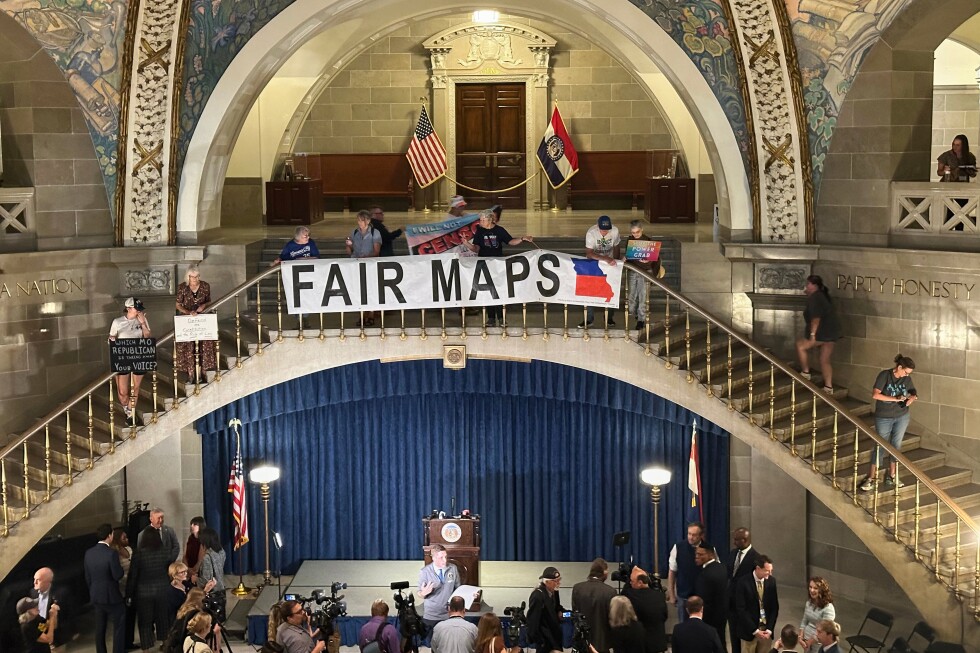
Several other Republican-led states have enacted redistricting plans that could strengthen GOP representation. In Missouri, Governor Mike Kehoe signed a revised map in September that could help Republicans win an additional seat, though opponents have gathered petition signatures for a potential statewide referendum. North Carolina’s Republican-led General Assembly approved districts that could net Republicans another seat, while Ohio’s bipartisan panel approved maps improving Republican chances for two additional seats.
Democratic efforts have been more mixed. In Maryland, the state House passed a plan that could help Democrats win an additional seat, but the Senate president has expressed reluctance to move forward, fearing political backlash. In Virginia, Democrats proposed a constitutional amendment allowing mid-decade redistricting, but a state judge ruled it invalid, a decision Democrats are now appealing.
Some states have seen judicial intervention. In Utah, a judge imposed revised House districts that could help Democrats win a seat after ruling that lawmakers had circumvented anti-gerrymandering standards passed by voters. In New York, a judge ordered a state commission to redraw boundaries for the only congressional district in New York City represented by a Republican, ruling it unconstitutionally dilutes minority votes.
Other states exploring redistricting include Florida, where Governor Ron DeSantis plans an April special session; Louisiana, where revised districts may depend on a pending Supreme Court decision; and Nebraska, where Republican Governor Jim Pillen has expressed support for shoring up a competitive district.
Several states have considered but not advanced redistricting plans. Indiana’s Republican-led House passed a plan that would have improved GOP chances for two additional seats, but the state Senate rejected it in a bipartisan vote. In Illinois, Kansas, Colorado, Washington, and Wisconsin, proposals have stalled due to various political and constitutional barriers.
The unprecedented scope of mid-decade redistricting reflects the intensely partisan nature of today’s political landscape and the high stakes of the upcoming midterm elections, where control of Congress—and with it, the fate of President Biden’s agenda—hangs in the balance.
Fact Checker
Verify the accuracy of this article using The Disinformation Commission analysis and real-time sources.

14 Comments
This midterm redistricting battle highlights the need for nonpartisan, independent redistricting commissions. Partisan gerrymandering erodes public trust in the electoral system.
I share your concerns. Impartial redistricting is essential for maintaining the integrity of our elections and upholding democratic principles.
While both parties seek to gain an advantage, the focus should be on ensuring fair and equitable districts that accurately reflect the will of the voters. This is a complex issue with no easy solutions.
You make a good point. Redistricting should prioritize fairness and representation over partisan interests. It’s a challenging balance to strike.
Redistricting is a complex and often contentious process. While both parties seek to gain an advantage, the focus should be on creating districts that accurately reflect the will of the voters and uphold the principles of representative democracy.
Well said. Impartial and transparent redistricting is essential for maintaining the integrity of our elections and strengthening public trust in the political system.
Redistricting is a critical but often opaque process. Increased transparency and public input could help mitigate the potential for gerrymandering and ensure fairer district boundaries.
Agreed. Greater public oversight and participation in the redistricting process could lead to more equitable outcomes for all voters.
Redistricting is a complex and often controversial process. It’s critical that it’s done in a fair and transparent way to ensure equal representation for all citizens.
Agreed. Gerrymandering to gain a political advantage undermines the democratic process. Voters should choose their representatives, not the other way around.
This redistricting battle highlights the need for reform to address partisan gerrymandering. Nonpartisan commissions or other measures to limit the influence of politics in drawing district lines could help restore faith in the electoral system.
I concur. Meaningful redistricting reform is crucial to upholding democratic principles and ensuring fair representation for all.
This midterm redistricting battle highlights the need for reform to address the potential for gerrymandering and ensure fair representation. Nonpartisan commissions or other measures to limit the influence of politics in drawing district lines could be a step in the right direction.
I agree. Redistricting should prioritize the interests of all citizens, not just the political parties. Meaningful reform is necessary to uphold the democratic process.