


Listen to the article
Western States Miss Second Deadline in Colorado River Water Negotiations
The seven Western states that rely on the Colorado River failed to reach an agreement for the second time on measures to address record drought and water shortages as the Saturday deadline passed. The impasse highlights growing tensions between Upper and Lower Basin states over how to share responsibility for conservation efforts.
Governors from the Lower Basin states of Arizona, California, and Nevada released a joint statement calling on their Upper Basin counterparts—Colorado, New Mexico, Utah, and Wyoming—to make additional concessions in the negotiations.
“The Colorado River is essential to our communities and economies, and our states have conserved large volumes of water in recent years to stabilize the basin’s water supplies for years to come,” said Governors Katie Hobbs, Gavin Newsom, and Joe Lombardo. “Our stance remains firm and fair: all seven basin states must share in the responsibility of conservation.”
The Lower Basin states have proposed significant reductions in their Colorado River allocations, with Arizona offering a 27% cut, Nevada 17%, and California 10%. However, these proposals have not been enough to bridge the gap with Upper Basin states.
Colorado Senator John Hickenlooper, who previously helped negotiate a river contingency plan in 2019 as governor, described the situation as “dire,” particularly pointing to Colorado’s low snowpack this year.
“If we don’t address this problem together –- head-on and fast –- our communities, farms, and economies will suffer. The best path forward is the one we take together. Litigation won’t solve the problem of this long-term aridification,” Hickenlooper said.
John Entsminger, general manager of the Southern Nevada Water Authority, expressed frustration over the lack of progress. “The actions we have taken over the past two-plus decades are less about raising Lake Mead’s elevation than they are about protecting ourselves if things go from bad to worse,” he stated.
This marks the second missed deadline in the negotiations, following a previous November deadline set by the U.S. Bureau of Reclamation for devising a strategy to address water shortages after current guidelines expire this year.
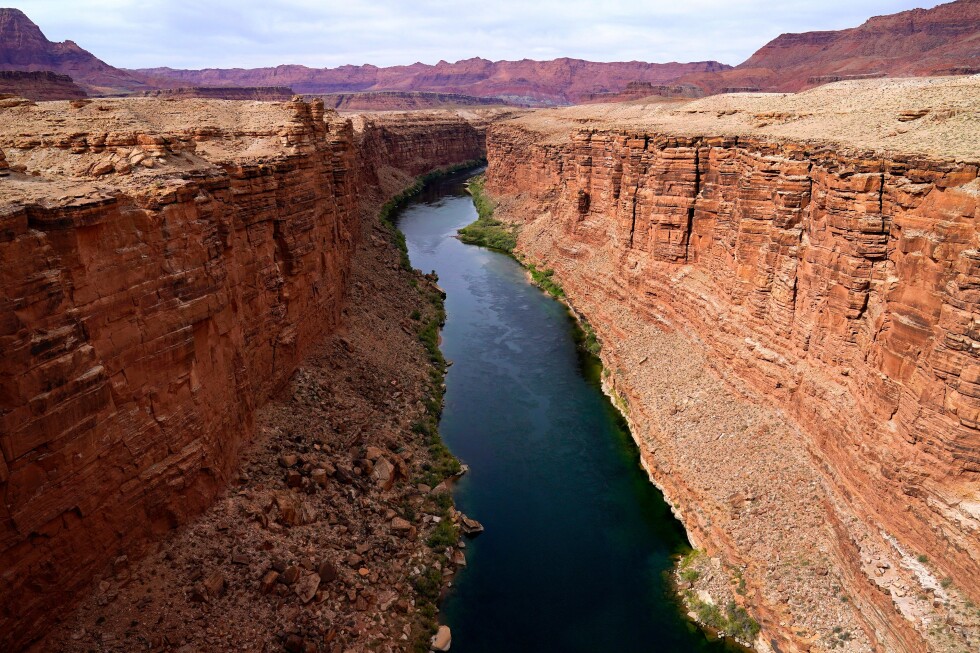
The Colorado River serves as a critical water source for over 40 million people across the seven states, Mexico, and Native American tribes. It provides essential water for agriculture and supplies water and electricity to millions of homes and businesses throughout the region. The river system begins with mountain snowfall in the Upper Basin states, which naturally collect more water than they use, while the Lower Basin states, with their extensive agricultural operations, consume significantly more.
Major urban centers including Denver, Salt Lake City, Albuquerque, Las Vegas, Phoenix, and Los Angeles depend heavily on the river’s water. However, decades of overuse, persistent drought conditions, and rising temperatures linked to climate change have dramatically reduced water flows.
The allocation and conservation of water, particularly during drought periods, have been central to interstate agreements for nearly a century. However, the original 1922 Colorado River Compact was based on water availability that no longer exists in today’s climate conditions, especially given the long-term drought affecting the region.
The current negotiations have been ongoing for more than two years. Without a consensus among the seven states, the federal government may be forced to intervene with its own plan, a scenario that could leave all parties dissatisfied and potentially trigger litigation.
Recent scientific data underscores the urgency of the situation. Researchers have found that snow cover and snow depth in the West are at their lowest levels in decades, with some areas experiencing their warmest December through early February on record. Typically, snow cover this time of year spans approximately 460,000 square miles—roughly equivalent to the combined area of California, Utah, Idaho, and Montana. This year, however, it covers only about 155,000 square miles, comparable to the size of California alone, according to the National Snow and Ice Data Center.
This diminished snowpack further threatens the already strained water supply in the Colorado River Basin, adding pressure on negotiators to reach an agreement before the situation deteriorates further.
Fact Checker
Verify the accuracy of this article using The Disinformation Commission analysis and real-time sources.

25 Comments
If AISC keeps dropping, this becomes investable for me.
Good point. Watching costs and grades closely.
Good point. Watching costs and grades closely.
If AISC keeps dropping, this becomes investable for me.
Good point. Watching costs and grades closely.
Nice to see insider buying—usually a good signal in this space.
Good point. Watching costs and grades closely.
Nice to see insider buying—usually a good signal in this space.
Good point. Watching costs and grades closely.
Nice to see insider buying—usually a good signal in this space.
Good point. Watching costs and grades closely.
Good point. Watching costs and grades closely.
If AISC keeps dropping, this becomes investable for me.
If AISC keeps dropping, this becomes investable for me.
Good point. Watching costs and grades closely.
The cost guidance is better than expected. If they deliver, the stock could rerate.
Uranium names keep pushing higher—supply still tight into 2026.
Good point. Watching costs and grades closely.
Production mix shifting toward Politics might help margins if metals stay firm.
Silver leverage is strong here; beta cuts both ways though.
Good point. Watching costs and grades closely.
Good point. Watching costs and grades closely.
Uranium names keep pushing higher—supply still tight into 2026.
Exploration results look promising, but permitting will be the key risk.
Interesting update on States reliant on Colorado River fail to meet the latest deadline to find consensus. Curious how the grades will trend next quarter.