


Listen to the article
U.S. State Department Halts Passport Processing at Nonprofit Libraries, Disrupting Community Services
The U.S. State Department has abruptly ordered numerous nonprofit public libraries across the country to stop processing passport applications, ending a service many communities have depended on for years.
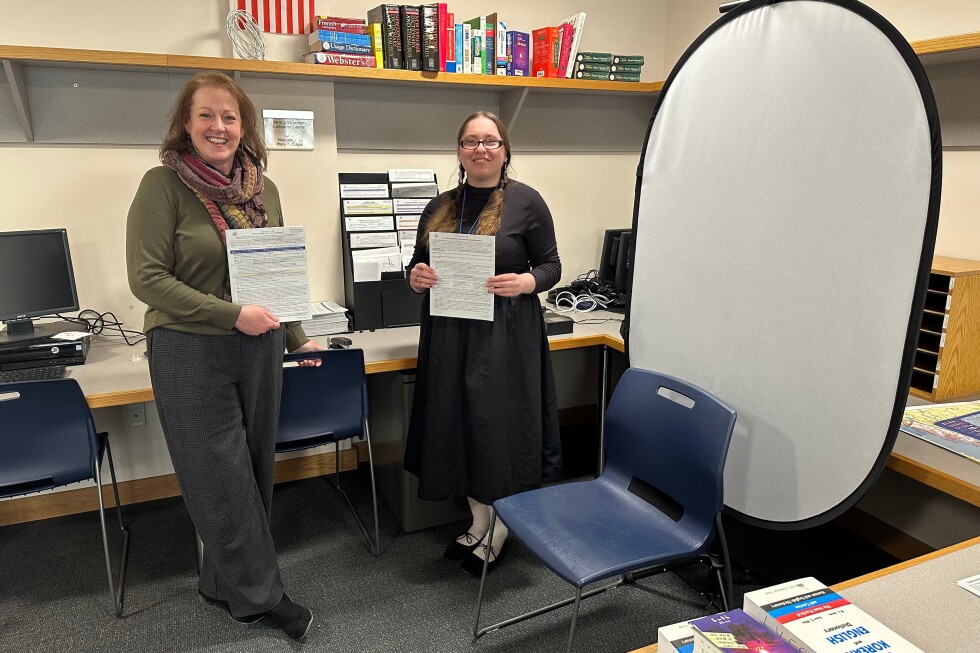
Since late fall, the agency has been issuing cease and desist orders to nonprofit libraries, informing them they are no longer authorized to participate in the Passport Acceptance Facility program. The order took effect Friday, though some libraries, like the Otis Library in Norwich, Connecticut, had already discontinued the service in November after receiving the notification.
“We still get calls daily seeking that service,” said Cathleen Special, executive director of the Otis Library, which had provided passport services for 18 years. “Our community was so used to us offering this.”
According to a State Department spokesperson, the decision stems from federal law and regulations that “clearly prohibit non-governmental organizations” from collecting and retaining fees for passport applications. Government-run libraries can continue offering the service unaffected.
The American Library Association estimates approximately 1,400 nonprofit public libraries nationwide could be impacted by this ruling, representing about 15% of all public libraries in the country. The State Department, however, maintains that the affected libraries constitute “less than one percent” of their total network of over 7,500 acceptance facilities nationwide.
The timing of this enforcement action has raised questions, as many of these libraries have operated as passport facilities for decades without issue. The State Department did not explain why this interpretation of the law is being enforced now after years of allowing the practice.
The policy change has drawn bipartisan criticism from lawmakers in multiple states. Members of Congress from Connecticut, Pennsylvania, New York, New Jersey, and Maryland have written to Secretary of State Marco Rubio requesting an extension of the existing program until Congress can implement a permanent solution.
“In a time when demand for passports is surging, libraries are among the most accessible passport acceptance facilities, particularly for working families and rural residents,” the lawmakers wrote.
The congressional letter highlighted several factors driving increased passport demand, including upcoming Real ID requirements, potential new voting rules that might require passports for voter registration, and concerns among immigrants who increasingly carry passports to confirm citizenship status.
The impact of the change varies significantly by state, depending on how public libraries are structured. In Pennsylvania, 85% of public libraries operate as nonprofit organizations rather than municipal government departments. Maine (56%), Rhode Island (54%), New York (47%), and Connecticut (46%) also have substantial proportions of nonprofit libraries.
In response, Representatives Madeleine Dean (D-PA) and John Joyce (R-PA) have introduced bipartisan legislation to amend the Passport Act of 1920, specifically allowing 501(c)(3) nonprofit public libraries to serve as passport acceptance facilities. A companion bill is pending in the Senate.
Dean called the State Department’s interpretation of the law “nonsense,” while pointing to the real-world consequences for communities. In Joyce’s rural district, the Marysville-Rye Library is one of only two passport facilities serving the 556-square-mile Perry County. With the library no longer offering the service, residents must rely solely on the county courthouse.
While the State Department maintains that 99% of Americans live within 20 miles of an authorized passport processing location, library officials point out that their services often filled crucial gaps in accessibility.
Special noted that the Norwich post office frequently referred passport applicants to her library when people needed service outside regular business hours or had children who needed supervision while parents completed paperwork. Library staff also provided assistance to applicants with language barriers.
“And now the burden falls on them to do all of it and that’s tough on them,” she said of the local post office. “I don’t know how they’re keeping up, to be honest, because it was such a popular service with us.”
As the State Department promises to “identify new eligible program partners in the impacted area,” communities across the country are facing disruptions to a service many had come to rely on as an accessible, convenient option for obtaining essential travel documents.
Fact Checker
Verify the accuracy of this article using The Disinformation Commission analysis and real-time sources.

7 Comments
The State Department’s decision to halt passport processing at nonprofit libraries is concerning. These libraries have filled an important role, making the passport application process more accessible for many people. I hope a resolution can be found to restore this community service.
It’s disappointing to see the State Department ending the passport processing service at nonprofit libraries. These libraries have long provided an essential public service, making the passport application process more accessible for many people. I hope the Department can find a way to restore this community resource.
It’s unfortunate that the State Department is ending the passport processing service at nonprofit libraries. This was a valuable convenience for many people, especially those who may have difficulty accessing other passport application centers. I hope the agency can reconsider this move.
The State Department’s decision to halt passport processing at nonprofit libraries is puzzling. These libraries have long played a vital role in making this service accessible to local residents. I wonder what specific regulations or laws are behind this move, and whether there may be room for compromise to keep this community resource available.
This seems like a shortsighted decision by the State Department. Nonprofit libraries have filled an important niche by offering passport processing services to their local communities. Disrupting this service could create significant inconvenience for many people. I hope the Department will reconsider and find a way to allow this valuable community resource to continue.
This seems like an unnecessary disruption to community services. Public libraries have long provided convenient passport processing for local residents. Hopefully the State Department can find a way to allow this helpful service to continue.
This seems like a questionable decision by the State Department. Nonprofit libraries have provided an important public service by offering passport processing. Disrupting that service could create hardship for many community members. I’m curious to hear the Department’s rationale for this change.