


Listen to the article
U.S. Orders Non-Essential Diplomatic Staff to Leave Lebanon Amid Rising Iran Tensions
The United States has ordered non-essential diplomats and their family members to depart from the U.S. Embassy in Beirut, the State Department announced Monday, as concerns grow over potential military conflict with Iran.
In an updated travel alert for American citizens in Lebanon, the department stated it had “ordered the departure of non-emergency U.S. government personnel and family members of government personnel due to the security situation in Beirut.” The announcement also indicated that U.S. personnel remaining in Lebanon would face restrictions on their in-country travel.
A State Department official, speaking on condition of anonymity before the formal announcement, described the drawdown as a “prudent” measure based on continuous assessment of regional security conditions. The official emphasized that this is a temporary measure and the embassy will maintain operations with essential personnel.
Lebanon has historically been a focal point for Iran-related retaliatory attacks against American interests, largely due to Tehran’s close ties with Hezbollah, the militant group responsible for the devastating 1983 Marine barracks bombing in Beirut and the 1984 embassy annex attack. Adjustments to diplomatic staffing in Beirut have often served as indicators of potential U.S. or Israeli military actions in the region, particularly regarding Iran.
A similar evacuation order was issued for Beirut and other regional embassies, including in Iraq, shortly before President Donald Trump ordered strikes against Iranian nuclear facilities last June. It remains unclear whether other American diplomatic missions across the Middle East will implement comparable measures.
The current situation follows Trump’s significant military buildup in the Middle East region—the largest in decades. The administration has dispatched a second aircraft carrier to join the substantial American naval and air forces already deployed, providing the president with multiple options for potential strikes even as diplomatic efforts continue.
Meanwhile, diplomatic channels remain active. Oman’s foreign minister, Badr al-Busaidi, announced that the U.S. and Iran plan to hold their next round of nuclear talks on Thursday in Geneva. A U.S. official, speaking anonymously, confirmed this meeting. Iran’s chief diplomat, Abbas Araghchi, told CBS on Sunday that he expected to meet with U.S. envoy Steve Witkoff and expressed optimism that a “good chance” remained for a diplomatic resolution to the nuclear issue.
Araghchi indicated that Iran is working on a proposed deal that would be ready to share within days. However, the indirect negotiations between the two longtime adversaries have shown limited visible progress in recent weeks. Iran has consistently refused to address broader U.S. and Israeli demands regarding its missile program and ties to regional armed groups.
When asked about the possibility of limited military action concurrent with negotiations, President Trump stated last Friday, “I guess I can say I am considering that.” He later added that Iran “better negotiate a fair deal,” underscoring the administration’s dual-track approach of diplomacy backed by military pressure.
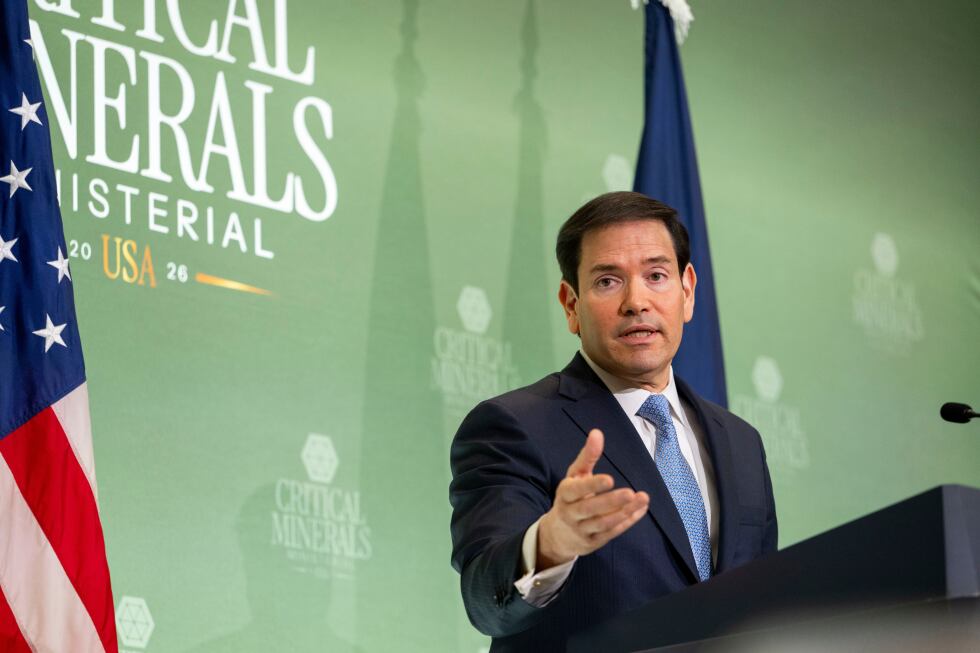
The evolving situation has also affected diplomatic schedules. A second State Department official indicated that Secretary of State Marco Rubio might delay his planned visit to Israel this weekend, though formal announcements regarding schedule changes are pending.
The ordered departure from Beirut comes at a critical juncture in U.S.-Iran relations, as regional tensions continue to escalate despite ongoing diplomatic efforts. The situation remains fluid, with both military and diplomatic developments potentially shifting rapidly in the coming days.
Fact Checker
Verify the accuracy of this article using The Disinformation Commission analysis and real-time sources.

9 Comments
Heightened tensions between the US and Iran are worrying, especially given Hezbollah’s presence in Lebanon. I hope cooler heads prevail and that diplomatic efforts can defuse the situation before it escalates further.
Withdrawing non-essential diplomats from Lebanon is a concerning development. The US has to balance security needs with maintaining a presence. I hope this doesn’t signal an imminent conflict, but the situation bears close watching.
Agreed. Diplomacy will be crucial to prevent the situation from spiraling out of control.
Lebanon has long been a proxy battleground between the US and Iran. This troop drawdown is likely a precautionary measure, but it underscores how quickly the situation could escalate if tensions aren’t managed properly.
With the US-Iran tensions simmering, it makes sense to pull out non-essential diplomatic staff from Lebanon. Hezbollah’s ties to Iran add an extra layer of complexity and risk that Washington can’t afford to ignore.
You’re right, the US has to tread carefully here. Protecting its personnel while maintaining a diplomatic presence will be challenging.
The US is clearly taking the threat to its personnel in Lebanon very seriously. Pulling out non-essential staff is a prudent move, but it also highlights the fragility of the regional security environment. Deescalation should be the priority.
This is certainly concerning. Lebanon has long been a powder keg due to its close ties to Iran and Hezbollah. Withdrawing non-essential diplomats is a prudent precautionary measure to ensure their safety.
The security situation in Lebanon seems very volatile right now. Withdrawing non-essential personnel is a sensible step, though I hope it doesn’t signal an imminent military confrontation between the US and Iran in the region.