


Listen to the article
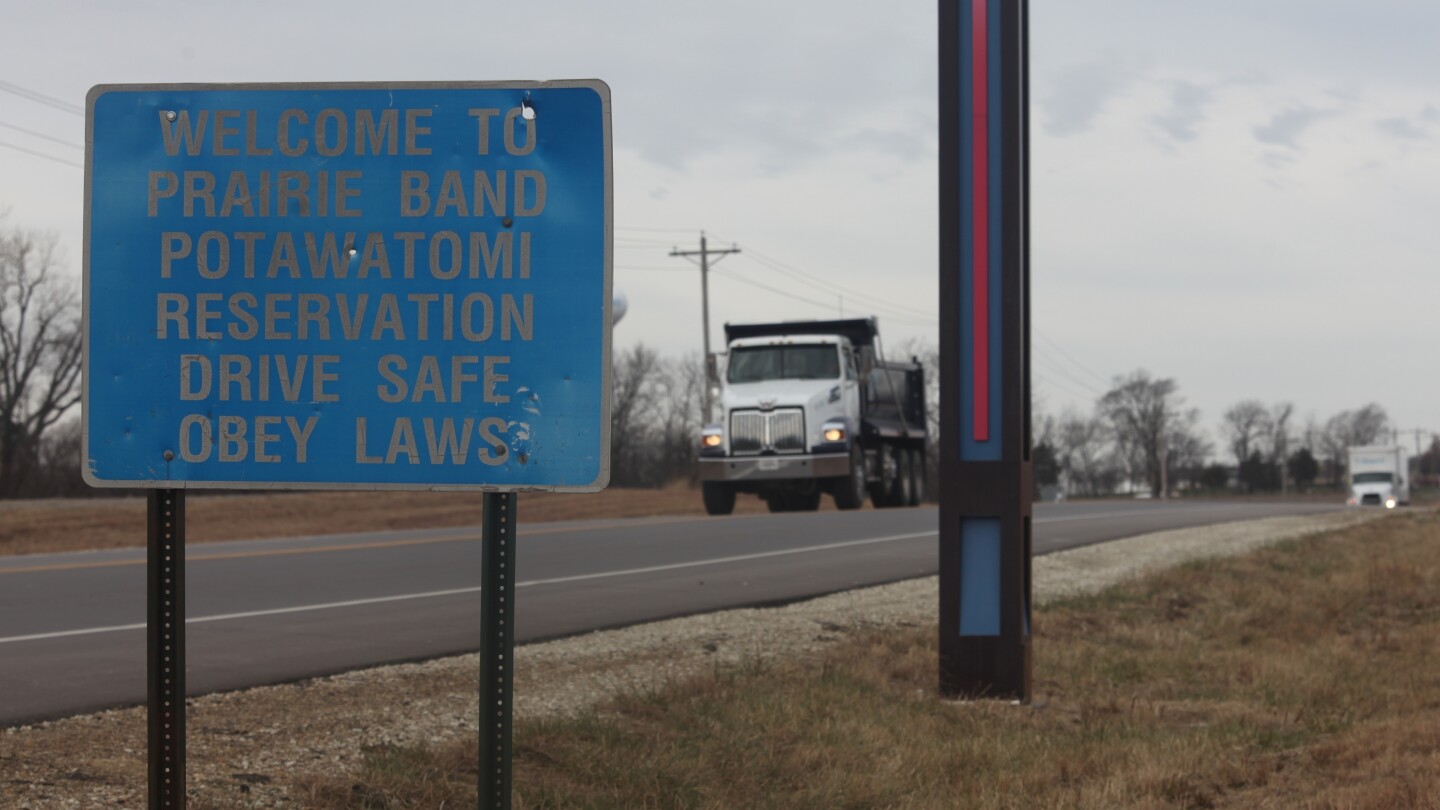
The Prairie Band Potawatomi Nation is facing intense criticism from fellow Native Americans after a tribal business entity secured a nearly $30 million federal contract to design immigrant detention centers across the United States as part of the Trump administration’s deportation campaign.
The tribal business, KPB Services LLC, established in April, signed the contract with U.S. Immigration and Customs Enforcement (ICE) in October without going through the typical competitive bidding process required for federal contracts. The backlash has been so severe that tribal leaders claim to have fired the economic development officials responsible for the deal.
“We are known across the nation now as traitors and treasonous to another race of people,” said Ray Rice, a 74-year-old tribal member who expressed shock at the arrangement. “We are brown and they’re brown.”
Tribal Chairman Joseph “Zeke” Rupnick addressed the controversy in a video message to tribal members last Friday, promising “full transparency” about what he described as an “evolving situation.” He stated the tribe is consulting with legal counsel about terminating the contract and acknowledged the painful historical parallels.
“We know our Indian reservations were the government’s first attempts at detention centers,” Rupnick said. “We were placed here because we were prisoners of war. So we must ask ourselves why we would ever participate in something that mirrors the harm and the trauma once done to our people.”
The contract initially awarded $19 million for “due diligence and concept designs” for processing and detention centers throughout the U.S. It was later modified to increase the ceiling to $29.9 million. Federal contracting experts note that sole-source contracts above $30 million require additional justification under federal regulations.
“The public’s trust in the federal procurement system depends on transparency and competition,” said Joshua Schnell, an attorney specializing in federal contracting law. “Although there is a role within this system for multimillion dollar sole-source contracts, these contracts are an exception to statutory competition requirements, and taxpayers are entitled to know how the government is spending their money.”
The contract’s timing is particularly sensitive following the U.S. Supreme Court’s September decision clearing the way for sweeping immigration raids and allowing apparent ethnicity as a relevant factor for stops. With some Native Americans caught up in recent immigration enforcement actions, ICE’s relationships with tribal entities are receiving heightened scrutiny.
This isn’t the only such arrangement in Indian Country. An LLC owned by the Poarch Band of Creek Indians in Alabama has a multimillion-dollar contract with ICE for financial and administrative services. Alaska Native corporation Akima provides security at several ICE detention facilities, causing concern among some of its shareholders.
“I’m shocked that there is any tribal nation that’s willing to assist the U.S. government in that,” said Brittany McKane, a 29-year-old Muscogee Nation citizen.
Some tribal nations have advised their citizens to carry tribal identification cards for protection. Last month, actor Elaine Miles reported being stopped by ICE agents who claimed her ID from the Confederated Tribes of the Umatilla Indian Reservation was fake.
Economic pressures on tribal nations have increased in recent years due to reduced federal funding, high inflation, and competition from online gambling. Tribal business entities, which may be run by non-Native executives, face mounting pressure to generate revenue.
“The economic opportunities presented to tribes don’t always align with their values,” said Gabe Galanda, an Indigenous rights attorney based in Seattle and member of the Round Valley Indian Tribes.
KPB Services LLC was established by Ernest C. Woodward Jr., a retired U.S. naval officer and member of the Miami Tribe of Oklahoma who markets himself as a “go-to” adviser for tribes seeking federal contracts. Woodward previously advised the Prairie Band Potawatomi Nation on other acquisitions, according to a 2017 tribal news release.
For the Prairie Band Potawatomi, whose ancestors were forcibly relocated from the Great Lakes region to Kansas in the 1830s, the contract’s historical irony has not been lost on tribal members or advocates.
Carole Cadue-Blackwood, who has Prairie Band Potawatomi ancestry and is an enrolled member of the Kickapoo Tribe in Kansas, expressed her dismay. She has been actively opposing an ICE detention center in Leavenworth, Kansas, and works for a Native American social service agency.
“I’m in just utter disbelief that this has happened,” she said.
Neither tribal leaders nor the Department of Homeland Security have provided detailed explanations about why KPB Services was selected for such a significant contract without competitive bidding, leaving many questions unanswered as the controversy continues to unfold.
Fact Checker
Verify the accuracy of this article using The Disinformation Commission analysis and real-time sources.

7 Comments
This is a challenging situation that touches on the fraught history between Native Americans and the US government. While the economic incentives may be appealing, profiting off of immigrant detention centers is extremely problematic from a moral and humanitarian perspective. The tribe should prioritize ethical considerations over short-term financial gain.
This is a complex issue with no easy answers. On one hand, the tribe may view the contract as an economic opportunity. But the historical context and current humanitarian concerns make this a very sensitive and fraught situation. Transparent dialogue and ethical reflection will be crucial.
Wow, this is a really troubling development. Designing immigrant detention centers, especially as a Native American tribe, seems like a major ethical breach and risks causing deep harm and division. I hope the tribe reconsiders this contract and explores alternative economic paths that don’t involve human rights abuses.
This is a complex and sensitive issue that touches on the painful history between Native Americans and the US government. It’s understandable that many would be shocked and outraged by a Native American tribe profiting from immigrant detention centers, given the history of oppression. Transparency and accountability will be crucial moving forward.
Agreed, the historical parallels are deeply troubling. Tribal leaders will need to carefully consider the ethical implications and impacts on their own community before proceeding with this contract.
While I can understand the economic incentives, this contract seems highly problematic from a moral and humanitarian perspective. Profiting off of immigrant detention centers, especially as a Native American tribe, is very troubling and risks causing further harm and division.
Absolutely. The tribe should reconsider this contract and explore alternative economic development opportunities that do not involve human rights abuses or perpetuating systems of oppression.