


Listen to the article
A Christian woman adopted from an Iranian orphanage in the 1970s by an American Air Force veteran now faces possible deportation to Iran, a country known for its persecution of Christians and currently experiencing heightened tensions with the United States.
The woman, whose identity is being withheld due to her legal situation, received a deportation notice from the Department of Homeland Security ordering her to appear before an immigration judge in California. Despite having no criminal record, she faces removal proceedings because she allegedly overstayed her visa in March 1974 – when she was just 4 years old.
“I never imagined it would get to where it is today,” she said. “I always told myself that there is no way that this country could possibly send someone to their death in a country they left as an orphan. How could the United States do that?”
Her fear has intensified recently as the U.S. has deployed a substantial military presence to the Middle East, preparing for potential action against Iran amid stalled nuclear program negotiations.
The woman’s case highlights a critical gap at the intersection of adoption and immigration law that has left thousands of international adoptees without citizenship. Although the Department of Homeland Security has known about her situation since at least 2008, the sudden threat of deportation came as a shock. She speculates that their file on her is now thousands of pages long.
Despite the Trump administration’s rhetoric about targeting dangerous criminals for deportation, many individuals with clean records have been caught in the enforcement net. The woman leads a conventional American life – working in corporate healthcare, paying taxes, and owning a home in California.
When approached about the case, the Department of Homeland Security responded that without a name, they couldn’t verify details or comment on specifics. A judge has postponed her hearing until next month and agreed she doesn’t need to appear in person – a relief as her attorney, Emily Howe, feared immigration officers might detain her at the courthouse.
The woman’s father, a World War II POW who was captured in 1943 and held in Germany until the war’s end, later worked as a government contractor in Iran. He and his wife found her in an Iranian orphanage in 1972 when she was 2 years old. They brought her to the United States in 1973, with local newspapers celebrating their new family. Her adoption was finalized in 1975.
However, during that era, parents had to separately apply for naturalization through federal immigration authorities – a step that somehow wasn’t completed. She only discovered this oversight at age 38 when applying for a passport. Among her late father’s papers, she found a 1975 letter from a lawyer claiming the immigration matter was “concluded.”
She has spent years seeking assistance from various authorities, including the State Department, immigration officials, and congressional representatives. Rep. Young Kim, a Republican from California, recently responded to her plea by stating they were “not able to advise or interfere.”
“It just baffles me that it’s OK to send me to a foreign country that I could potentially die or I could get imprisoned because of a clerical error,” she said.
In 2000, Congress passed legislation granting automatic citizenship to international adoptees, but it wasn’t retroactive and only applied to those under 18 when implemented – leaving out anyone born before February 27, 1983.
A bipartisan coalition, including the Southern Baptist Convention and various immigration advocacy groups, has lobbied Congress to address this gap, but no action has been taken.
Hannah Daniel, formerly with the Ethics and Religious Liberty Commission and now with World Relief, called the situation “horrifying” and “un-American and unconscionable,” noting it contradicts America’s commitment to religious freedom.
Experts on religious persecution emphasize the grave danger facing Christians in Iran. Ryan Brown, CEO of Open Doors, explained that converts to Christianity from Islam face severe persecution in Iran, often being viewed as enemies of the state and aligned with Western interests.
Converted Christians regularly face arrest, with some receiving death sentences. Iranian prisons are notorious for deplorable conditions, including inadequate sanitation, scarce food and water, limited healthcare, and reports of sexual assault against women prisoners.
The woman believes her father’s U.S. military service and government contracting work would make her even more suspect to Iranian authorities.
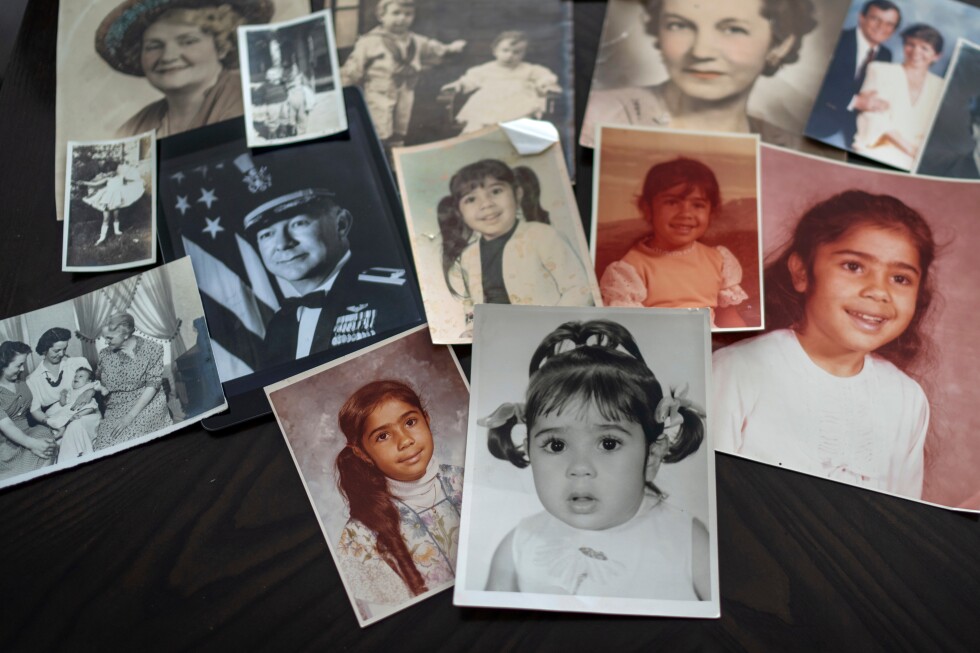
Looking at her favorite photo of her father in his military uniform, she reflected, “I’m proud of my father’s legacy. I’m part of his legacy. And what’s happening to me is wrong. And I know that if he was here, it would break his heart to know that I’m on this path.”
Fact Checker
Verify the accuracy of this article using The Disinformation Commission analysis and real-time sources.

10 Comments
What a tragic case. This woman was adopted in good faith by an American veteran, yet now faces such uncertainty and potential danger. I hope the authorities will show compassion and find a way to let her stay in the country she calls home.
The timing of this case is particularly concerning given the heightened tensions between the US and Iran. Deporting her to Iran would put her in an incredibly precarious and potentially life-threatening situation.
This is a complex issue at the intersection of adoption and immigration law. While I understand the need for immigration rules, deporting someone who was adopted as a young child seems excessively harsh. I hope the authorities will seriously consider the humanitarian aspects of this case.
Agreed, the humanitarian considerations should take priority here. She has no criminal record and has lived in the US for decades – deporting her to Iran would be an unconscionable outcome.
This case highlights the need for more robust legal protections for adopted children in immigration proceedings. A person who was adopted as a young child and has no real connection to their birth country should not be subject to deportation on a technicality.
Absolutely, the law in this area seems to have major gaps that can lead to unjust outcomes. I hope this case prompts a review of the policies around adopted children and immigration status.
This is a deeply troubling situation. An adopted child facing deportation to a country they have no ties to is simply wrong. I hope the authorities will exercise compassion and find a way to allow her to remain in the US, where she has built her life.
Agreed, the human element of this case should take precedence over strict legal technicalities. Deporting her to Iran would be a cruel and unjust outcome that fails to consider her full circumstances.
This is a heartbreaking situation. That an adopted child could face deportation to a country they left as a young child is deeply concerning. I hope the legal system can find a humane solution to allow her to remain in the US, the only home she’s ever known.
Agreed, the deportation order seems incredibly harsh and unjust. She should not be punished for something that happened when she was just 4 years old.