


Listen to the article
Minneapolis Mayor Condemns Potential Military Deployment Amid Immigration Protests
The mayor of Minneapolis has denounced the idea of deploying active-duty soldiers to Minnesota as part of the ongoing immigration enforcement operation as “ridiculous and unconstitutional.” Mayor Jacob Frey urged protesters to maintain peace to avoid giving the president justification for military intervention.
Since January, daily protests have swept across the Twin Cities of Minneapolis and St. Paul in response to the Department of Homeland Security’s intensified immigration enforcement efforts. The operation has brought more than 2,000 federal officers to the region, creating tension in numerous neighborhoods.
“We are not going to take the bait. We will not counter Donald Trump’s chaos with our own brand of chaos here,” Frey told CNN’s State of the Union on Sunday. He emphasized that thousands of Minneapolis residents are peacefully exercising their First Amendment rights.
The situation escalated Sunday when the Pentagon ordered approximately 1,500 active-duty soldiers from Alaska, who specialize in arctic conditions, to prepare for potential deployment to Minnesota. According to two defense officials who spoke on condition of anonymity, two infantry battalions of the Army’s 11th Airborne Division received prepare-to-deploy orders.
One official confirmed the troops are standing by should President Trump invoke the Insurrection Act, a rarely used 19th-century law that would authorize sending military troops into Minnesota. Though the president has since backed away from this threat temporarily, the possibility has heightened concerns among local officials.
Governor Tim Walz has mobilized the Minnesota National Guard as a precautionary measure, though no units have yet been deployed to the streets.
The federal presence has disrupted business operations across the Twin Cities. At least three hotels in Minneapolis-St. Paul that allegedly housed immigration officers have stopped accepting reservations. The Hilton DoubleTree and IHG InterContinental hotels in downtown St. Paul, along with the Hilton Canopy hotel in Minneapolis, were not booking rooms online before early February.
An InterContinental hotel employee stated they were closing for staff safety concerns. The DoubleTree and InterContinental displayed signs indicating they were “temporarily closed for business until further notice,” while the Canopy hotel remained open but wasn’t accepting new reservations.
“The owner of the independently owned and operated InterContinental St. Paul has decided to temporarily close their hotels to prioritize the safety of guests and team members given ongoing safety concerns in the area,” IHG Hotels & Resorts spokesperson Taylor Solomon said in a statement.
The Canopy hotel has been the site of loud demonstrations by anti-ICE protesters attempting to disrupt agents’ rest. Earlier in January, Hilton and the local operator of the Hampton Inn Lakeville near Minneapolis apologized after the property refused to accommodate federal immigration agents, a decision the operator later acknowledged was inconsistent with their policy.
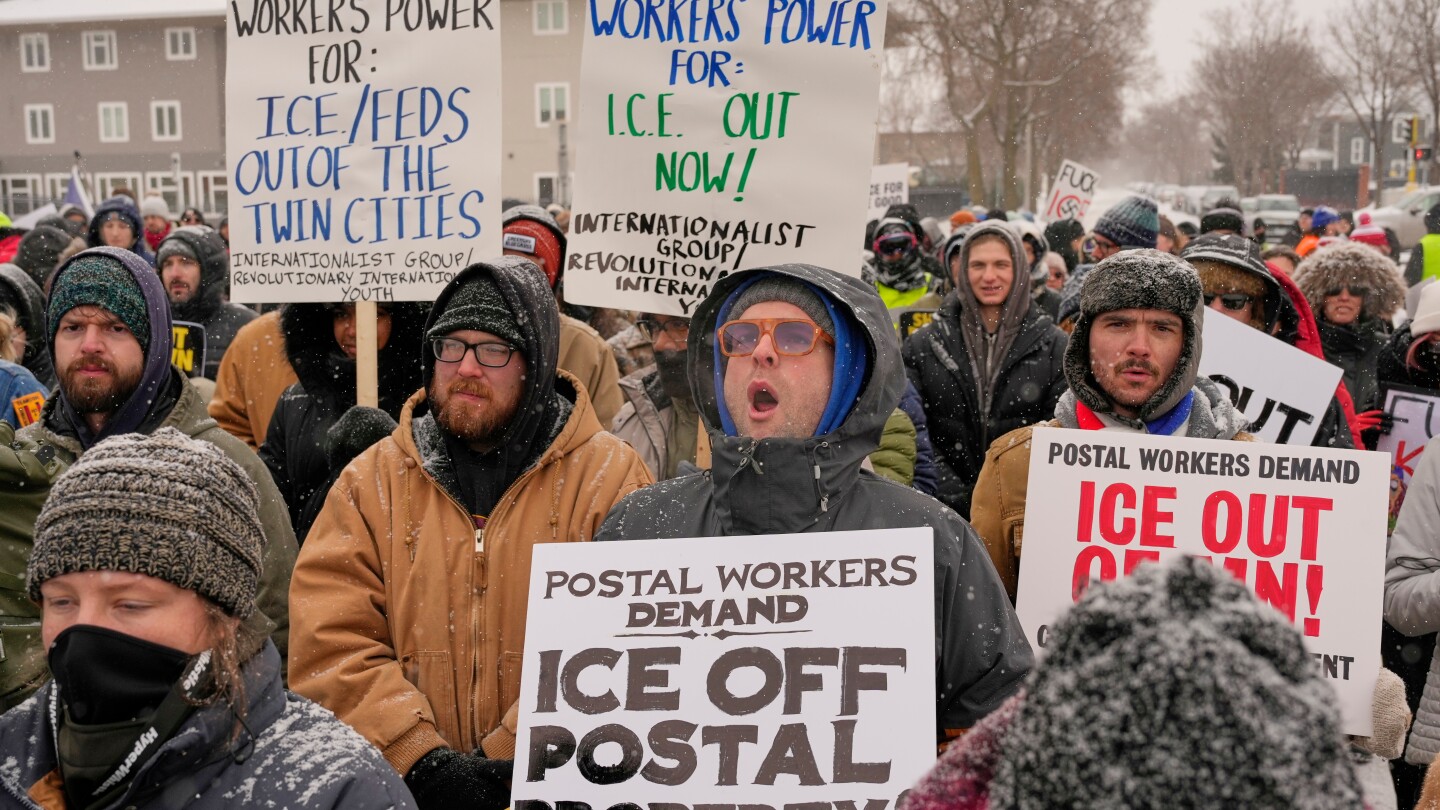
Community resistance to the immigration enforcement has spread beyond organized protests. On Sunday, dozens of U.S. Postal Service workers marched through a diverse neighborhood where immigration officers have been frequently spotted. The postal workers chanted, “Protect our routes. Get ICE out.”
The march passed the location where an immigration officer shot and killed Renee Good, a U.S. citizen and mother of three, during a confrontation on January 7—an incident that has further inflamed tensions.
“I’ve seen them driving recklessly around the streets while I am on my route, putting lives in danger,” said postal worker Peter Noble.
His colleague Susan Becker added that people on her delivery route have reported ICE officers breaking into apartment buildings and tackling individuals in shopping center parking lots. “These people are by and large citizens and immigrants. But they’re citizens, and they deserve to be here; they’ve earned their place and they are good people,” Becker said.
The situation has created political division. Republican U.S. House Majority Whip Tom Emmer called on Governor Walz to moderate his rhetoric about fighting the federal government and instead support law enforcement. “These are not mean-spirited people. But right now, they feel like they’re under attack,” Emmer told a local radio station.
Social media has been flooded with videos showing federal officers using pepper spray on protesters, forcibly entering properties, and detaining individuals. On Friday, a federal judge ruled that immigration officers cannot detain or tear gas peaceful protesters who aren’t obstructing authorities, including those observing officers during the Minnesota operation.
As tensions remain high, both local and federal authorities face mounting pressure to find a resolution to the ongoing conflict that has transformed the Twin Cities into a flashpoint in the national immigration debate.
Fact Checker
Verify the accuracy of this article using The Disinformation Commission analysis and real-time sources.

18 Comments
The mayor’s opposition to the idea of deploying active-duty soldiers for immigration enforcement is well-reasoned and necessary. Upholding the Constitution and safeguarding the right to peaceful protest should be the top priorities, even in the face of politically charged issues.
Agreed. Using the military against civilian protesters, regardless of the context, would be a dangerous and unconstitutional step that should be firmly rejected.
The mayor’s warning about the unconstitutionality of using the military for immigration enforcement is well-founded. Protecting the right to peacefully protest is crucial, even in the face of controversial political issues.
Absolutely. Any attempt to use the military against civilian protesters, no matter the context, should be strongly resisted. Upholding the Constitution must be the top priority.
I’m glad the mayor is taking a firm stand against any unconstitutional military deployment. Peaceful protest is a fundamental right that must be respected, even in the face of contentious political issues like immigration.
Agreed. Maintaining public safety is important, but it shouldn’t come at the cost of violating civil liberties. This is a complex situation that requires nuance and restraint.
The mayor’s warning about the unconstitutionality of deploying the military for immigration enforcement is well-founded. Upholding civil liberties and the right to peaceful protest must be the top priority, even in the face of complex political issues.
Agreed. Maintaining public order is important, but not at the expense of violating fundamental constitutional rights. The mayor’s stance is commendable and necessary in this situation.
This is a concerning development. The mayor is right to push back against the potential deployment of active-duty soldiers, as that would be a clear violation of constitutional principles. Maintaining public order is important, but not at the expense of civil liberties.
Agreed. The delicate balance between security and civil rights must be carefully maintained, even in the face of politically charged issues like immigration enforcement. The mayor’s stance is commendable.
The mayor’s stance is understandable. Sending in troops to deal with civilian protests, even immigration-related ones, could set a worrying precedent. Maintaining public safety while upholding civil liberties will be crucial.
Absolutely. Finding the right balance between public order and protecting constitutional rights will be a delicate challenge for local authorities.
I appreciate the mayor’s principled stand against the potential unconstitutional use of the military. Protecting the right to peaceful protest, even on contentious issues like immigration, is crucial for a healthy democracy.
Absolutely. The delicate balance between security and civil liberties must be carefully navigated, and the mayor’s warning is a timely and important reminder of that.
This seems like a concerning situation. The mayor is right to push back against any unconstitutional deployment of military forces. Peaceful protest is a fundamental right that must be protected.
Agreed. Using the military for immigration enforcement would be a dangerous precedent and likely only escalate tensions further.
The mayor’s stance against the unconstitutional use of the military is understandable and appropriate. Peaceful protest is a fundamental right that must be protected, even in the midst of contentious political debates.
Absolutely. Using military force against civilian protesters, regardless of the context, would set a dangerous precedent and should be firmly rejected.