


Listen to the article
Senator Pauses Coast Guard Nomination Over Hate Symbol Policy Concerns
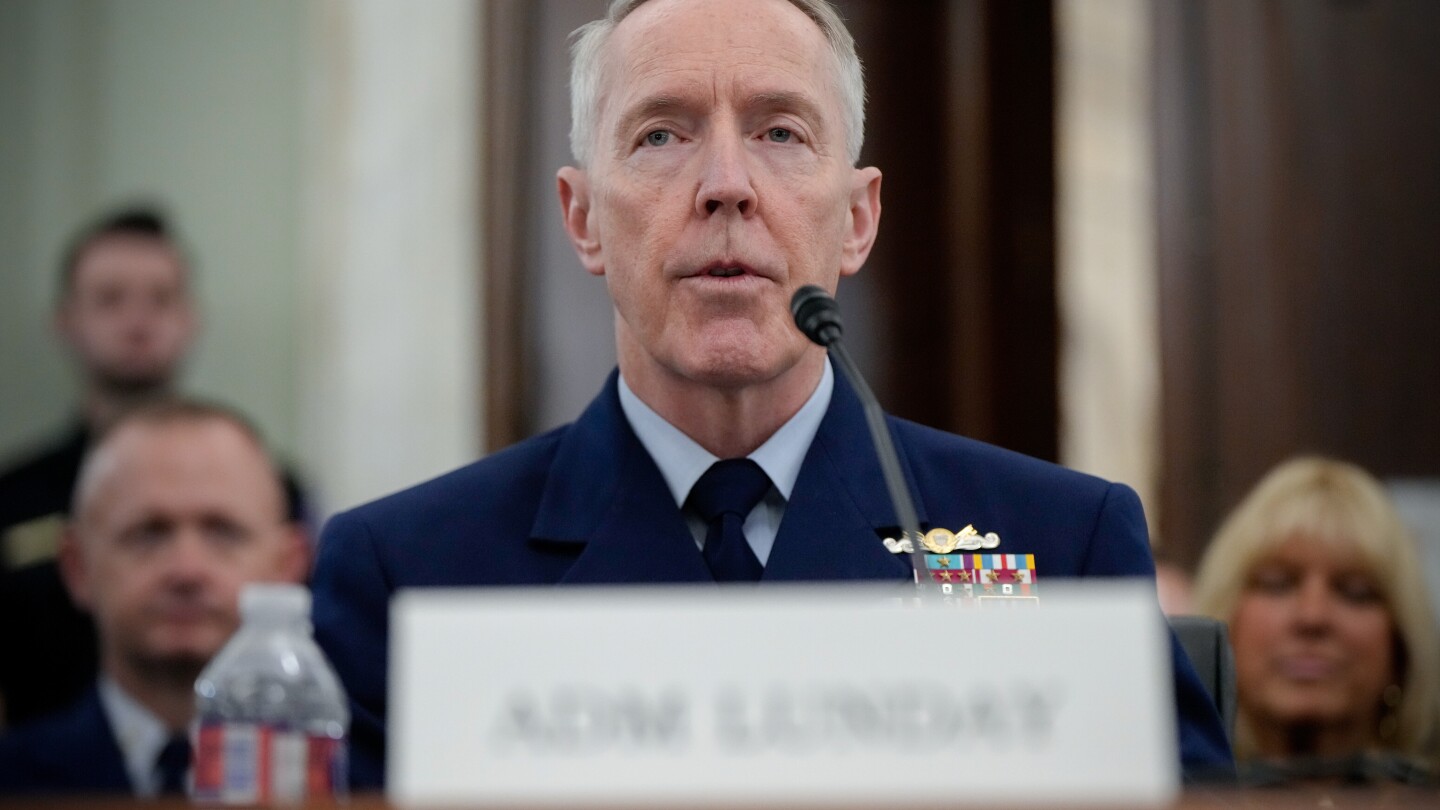
Senator Jacky Rosen has temporarily halted the nomination of Admiral Kevin Lunday for the Coast Guard’s top leadership position, citing concerns that he may have reversed course on commitments to combat antisemitism within the service.
The Nevada Democrat announced Wednesday that she is placing a hold on Lunday’s nomination for Coast Guard commandant until she receives satisfactory answers regarding the service’s policy on hate symbols.
“As it appears that Admiral Lunday may have backtracked on his commitment to me to combat antisemitism and hate crimes and protect all members of the Coast Guard, I will be placing a hold on his nomination until the Coast Guard provides answers,” Rosen stated on social media.
The controversy centers on the Coast Guard’s revision of its policy regarding the display of symbols like swastikas and nooses. Last month, a draft policy emerged describing these symbols as “potentially divisive” rather than explicitly prohibited. The new language marked a shift from the previous policy, which had clearly identified such symbols as “widely identified with oppression or hatred” and classified their display as “a potential hate incident.”
The policy change drew immediate criticism, particularly in light of rising antisemitism globally. The timing is especially sensitive following Sunday’s mass shooting targeting Jewish celebrants at Bondi Beach in Sydney, Australia, which killed 15 people—one of the deadliest antisemitic attacks in recent years.
After initial pushback from Rosen and Republican Senator James Lankford of Oklahoma, who co-lead a bipartisan antisemitism task force, the Coast Guard issued a memo in late November to clarify that “hate symbols and flags are prohibited.” However, according to sources familiar with the situation, the final policy published this week retained the “potentially divisive” language rather than explicitly banning such symbols.
The Department of Homeland Security, which oversees the Coast Guard, has defended the policy, insisting there was never a “downgrade” in standards. DHS spokesperson Tricia McLaughlin claimed the change “strengthens our ability to report, investigate, and prosecute those who violate longstanding policy.”
“The symbols listed in the policy include, but are not limited to, nooses, swastikas, and any symbols or flags that have been adopted by hate-based groups to represent supremacy, racial or religious intolerance, antisemitism, or any other form of bias,” McLaughlin explained in a statement.
Sources close to the matter indicate the Coast Guard maintains that Admiral Lunday’s November memo, which explicitly prohibited hate symbols, supersedes the actual policy document. This apparent contradiction between the memo and the official policy language has fueled Senator Rosen’s concerns about the Coast Guard’s commitment to addressing antisemitism and other forms of hatred within its ranks.
This policy revision comes at a critical moment when military and federal agencies are under increased scrutiny regarding how they handle issues of extremism and hate speech within their organizations. In recent years, the Department of Defense and other federal agencies have strengthened policies against extremism following evidence of service members participating in hate groups or extremist organizations.
The Coast Guard, with approximately 44,500 active duty personnel, has historically maintained strong anti-discrimination policies. However, this current controversy raises questions about consistency in enforcement and clarity of messaging regarding hate symbols.
Senator Rosen’s hold on Lunday’s nomination creates a significant obstacle in filling the Coast Guard’s top leadership position. Senate holds are a powerful procedural tool that can indefinitely delay confirmation votes, potentially leaving important positions unfilled for extended periods.
The Washington Post first reported on the finalized policy moving forward despite the concerns raised by lawmakers. Neither Admiral Lunday nor Coast Guard headquarters had issued additional statements addressing Senator Rosen’s hold as of press time.
Fact Checker
Verify the accuracy of this article using The Disinformation Commission analysis and real-time sources.

14 Comments
This situation highlights the ongoing challenges the military faces in grappling with extremism and bias within its ranks. I’m glad to see elected officials like Senator Rosen taking a strong stance on this issue.
I’m curious to hear more about the specifics of the policy change and what led to the apparent shift. Transparency and accountability will be key in resolving this situation effectively.
This is a complex issue, but the Coast Guard needs to take a firm stand. Allowing any ambiguity or equivocation around hate symbols could embolden extremists and create a toxic, unsafe environment for service members.
This is a concerning development. It’s critical that the Coast Guard takes a firm stance against hate symbols and actively works to root out any bias or discrimination within its ranks. I hope the service can provide satisfactory answers to Senator Rosen’s questions and commit to stronger policies in this area.
Agreed. Symbols of hate and oppression have no place in the military, which should reflect the diversity and values of our nation.
I hope the Coast Guard can work constructively with Senator Rosen and other stakeholders to address this matter and develop a comprehensive policy that aligns with the service’s values and mission.
Absolutely. An open and transparent dialogue will be crucial to finding a solution that upholds the Coast Guard’s commitment to diversity, inclusion, and combating hate.
The Coast Guard needs to take this issue seriously and ensure that its policies send a clear message that hate and extremism will not be tolerated. It’s disappointing to see any backtracking on commitments to combat antisemitism and protect all service members.
Absolutely. The service should be setting an example of inclusivity and standing up against discrimination in all its forms.
This is a complex issue, but the Coast Guard has a responsibility to uphold the values of our nation. I encourage them to engage with stakeholders, listen to diverse perspectives, and develop a robust policy that leaves no room for hate or discrimination.
Maintaining a professional, inclusive, and ethical culture should be a top priority for the Coast Guard. I hope they can resolve this issue swiftly and demonstrate a clear, unwavering commitment to these principles.
Agreed. The Coast Guard’s response will set an important precedent for the broader military and government.
As a taxpayer and citizen, I expect the Coast Guard to uphold the highest standards of integrity and ethics. Allowing the display of hate symbols would be a significant breach of public trust.
Agreed. The service must send a clear, unequivocal message that such symbols and ideologies have no place in the military or government.