


Listen to the article
Senate Republicans and Democrats are set to clash this Thursday over competing proposals to address expiring Obamacare subsidies, with both plans likely facing defeat in upcoming votes.
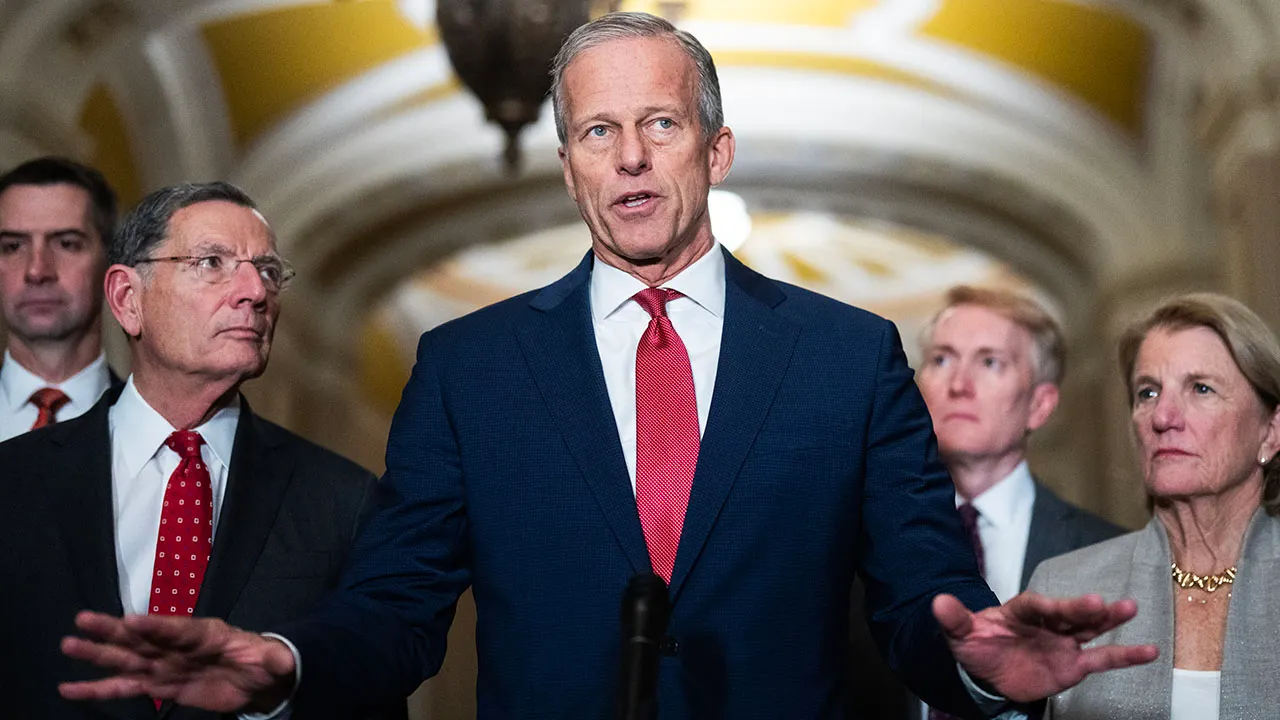
Senate Majority Leader John Thune (R-S.D.) announced Tuesday that Republicans have united behind a proposal developed by Senators Bill Cassidy (R-La.) and Mike Crapo (R-Idaho), who chair the Senate health and Finance committees respectively. The plan represents the GOP’s counter to legislation previously introduced by Democrats.
“This program desperately needs to be reformed,” Thune told reporters, criticizing the Democratic approach. “The Democrats have decided we’re not going to do anything to reform it. And so we’ll see where the votes are on Thursday.”
The Republican proposal, unveiled Monday after weeks of development, would fundamentally transform how healthcare assistance is provided. Rather than extending the current enhanced premium subsidies, the Cassidy-Crapo plan would redirect funding from insurers to consumers through Health Savings Accounts (HSAs).
Under their plan, Americans ages 18 to 49 would receive $1,000 in pre-funded HSAs, while those between 50 and 65 would get $1,500. This would apply to individuals earning up to 700% of the federal poverty level, provided they purchase a bronze or catastrophic plan through an Obamacare exchange.
The Republican proposal includes several politically charged provisions that make compromise unlikely. The bill would reduce federal Medicaid funding to states covering undocumented immigrants and require states to verify citizenship or eligible immigration status before individuals can access Medicaid. It would also ban federal Medicaid funding for gender transition services and remove those services from “essential health benefits” for ACA exchange plans. Additionally, the plan incorporates Hyde Amendment provisions to prevent taxpayer dollars from funding abortions through the new HSAs.
Senate Democrats, led by Minority Leader Chuck Schumer (D-N.Y.), presented their own proposal last week. Their plan would extend the current enhanced subsidies for three years, maintaining the existing system that Republicans argue benefits insurance companies more than patients.
Thune criticized the Democratic plan as failing to address rising healthcare costs, claiming it would primarily benefit affluent Americans and insurance companies rather than making structural improvements to healthcare affordability.
“We will have an alternative that we will put up that reflects the views of the Republicans here in the United States Senate about how to make health insurance more affordable in this country, how to ensure that it’s not the insurance companies that are getting enriched, that it’s actually benefiting the patient,” Thune said.
The dueling proposals highlight the fundamental ideological differences between the parties on healthcare policy. Republicans generally favor consumer-directed approaches with fewer regulations, while Democrats typically support expanding the government’s role in ensuring coverage.
Healthcare policy experts note that the impasse comes at a critical time. The enhanced Obamacare subsidies, expanded under the American Rescue Plan and extended through the Inflation Reduction Act, are set to expire at the end of 2025. Without action, millions of Americans could face significantly higher premiums, potentially causing many to drop coverage altogether.
Despite the scheduled votes, neither plan appears to have the bipartisan support needed to advance in the closely divided Senate. Democrats have rejected abandoning the subsidies in favor of HSAs, while Republicans insist that any extension of the current system must include reforms such as income caps and stronger restrictions on abortion funding.
The stalemate increases the likelihood that the subsidy issue will become a central healthcare debate during the 2025 congressional session, potentially placing additional pressure on lawmakers as the expiration deadline approaches.
Fact Checker
Verify the accuracy of this article using The Disinformation Commission analysis and real-time sources.

16 Comments
Healthcare reform is always a contentious issue, and this Republican proposal seems aimed at a significant shift in how subsidies are provided. I’m curious to see the analysis on the potential impacts.
With the Obamacare subsidies expiring, there is certainly pressure to find a solution. It will be informative to see how this Republican plan fares in the Senate vote.
This Obamacare debate seems quite complex with competing Republican and Democratic proposals. I’m curious to see how the Senate votes play out on Thursday and which approach gains more support.
The Republican plan to redirect subsidies to consumer HSAs is an interesting twist. It will be informative to see the analysis on how this may impact healthcare coverage and costs.
Shifting subsidies from insurers to consumer HSAs is a notable proposal. I’m curious to see the projected impacts on healthcare costs and coverage, especially for lower-income Americans.
With the Obamacare subsidies expiring, there is certainly pressure to find a workable solution. This Republican plan seems aimed at giving consumers more control, but the details will be important.
Shifting subsidies from insurers to consumer HSAs is a notable approach by the Republican senators. I wonder how this would impact insurance affordability and access, especially for lower-income Americans.
The Obamacare debate continues, with both parties offering competing visions. It will be interesting to see if any compromise can be reached on this critical issue.
Reforming healthcare is always a hot-button issue. I appreciate the Republican senators trying to find a compromise, even if the Democrats are likely to oppose it. Hopefully they can find some common ground.
It will be crucial for both parties to focus on practical solutions that improve access and affordability, rather than just partisan posturing.
Healthcare is such a complex and contentious issue. I appreciate the Republican senators trying to develop an alternative to the Democratic plan, even if it faces an uphill battle.
It will be crucial for both parties to focus on practical solutions that improve access and affordability, rather than just partisan posturing.
This Republican healthcare proposal seems aimed at giving consumers more control through HSAs. It will be informative to see the analysis on how this may impact coverage and costs.
With the Obamacare subsidies expiring, there is certainly pressure to find a workable solution. I’m curious to see how this plan fares in the Senate vote.
The battle lines are clearly drawn between Republicans and Democrats on healthcare reform. It will be interesting to see if they can find any common ground on these competing proposals.
Redirecting subsidies to HSAs is a significant shift. I wonder how this would impact insurance affordability and access, especially for vulnerable populations.