


Listen to the article
Senate Republicans blocked a Democratic attempt to limit President Donald Trump’s military authority in Iran, marking another chapter in an ongoing power struggle between Congress and the White House over war powers.
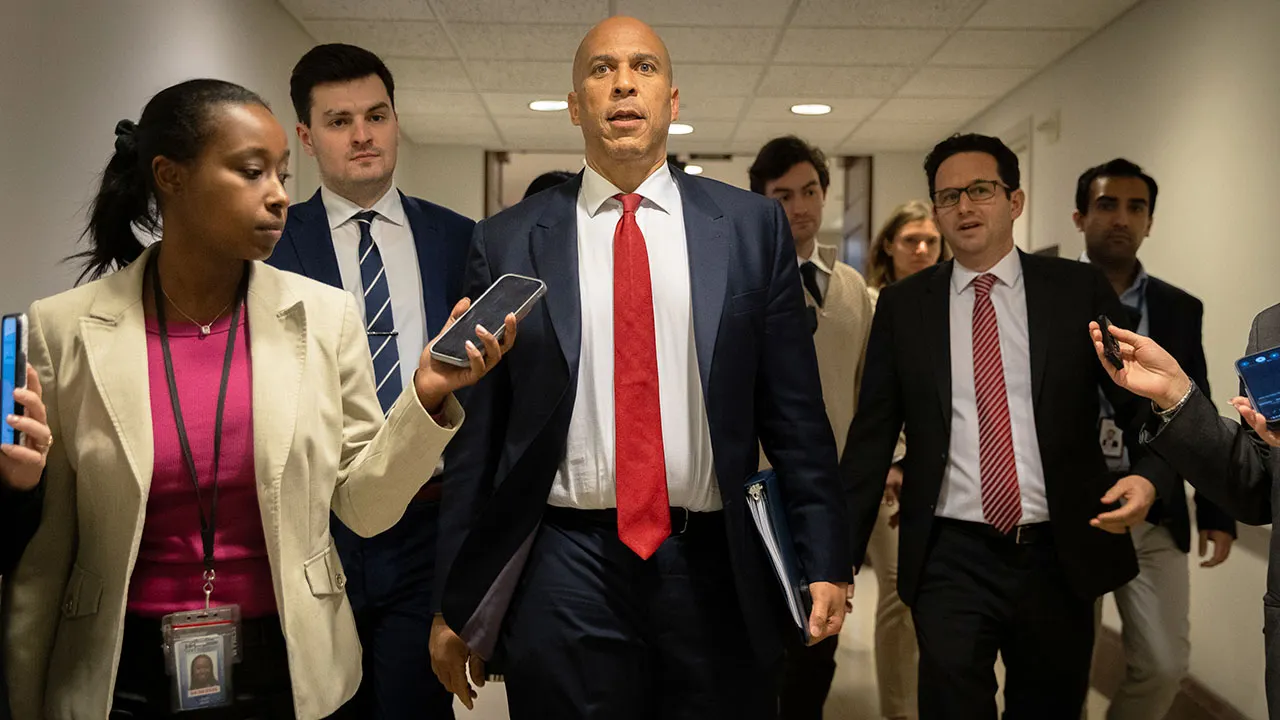
The resolution, introduced by Sen. Cory Booker (D-N.J.), was one of several measures Senate Democrats have prepared as part of their strategy to compel public testimony from Secretary of State Marco Rubio and Secretary of War Pete Hegseth about the administration’s military actions in Iran.
“We need to focus on what the issues of the people are and put before them a president who promised to bring your prices down and keep us out of wars, who is now bringing us into more wars and driving up our prices as a result,” Booker told Fox News Digital before the vote. “The question is, what should Congress do as a result?”
Despite support from nearly every Senate Democrat and Republican Sen. Rand Paul of Kentucky, the resolution failed to advance. Sen. John Fetterman (D-Pa.) was the only Democrat who broke ranks to vote against the measure.
This follows a similar attempt earlier this month by Democratic Virginia Sen. Tim Kaine, which Republicans also blocked. The ongoing conflict highlights the constitutional tension between Congress’s war-declaring authority and the president’s powers as commander-in-chief.
Senate Democrats reportedly have four additional war powers resolutions ready, which would direct an immediate end to hostilities with Iran and the withdrawal of U.S. forces from the region. This persistent strategy suggests Democrats are prepared to continue challenging the administration’s military approach.
Senate Majority Leader John Thune (R-S.D.) defended the president’s actions, stating that military planners were doing a “masterful job” of diminishing Iran’s offensive capabilities. He asserted that Trump was operating within his constitutional authority in executing Operation Epic Fury, the administration’s military campaign in Iran.
“The Strait of Hormuz, obviously, is an issue that we’re all paying a lot of attention to,” Thune said, referencing the strategically vital waterway through which approximately one-fifth of the world’s oil supply passes. “But I feel confident that the administration and those who are leading our military efforts there ultimately will be successful in getting things open up there.”
The Strait of Hormuz has become a critical flashpoint in the conflict. Iran’s influence over this narrow waterway has raised concerns about potential oil supply disruptions and price increases, adding economic dimensions to the military conflict. Any prolonged closure could significantly impact global energy markets and fuel inflation.
Republicans have pushed back against Democrats’ demands for public hearings with Rubio and Hegseth, arguing that administration officials have provided adequate information through classified briefings and media appearances.
Sen. Lindsey Graham (R-S.C.), who has been supportive of the administration’s strikes against Iran, criticized the Democrats’ continued use of war powers resolutions as “an abuse of the process” and suggested they were “impeding the war effort” through “cheap politics.”
The conflict over war powers reflects deeper partisan divides on foreign policy and executive authority. Democrats argue for greater congressional oversight and limitations on military actions, while Republicans generally favor giving the president broader latitude in national security matters.
As tensions with Iran continue, this congressional battle over war powers remains significant not only for immediate policy but for the broader question of how military decisions are made in the American system of government. With Democrats threatening additional war powers votes, the issue is likely to remain at the forefront of Senate business in the coming days.
Fact Checker
Verify the accuracy of this article using The Disinformation Commission analysis and real-time sources.

8 Comments
An interesting power struggle between Congress and the White House over war powers. It’s an important issue that deserves robust debate and scrutiny from both parties.
I agree, these are complex matters without easy answers. Reasonable people can disagree on the appropriate balance of executive and legislative authority when it comes to military action.
As an investor in mining and energy equities, I’ll be monitoring this situation closely. Geopolitical tensions and policy uncertainty can introduce significant volatility into commodity markets and affect the performance of related stocks.
This vote highlights the partisan divisions on Capitol Hill. While I respect the Senate Republicans’ position, I’m curious to hear more from the Democrats on their rationale for limiting the president’s military authority in Iran.
The Democrats seem concerned about the administration’s actions potentially leading to more conflict and higher energy prices. But the Republicans likely felt the resolution went too far in constraining the president’s war powers.
With global energy markets already volatile, the geopolitical tensions surrounding Iran are an important consideration. I wonder how this issue may impact the outlook for key commodities like oil, gas, and uranium.
That’s a good point. Developments in the Middle East can certainly have ripple effects on commodity prices and supply chains. Investors in mining and energy stocks will be closely watching this situation.
The ongoing conflict between Congress and the White House over war powers is a complex issue without easy answers. I hope our elected leaders can find a way to work together and put the interests of the American people first.