


Listen to the article
Senate Races to Avert Third Government Shutdown Under Trump
The Senate is rushing to prevent a third government shutdown during President Donald Trump’s administration, with lawmakers cautiously optimistic about reaching a deal before Friday’s deadline. What began as stalled negotiations has shown signs of progress as both sides exchange proposals.
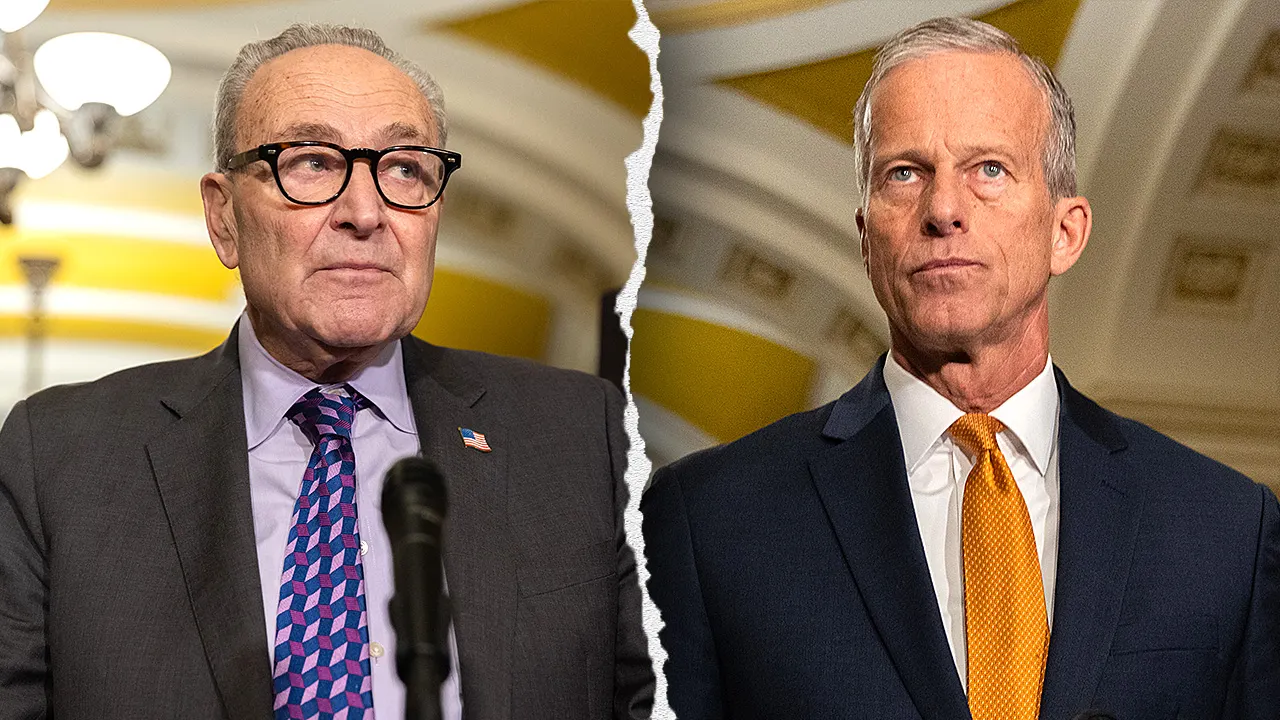
Senate Republicans received what they described as Democrats’ “partisan wishlist” over the weekend, while the White House submitted its own counter-proposal. The exact details of these proposals remain unclear to many lawmakers, but Senate Majority Leader John Thune of South Dakota indicated that congressional Democrats and the White House are “trading papers” – a positive sign that negotiations are advancing.
“I think, based on what I’m familiar with about the discussion so far, I think there is [progress], but we’ll know more when the proposal comes back,” Thune said. He plans to introduce another short-term funding extension, known as a continuing resolution (CR), on Tuesday, though he noted its duration “will have to be negotiated.”
Despite this progress, lawmakers face significant time constraints. With Congress required to pass legislation by Friday to avoid a shutdown, and many senators scheduled to depart Thursday for the Munich Security Conference, the window for action is narrowing rapidly. Thune has warned that he may cancel the upcoming recess if substantial progress isn’t made.
Unlike previous shutdown threats that affected the entire government, this potential closure would be limited to the Department of Homeland Security (DHS). Even then, Immigration and Customs Enforcement (ICE) and border operations would continue functioning due to billions in funding from earlier legislation that Trump has called his “big, beautiful bill.”
The core dispute centers on Democrats’ demands for reforms to ICE operations following the fatal shootings of Alex Pretti and Renee Nicole Good. Senate Democrats have proposed requiring ICE agents to obtain judicial warrants, remove masks during operations, and display identification – measures Republicans argue could endanger agents by exposing their personal information.
“We have sent you our proposals, and they are exceedingly reasonable,” Senate Minority Leader Chuck Schumer said on the Senate floor. “I hope our colleagues on the other side, many of whom, at least here in the Senate, recognize that things need to change, show they’re ready to act in a meaningful way.”
Senator Chris Murphy, the top Democrat on the Senate Homeland Security Appropriations panel, defended his party’s stance: “We did not ask for the moon. We asked for targeted but impactful changes in the way that ICE is terrorizing American cities. So obviously we’re willing to negotiate.”
Republicans, meanwhile, have criticized Democrats for what they see as unreasonable demands that could hamper national security operations.
“To say that the security of Americans is not paramount, I think, would be a huge mistake for the Democrats,” said Senator Katie Britt, the Republican chair of the Homeland Security spending panel.
A White House official emphasized that “President Trump has been consistent, he wants the government open and the Administration has been working with both parties to ensure the American people don’t have to endure another drawn-out, senseless, and hurtful shutdown.”
The current impasse follows Democrats’ earlier demand for a two-week funding extension specifically for DHS. If a shutdown does occur, it would primarily affect agencies like FEMA, TSA, and the Coast Guard, while leaving immigration enforcement operations largely intact.
As the clock ticks toward Friday’s deadline, both sides continue to navigate what has become a delicate political balancing act, weighing partisan priorities against the practical consequences of allowing even a partial government shutdown.
Fact Checker
Verify the accuracy of this article using The Disinformation Commission analysis and real-time sources.

16 Comments
This is an important issue that impacts many industries, including mining and energy. I hope the Senate can find a solution that addresses security concerns while avoiding disruptions.
Me too. A government shutdown would likely have ripple effects across the economy, including the commodity and energy sectors.
This is a complex issue with many competing interests. I’m curious to see how the Senate navigates the negotiations and whether they can find a solution that satisfies all parties.
Absolutely. Balancing security concerns, budgetary constraints, and the needs of various industries will require careful deliberation and compromise.
Given the potential impacts on critical infrastructure and supply chains, it’s good to see the Senate taking this issue seriously. Hopefully they can reach an agreement before the deadline.
Agreed. Prolonged uncertainty or disruptions would be problematic for many sectors, including mining and energy.
The details of the proposals will be important to understand. I hope the negotiations result in a compromise that addresses the needs of all stakeholders, including the mining and energy industries.
Yes, a balanced solution is key. Avoiding partisan gridlock and finding common ground should be the priority.
The mining and energy sectors have a big stake in the outcome of these negotiations. I hope the Senate takes their concerns into account as they work to prevent another government shutdown.
Yes, it’s important for policymakers to understand the potential impacts on these industries and the broader economy. A collaborative approach will be essential.
Interesting development in the Senate’s efforts to avoid another government shutdown. It will be important to see the details of the proposals and how the negotiations progress in the coming days.
Yes, the tight timeline is certainly a concern. Hopefully they can reach a bipartisan compromise before the deadline.
The Department of Homeland Security budget has been a contentious issue, so it’s good to see some progress being made. Curious to learn more about the specific proposals being discussed.
Agreed. Avoiding a third shutdown under the Trump administration would be a positive outcome for the country.
It’s encouraging to see the Senate working to prevent another shutdown. Maintaining stability and predictability in government operations is crucial for businesses and communities.
Absolutely. Repeated shutdowns create uncertainty and disrupt planning, which is detrimental to economic growth and investment.