


Listen to the article
Senator Hawley Faces MAGA Backlash After Breaking with Trump on Venezuela War Powers
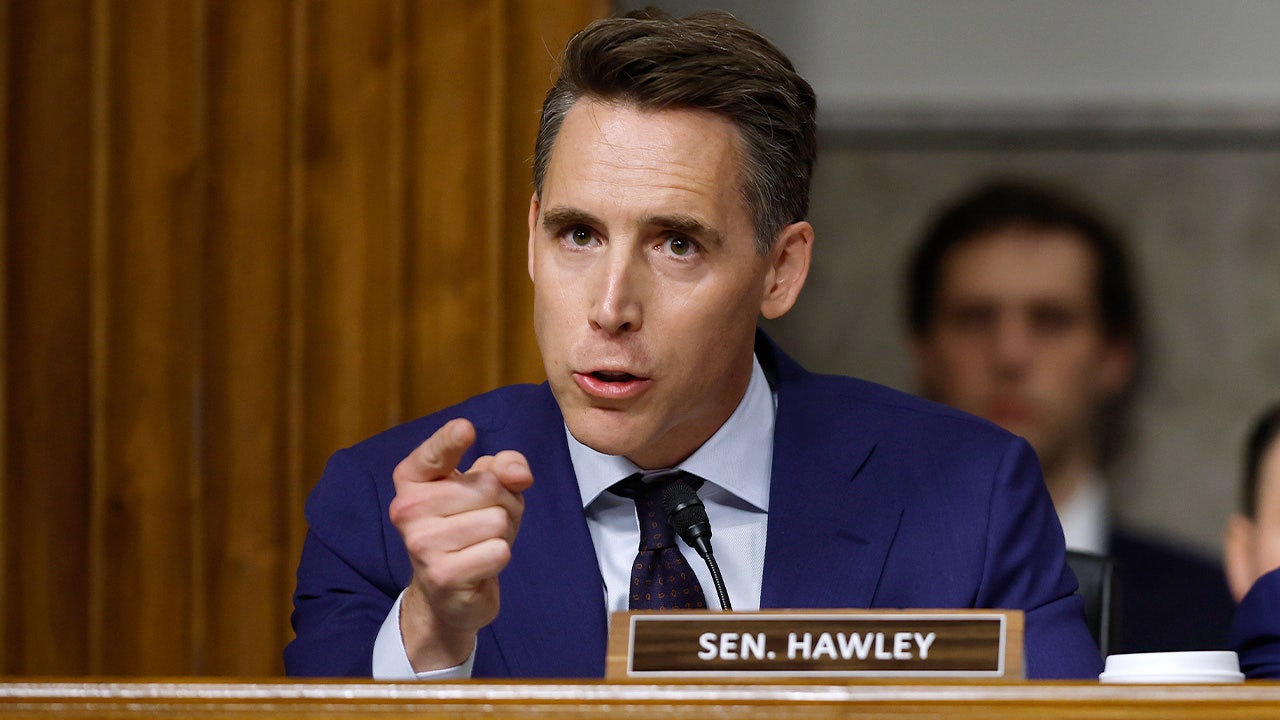
Missouri Republican Senator Josh Hawley has found himself at odds with former President Donald Trump’s supporters after voting to advance a bipartisan war powers resolution that would limit presidential military authority regarding Venezuela. The move has sparked significant criticism from Trump’s MAGA base ahead of a critical Senate vote scheduled for Wednesday.
The controversy stems from Trump’s January 3 operation in Venezuela that led to the capture of dictatorial president Nicolás Maduro and his wife, who are now detained in New York City on narco-terrorism conspiracy and drug trafficking charges. The operation prompted immediate criticism from Democrats, who objected to Trump ordering a military strike without prior congressional approval.
On January 8, the Senate advanced a bipartisan war powers resolution by a 52-47 vote that would require the president to seek congressional authorization before engaging U.S. armed forces in “hostilities within or against Venezuela.” Hawley joined four other Republican senators – Lisa Murkowski of Alaska, Rand Paul of Kentucky, Susan Collins of Maine, and Todd Young of Indiana – in voting with Democrats on the procedural measure.
The backlash from Trump supporters was swift and severe. Former campaign aide Alex Bruesewitz posted to social media that the Republicans who sided with Democrats were “STUPID & WEAK,” adding that he was particularly “surprised and disappointed” by Hawley for aligning “himself with the anti-Trump faction and Democrats, particularly since he represents Missouri, one of the most staunchly pro-Trump states in the nation.”
Hawley defended his vote as a constitutional issue rather than opposition to Trump, explaining on social media: “My read of the Constitution is that if the President feels the need to put boots on the ground there in the future, Congress would need to vote on it.”
Trump himself responded to the procedural vote with a warning on Truth Social that the five Republican senators “should never be elected to office again.” He argued that the “Vote greatly hampers American Self Defense and National Security, impeding the President’s Authority as Commander in Chief,” adding that “the War Powers Act is Unconstitutional, totally violating Article II of the Constitution.”
The dispute highlights growing tensions within the Republican party over constitutional authority and military operations. A longtime Republican campaign operative, speaking to Fox News Digital, claimed Hawley “seems like every other month he does something that’s opposed to the president and the party more broadly,” comparing him to Representatives Marjorie Taylor Greene and Thomas Massie, who have frequently broken with Trump on policy issues.
For Wednesday’s vote to succeed, Trump would need at least two of the five Republicans to switch their positions. However, Hawley told Fox News on Tuesday that he has spoken with Trump, Secretary of State Marco Rubio, and Department of Justice officials regarding his primary concern about American troops on the ground in Venezuela.
“My big concern has been ground troops in Venezuela and, making sure that if there’s going to be ground troops in Venezuela, (which) I would hope we would not do, that Congress authorizes that,” Hawley said. He added that administration officials “assured me there are no ground troops in Venezuela” and that there “are not going to be ground troops in Venezuela.”
This isn’t the first time Hawley has drawn Trump’s ire. In July, Trump criticized the senator over his stock-trading ban proposal, accusing him of siding with Democrats to block a GOP-backed effort to review Nancy Pelosi’s stock trading history. Hawley has also broken with the administration on domestic policy, particularly regarding Medicaid reforms in Trump’s major legislative package in 2025, though he ultimately supported the bill.
Political analysts speculate that Hawley’s occasional breaks with Trump might be positioning for a potential 2028 presidential run, though the campaign operative interviewed questioned the wisdom of such a strategy. “The polling I’ve seen shows that Republicans are in favor of the president’s actions in Venezuela,” the source noted. “He would be out of step with our voters.”
As Wednesday’s vote approaches, the spotlight remains on Hawley and the other four Republican senators who will decide whether to maintain their positions or align with Trump’s stance on presidential war powers regarding Venezuela.
Fact Checker
Verify the accuracy of this article using The Disinformation Commission analysis and real-time sources.

20 Comments
Hawley’s stance on the war powers resolution is a bit surprising, given his generally conservative credentials. It will be interesting to see if this marks a broader shift in his positions.
The MAGA base’s reaction to Hawley’s vote will be telling, as it could foreshadow potential cracks within the Republican party on foreign policy issues.
This situation raises important questions about the balance of power between the president and Congress when it comes to military interventions. It will be interesting to see how this plays out.
Hawley’s position could signal a shift within the Republican party on these issues, which could have significant ramifications.
This is an interesting development in the ongoing debate over presidential war powers. Hawley’s position seems to be a departure from the typical MAGA stance, which could spark some lively discussions within the party.
It will be intriguing to see how this vote plays out and whether Hawley’s move opens up more bipartisan support for restricting the president’s authority in this area.
This situation highlights the ongoing tensions between the executive and legislative branches over the use of military force. It’s a debate that’s sure to continue as new challenges arise.
I’m curious to see how this vote plays out and whether it sets any precedents for future congressional oversight of presidential military actions.
Hawley’s vote on the war powers resolution is an interesting development, and it will be worth following how it plays out both politically and in terms of U.S. policy toward Venezuela.
The broader implications of this situation for the balance of power between the executive and legislative branches are certainly worth considering.
The capture of Maduro is certainly a significant development, but the legal and political fallout remains to be seen. This is a complex issue with a lot of moving parts.
I’ll be following this story closely to see how it evolves and what the ultimate impact is on U.S. policy toward Venezuela.
The Senate’s consideration of this war powers resolution highlights the ongoing tension between the legislative and executive branches over the use of military force. It’s a debate that’s sure to continue.
I’m curious to see how the final vote turns out and whether it has any broader implications for U.S. foreign policy in the region.
Hawley’s vote seems to put him at odds with the MAGA base, which could have political ramifications. It will be worth watching how this issue plays out and whether it affects his standing within the Republican party.
Navigating these complex geopolitical situations while maintaining party unity must be a real challenge for senators like Hawley.
The charges against Maduro are certainly significant, but the legal and diplomatic implications are still unclear. This is a complex issue that bears close watching.
Hawley’s position could signal a shift in Republican thinking on these issues, which could have ripple effects on U.S. foreign policy in the region.
The capture of Maduro has certainly added a new wrinkle to the situation. I’m curious to hear more about the legal basis and implications of the charges he’s facing in New York.
This case could set an important precedent for how the US responds to authoritarian leaders accused of narco-terrorism and other serious crimes.