


Listen to the article
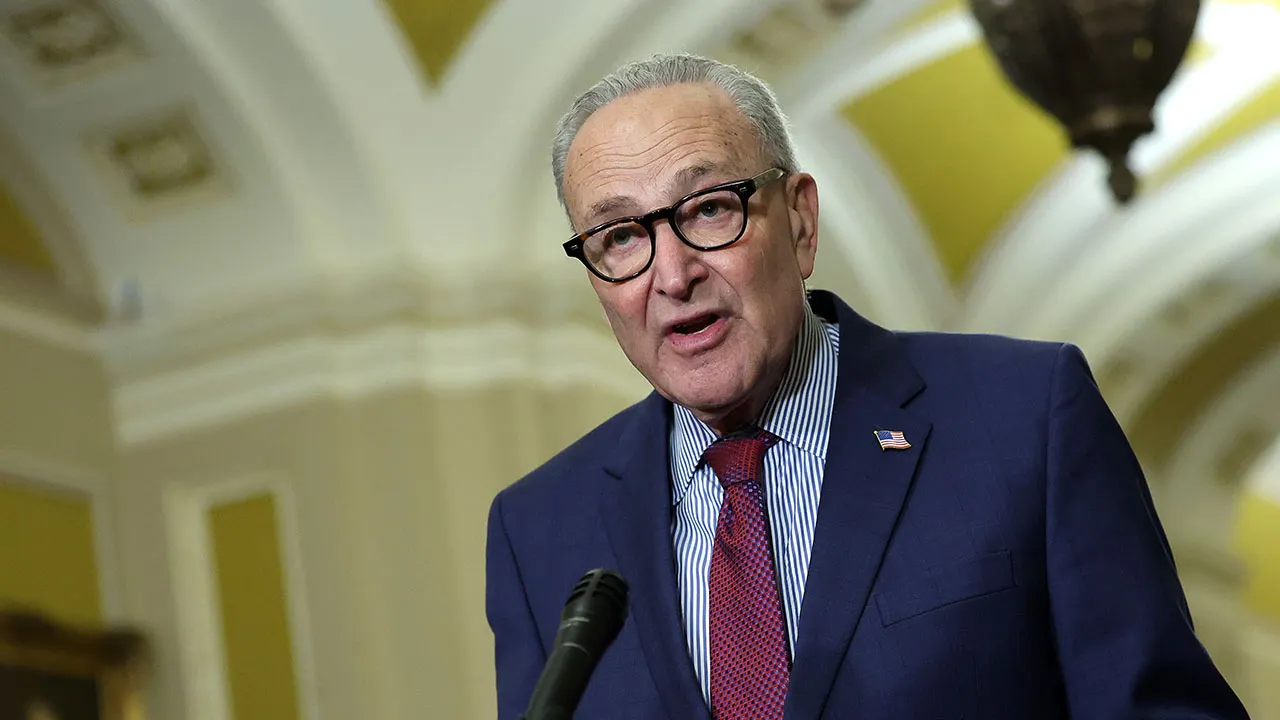
Senate Minority Leader Chuck Schumer has issued a stark warning to House Republicans, declaring that any attempt to include voter ID legislation in the Trump-backed government funding deal would be “dead on arrival” in the Senate.
The funding impasse has taken a new turn as House Republicans seek to salvage a political victory from the current spending fight, despite President Donald Trump having negotiated a temporary funding compromise with Schumer and Senate Democrats. GOP lawmakers are now demanding that the five-bill funding package include their Safeguarding American Voter Eligibility (SAVE) Act, a move that threatens to derail the fragile agreement.
“I have said it before, and I’ll say it again, the SAVE Act would impose Jim Crow-type laws to the entire country and is dead on arrival in the Senate,” Schumer stated firmly. “It is a poison pill that will kill any legislation that it is attached to. If House Republicans add the SAVE Act to the bipartisan appropriations package, it will lead to another prolonged Trump government shutdown.”
The current funding deal stripped out the controversial Department of Homeland Security spending bill in favor of a two-week funding extension. The compromise was intended to end what was designed to be a short-term partial government shutdown, but the addition of voter ID requirements threatens to extend the budgetary standoff.
The updated version of the SAVE Act would implement several significant election-related measures, including requiring photo identification before voting, mandating states to obtain proof of citizenship during in-person voter registration, and removing non-citizens from voter rolls. Supporters frame these measures as common-sense election integrity provisions, while opponents view them as voter suppression tactics.
Rep. Anna Paulina Luna (R-Fla.), who is spearheading the push to attach the voter ID legislation to the funding package, rejected Schumer’s characterization. “If you are a minority that wants a voter ID, apparently you are for racist policies according to Schumer,” Luna countered on social media platform X.
The dispute highlights the deeply entrenched partisan divide on voting rights and election administration. For the SAVE Act to become law, it would need to secure at least 60 votes in the Senate, an unlikely scenario given Senate Democrats’ vocal opposition to the measure.
The political calculus is further complicated for House Speaker Mike Johnson (R-La.), who may need Democratic support to pass any funding legislation given the resistance within his own conference. Many House Republicans remain dissatisfied with the compromise negotiated by Trump, viewing it as a capitulation to Democratic priorities.
Adding the SAVE Act to the package would likely drive away potential Democratic supporters in the House while creating a legislative ping-pong between chambers as the shutdown continues. If the modified package were to pass the House with the SAVE Act included, it would need to return to the Senate for another vote, extending the budgetary impasse.
Despite these obstacles, House Republicans are holding firm on their demands, with support from several Senate allies including Senators Rick Scott (R-Fla.) and Mike Lee (R-Utah).
“House Republicans shouldn’t let Schumer dictate the terms of government funding,” Rep. Eric Burlison (R-Mo.) asserted on X. “If Dems want to play games, no spending package should come out of the House without the SAVE Act attached — securing American elections must be a non-negotiable.”
The standoff comes at a critical juncture for government operations and reflects the broader tensions surrounding election policies ahead of future electoral contests. With both sides digging in on their respective positions, the path to resolving the government funding crisis remains uncertain as the partial shutdown continues.
Fact Checker
Verify the accuracy of this article using The Disinformation Commission analysis and real-time sources.

22 Comments
The clash over voter ID requirements is a familiar political battle. Both sides have valid concerns about election integrity and ballot access. I hope the Senate and House can find a middle ground that works for all Americans.
Voter ID is a sensitive issue that requires nuanced policymaking. Lawmakers should focus on developing bipartisan reforms that strengthen election security without disenfranchising voters.
This standoff over voter ID requirements is a familiar political battle. Both sides raise valid points about election integrity and ballot access. I hope the Senate and House can find a balanced approach that works for all Americans.
Voter ID is a sensitive issue that requires nuanced policymaking. Lawmakers should strive for bipartisan reforms that strengthen election security without disenfranchising voters.
Voter ID is a contentious issue with legitimate concerns on both sides. I hope the Senate and House can work together to find a balanced approach that strengthens election security without disenfranchising voters.
Voter ID is a complex problem without clear solutions. Lawmakers should strive for bipartisan reforms that enhance election integrity while preserving access to the ballot box.
This standoff over voter ID requirements is a familiar political battle. Both sides raise valid points about election integrity and ballot access. I hope the Senate and House can find a balanced approach that works for all Americans.
Voter ID is a sensitive issue that requires nuanced policymaking. Lawmakers should strive for bipartisan reforms that strengthen election security without disenfranchising voters.
This standoff over voter ID legislation is concerning. Ensuring the integrity of elections is important, but any reforms should be carefully balanced to protect voting rights. I hope the two sides can reach a reasonable compromise.
Voter ID is a complex issue without easy answers. Lawmakers need to weigh election security and voter access when crafting policies. Bipartisanship will be key to finding an effective solution.
The debate over voter ID legislation highlights the challenges of ensuring secure and accessible elections. I’m curious to see if the parties can find common ground on this sensitive issue.
Voter ID is a polarizing topic, but maintaining the integrity of elections is crucial. Hopefully the Senate and House can work together on a balanced solution.
The clash over voter ID legislation highlights the challenges of ensuring secure and accessible elections. I’m curious to see if the Senate and House can find a compromise solution that addresses the concerns of both parties.
Voter ID is a complex problem without clear answers. Lawmakers should focus on developing bipartisan reforms that enhance election integrity while preserving the right to vote.
This debate over voter ID seems to be heating up again. It’s an issue that touches on important democratic principles like ballot access and election integrity. I hope lawmakers can find a balanced approach.
Voter ID laws are controversial, but ensuring secure and fair elections is crucial. Hopefully the two parties can compromise on a solution that works for everyone.
Interesting political impasse over voter ID legislation. Reasonable people can disagree on the balance between election security and accessibility. Hopefully both sides can find a compromise that works for all Americans.
Voter ID is a complex issue with valid concerns on both sides. A bipartisan solution that strengthens election integrity without disenfranchising voters would be ideal.
The battle over voter ID legislation is a familiar one. Reasonable people can disagree on the right balance between electoral security and voter access. I’m curious to see if the parties can find common ground.
Voter ID is a sensitive topic without easy answers. Hopefully lawmakers can set aside partisanship and develop a sensible policy that protects the integrity of elections.
The ongoing debate over voter ID legislation highlights the difficulty of balancing election integrity and voting rights. I’m curious to see if the Senate and House can find a compromise solution that addresses the concerns of both parties.
Voter ID is a complex problem without easy answers. Lawmakers should work together to craft policies that enhance election security while protecting voter access to the polls.