


Listen to the article
Senate Democrats Poised to Block DHS Funding Bill Following Fatal Border Patrol Shooting
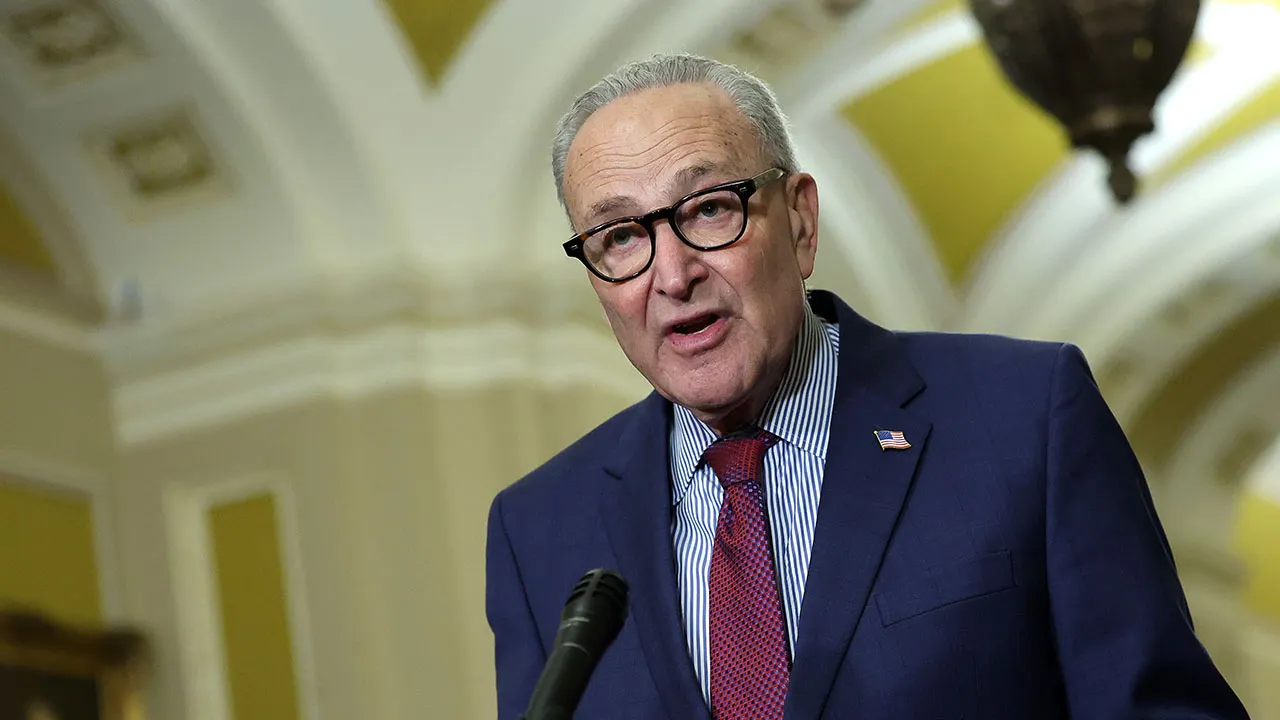
Senate Democrats, led by Minority Leader Chuck Schumer, have announced plans to vote against Department of Homeland Security funding legislation following a fatal shooting involving a border patrol agent in Minnesota. The decision threatens to derail a fragile bipartisan agreement and increases the likelihood of a partial government shutdown when the current funding expires on January 30.
The shooting of 37-year-old Alex Pretti during an immigration enforcement operation in Minneapolis on Saturday has intensified existing Democratic concerns about DHS operations. Congressional Democrats were already uneasy about supporting DHS funding due to the agency’s presence in Minnesota and other locations across the country.
“Because of Republicans’ refusal to stand up to President Trump, the DHS bill is woefully inadequate to rein in the abuses” of Immigration and Customs Enforcement, Schumer said in a statement. “I will vote no. Senate Democrats will not provide the votes to proceed to the appropriations bill if the DHS funding bill is included.”
The DHS funding is currently part of a broader package that includes five other spending bills. Removing it would create significant procedural complications, as any changes to the package would require approval from the House of Representatives, which is not scheduled to return from recess until February 2.
The timing is particularly problematic as an arctic storm sweeping across the country has already forced the Senate to cancel Monday’s votes, further compressing an already tight legislative calendar before the funding deadline.
A senior Senate aide expressed frustration with the Democrats’ position, noting that the bills had been negotiated in a bipartisan manner. “These bills were negotiated with Dems — they agreed to what’s in them,” the aide told Fox News Digital.
The current proposal would fully fund DHS but includes several restrictions and reporting requirements. If these conditions aren’t met, certain funding streams would be automatically cut off—a compromise that had previously appeared acceptable to many lawmakers from both parties.
Even before Saturday’s shooting, some Senate Democrats had voiced opposition to the legislation, including Senators Chris Murphy (D-Conn.) and Tim Kaine (D-Va.). Following the incident, additional Democratic senators joined in opposition, including Catherine Cortez Masto (D-Nev.) and Jacky Rosen (D-N.M.).
“My personal guiding principle has always been ‘agree where you can and fight where you must,'” Rosen said in a statement. “And I believe this is a time when we must fight back.”
The House of Representatives completed its work on the spending package last Thursday, passing the legislation in two separate votes—one specifically for DHS funding and another combining funding for the departments of War, Health and Human Services, Labor, Education, Transportation, and Housing and Urban Development.
House Republican leadership has indicated they have no plans to cut short their scheduled recess to address any changes the Senate might make. “We passed all 12 bills over to the Senate, and they still have six in their possession that they need to pass to the president,” a House GOP leadership source told Fox News Digital. “We have no plan to come back next week.”
Even if House leaders changed course, the ongoing winter storm would likely delay lawmakers’ return until Tuesday at the earliest, making it virtually impossible to finalize the legislation before the January 30 deadline.
A partial government shutdown would affect only agencies that haven’t received appropriations. This could impact payments to active duty military personnel, air traffic controllers, and border patrol agents, among other critical government functions.
The political standoff over DHS funding reflects broader tensions over immigration enforcement policies, which have been a flashpoint between Democrats and Republicans throughout the current administration.
Fact Checker
Verify the accuracy of this article using The Disinformation Commission analysis and real-time sources.

10 Comments
This is a sensitive and complex issue. While the shooting in Minneapolis is concerning, I’m not sure blocking DHS funding is the best approach. There may be room for bipartisan compromise to address legitimate concerns without risking a government shutdown.
I agree, a shutdown would likely do more harm than good. Both sides should work together to find a balanced solution that upholds security while respecting civil liberties.
The unrest in Minneapolis is troubling, but I’m not convinced that blocking DHS funding is the right solution. There could be alternative ways to address the agency’s issues without resorting to a government shutdown.
That’s a fair point. Shutdowns tend to create more problems than they solve. Perhaps the focus should be on targeted DHS reforms rather than a blanket funding block.
It’s understandable that Senate Democrats are concerned about DHS operations, but a government shutdown could have serious economic and security consequences. I hope they can find a way to address their concerns through constructive dialogue and negotiation.
The situation in Minneapolis is certainly concerning, but I’m not convinced that blocking DHS funding is the right move. A government shutdown could have significant negative impacts on the economy and national security. I hope the parties can find a way to address the issues constructively.
This is a complex issue with valid concerns on both sides. While the unrest in Minneapolis is worrying, I’m not sure that blocking DHS funding is the best approach. A government shutdown could do more harm than good.
Agreed. Both parties should work together to find a balanced solution that enhances security while respecting civil liberties. Compromise and cooperation are key.
I can understand the Senate Democrats’ concerns, but a government shutdown over DHS funding could be very disruptive. Perhaps there are other ways to address the issues with the agency’s operations without resorting to such drastic measures.
That’s a fair point. Shutdowns often create more problems than they solve. Targeted reforms or increased oversight might be a better approach than a blanket funding block.