


Listen to the article
Federal immigration officials have halted their enhanced operations in Maine following a week-long enforcement surge that resulted in hundreds of arrests, U.S. Senator Susan Collins announced Thursday.
The Republican senator said she had spoken directly with Secretary of Homeland Security Kristi Noem, who confirmed that “there are currently no ongoing or planned large-scale ICE operations” in the state. Collins noted she had been pressing Secretary Noem and other administration officials to reconsider their approach to immigration enforcement in Maine.
“ICE and Border Patrol officials will continue their normal operations that have been ongoing here for many years,” Collins clarified in her statement.
The Department of Homeland Security, however, provided a more ambiguous response, stating only that it would “continue to enforce the law across the country, as we do every day.” ICE, which operates under DHS, emphasized its ability to function despite protestor resistance but did not specifically address whether operations in Maine were being scaled back.
“The early success of this operation displays how effectively ICE officers can operate anywhere and in any environment,” said ICE Deputy Assistant Director Patricia Hyde.
The announcement comes more than a week after ICE began an operation dubbed “Catch of the Day” in Maine. Federal officials reported approximately 50 arrests on the first day alone and indicated they had targeted roughly 1,400 people in the largely rural state of 1.4 million residents, where only 4% of the population is foreign-born.
In Lewiston, one of the cities targeted in the operation, Mayor Carl Sheline welcomed news of the scale-down, describing ICE’s activities as “disastrous” for the community. “ICE operations in Maine have failed to improve public safety and have caused lasting damage to our communities,” Sheline said. “We will continue working to ensure that those who were wrongfully detained by ICE are returned to us.”
Similar immigration enforcement operations have been launched in Minnesota, Chicago, and other cities across the country. While the Trump administration had initially pushed to deploy National Guard troops to address both immigration and crime concerns, the White House backed away from those plans in early January after encountering legal challenges.
Homeland Security officials have justified the Maine operation by claiming some arrests involved individuals “convicted of horrific crimes including aggravated assault, false imprisonment, and endangering the welfare of a child.” However, court records present a more nuanced picture, showing that while some detainees had felony convictions, others were individuals with unresolved immigration proceedings or people who had been arrested but never convicted of any crime.
One case highlighted by federal authorities involved Elmara Correia, whom they described as being “arrested previously for endangering the welfare of a child.” Manuel Vemba, who has a four-year-old son with Correia, disputed this characterization, explaining that a neighbor had called police about their son playing outside with friends, and he believes no charges were ever filed.
“She does not have any criminal record, and she’s not the type of person they’re labeling her,” Vemba said. “Elmara is a mother, just like many other mothers out there, who loves her child and has sacrificed for her child.” Their son, who is on the autism spectrum, is currently staying with Vemba, who has told the child that “Mommy’s traveling. Mommy will be back.” A Massachusetts judge granted Correia a bail hearing on Wednesday.
The immigration enforcement issue has taken on political dimensions in Maine, where Collins is up for reelection this year. Unlike some Republican senators in competitive races, Collins has not called for Noem’s resignation but has suggested that ICE should not target individuals legally present in the United States.
Democratic Governor Janet Mills, who announced her Senate candidacy in October and could face Collins in the general election, has demanded that immigration officials provide judicial warrants, real-time arrest numbers, and essential information about those being detained in Maine. Mills has criticized Collins for voting to fund the Department of Homeland Security and other federal agencies on Thursday, accusing her of governing “without any courage.”
Despite the announced scaling back of operations, Mills insisted that ICE must still be held accountable. “We still do not know critical details about the 200 individuals ICE says it has detained, many of whom appear to be here legally, who have no criminal record and who are not ‘the worst of the worst,'” Mills said. “The people of Maine deserve to know the identities of every person taken from here, the legal justification for doing so, where they are being held, and what the federal government’s plan for them is.”
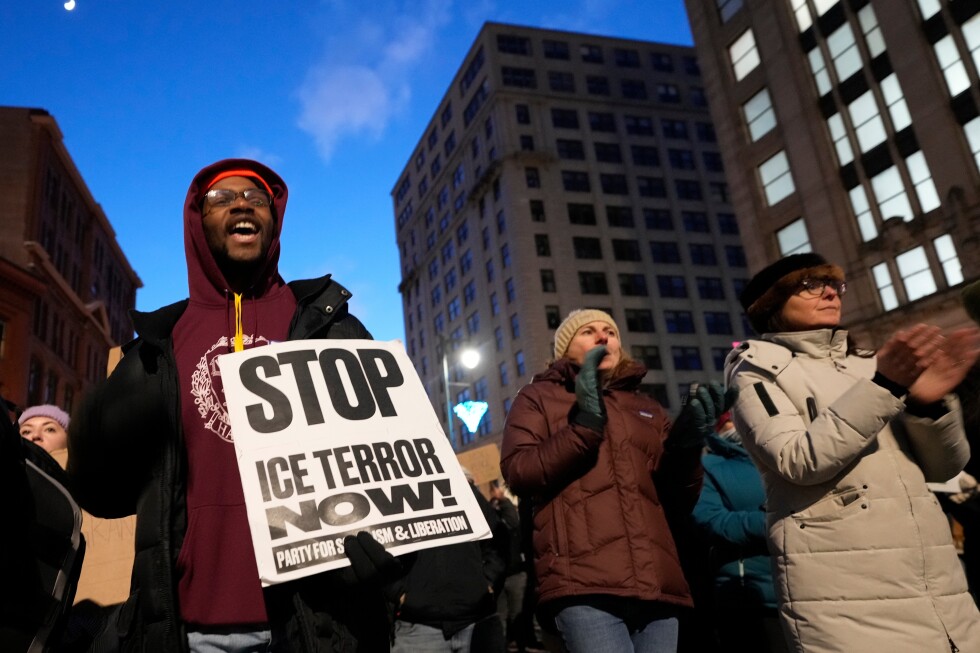
Meanwhile, Graham Platner, a first-time Democratic candidate challenging Mills in the primary, has criticized both Mills’ and Collins’ handling of the situation and has called for ICE to be dismantled. Platner organized a protest outside Collins’ office in Portland on Thursday.
Fact Checker
Verify the accuracy of this article using The Disinformation Commission analysis and real-time sources.

10 Comments
I’m glad to see the federal government taking a more nuanced approach to immigration enforcement in Maine. Balancing public safety and civil liberties is always a delicate task.
Kudos to Sen. Collins for pressing the administration on this issue and securing a more targeted enforcement strategy. Open communication is key in these sensitive matters.
This is an interesting development regarding ICE operations in Maine. I’d be curious to hear more details on the talks between Sen. Collins and Secretary Noem, and what led to the decision to scale back the large-scale enforcement surge.
Seems like a pragmatic compromise to allow normal ICE operations while responding to local concerns. It will be important to monitor the situation going forward.
This seems like a pragmatic solution that balances enforcement needs with community concerns. I’m curious to see how it plays out on the ground in the coming months.
Kudos to Sen. Collins and DHS for finding a middle ground here. Maintaining public safety while respecting civil liberties is always a delicate balance.
An interesting compromise, though the details around the scope of ongoing ICE activities in Maine remain a bit unclear. I hope transparency and oversight can help build trust on all sides.
While I’m glad to see a more targeted approach to immigration enforcement in Maine, I hope this doesn’t inadvertently create new challenges or gaps in the system.
This decision by ICE and DHS raises some questions. While I appreciate the desire to be responsive to local concerns, I hope it doesn’t undermine necessary immigration enforcement efforts.
It will be important to ensure normal ICE operations in Maine don’t lead to unintended consequences or disproportionate impacts on certain communities.