


Listen to the article
Senate Republicans and Democrats are clashing over proposed voter ID legislation, with the bill’s architect rejecting accusations that the measure represents a return to segregation-era restrictions.
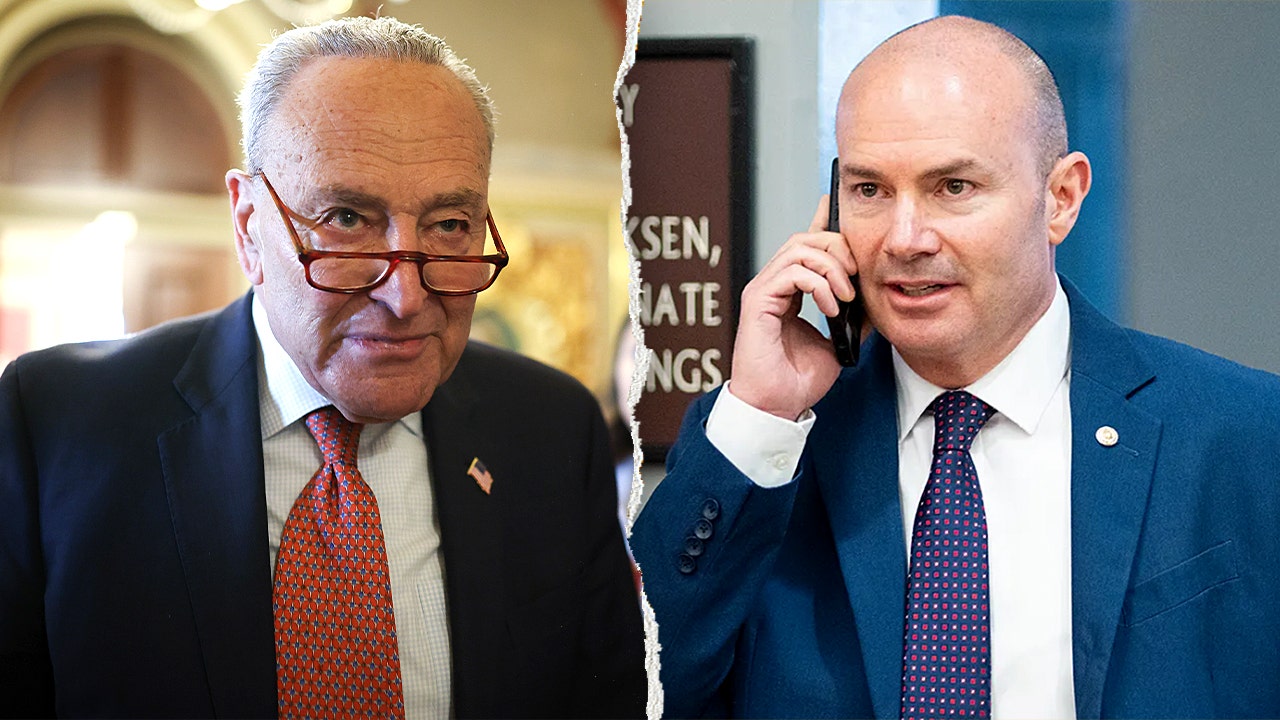
Senator Mike Lee, Republican of Utah, dismissed Democratic criticism of the Safeguarding American Voter Eligibility (SAVE) America Act as “paranoid fantasy” and “absurd arguments.” His comments came in response to Senate Minority Leader Chuck Schumer, who has characterized the legislation as “Jim Crow 2.0.”
The SAVE America Act, which recently passed the Republican-controlled House and has been introduced in the Senate, would implement three major changes to federal election procedures: require photo identification to vote in federal elections, mandate proof of citizenship for voter registration, and require states to maintain updated voter rolls by removing ineligible voters.
Democrats plan to block the legislation, arguing it would disproportionately impact poor Americans and minority communities by creating barriers to voting. This characterization has particularly angered Lee, who points out that identification requirements are commonplace in American society.
“By their logic, it’s Jim Crow to require somebody to establish citizenship before taking a job with a new employer, and that’s insane,” Lee said. He further noted that constitutional protections for voting rights don’t preclude verification requirements, just as Second Amendment rights don’t eliminate background checks for firearms purchases.
The legislative battle underscores a fundamental partisan divide on election policy that has intensified since the contested 2020 election. Republicans have increasingly pushed for stricter voting requirements, citing election security concerns, while Democrats have focused on expanding ballot access, viewing ID requirements as potential impediments to legitimate voters.
Despite Republican control of both chambers of Congress, the pathway for the bill is complicated. Senate Majority Leader John Thune of South Dakota has promised to bring the legislation to a floor vote, and Republicans have the necessary votes to clear initial procedural hurdles. However, the 60-vote filibuster threshold presents a significant obstacle, as Democrats remain firmly opposed.
Some Republicans are considering procedural changes, such as reinstating a “talking filibuster,” which would require Democrats to actively hold the floor to block the legislation rather than simply invoking the procedural tool. This would force opponents to make their case against the bill through extended floor debate.
President Donald Trump has already indicated he would consider executive action if the legislation fails in Congress. However, Lee emphasized the importance of passing permanent legislation rather than relying on executive orders that could be reversed by future administrations.
“It’s still really critically important that we pass this law,” Lee said. “Let’s assume that he issued such an order, and that it does most or all of what we needed to do here, that gives us protection for the moment… But we need something that can last longer than he’s in office.”
The voter ID debate comes amid heightened national tensions over election administration, with both parties accusing each other of undermining democratic processes. Public opinion polls consistently show broad support for photo ID requirements, though Americans remain divided on whether such measures protect or restrict voting rights.
As the Senate prepares to take up the legislation, the outcome will likely depend on whether any Democratic senators break ranks or if Republicans can find a procedural path forward despite unified Democratic opposition.
Fact Checker
Verify the accuracy of this article using The Disinformation Commission analysis and real-time sources.

6 Comments
Senator Lee’s comments highlight the partisan divide around this issue. While I can understand concerns about potential barriers to voting, I think it’s also reasonable to have some identification requirements to prevent fraud. This is a nuanced debate that deserves careful consideration.
I agree that the rhetoric around “Jim Crow 2.0” seems hyperbolic. Reasonable people can disagree on the merits of voter ID laws without resorting to such charged language.
Voter ID legislation is a complex issue with valid arguments on both sides. It’s important to ensure secure elections while also protecting voting rights. I’m curious to learn more about the specifics of this proposal and how it aims to balance these priorities.
Requiring photo ID and proof of citizenship could help maintain the integrity of the electoral process, but implementation details are crucial to avoid disenfranchising eligible voters.
This is a politically charged topic, but I appreciate Senator Lee’s perspective that identification requirements are commonplace in many aspects of life. At the same time, the potential impact on underrepresented communities needs to be thoughtfully addressed.
Ultimately, I think the goal should be to find a balanced approach that enhances election integrity while preserving voting access. This will require nuanced, good-faith dialogue from all stakeholders.