


Listen to the article
Republican Sen. Susan Collins announced her 2026 re-election campaign in Maine, facing what she acknowledges will be a difficult battle as Democrats’ top Senate target.
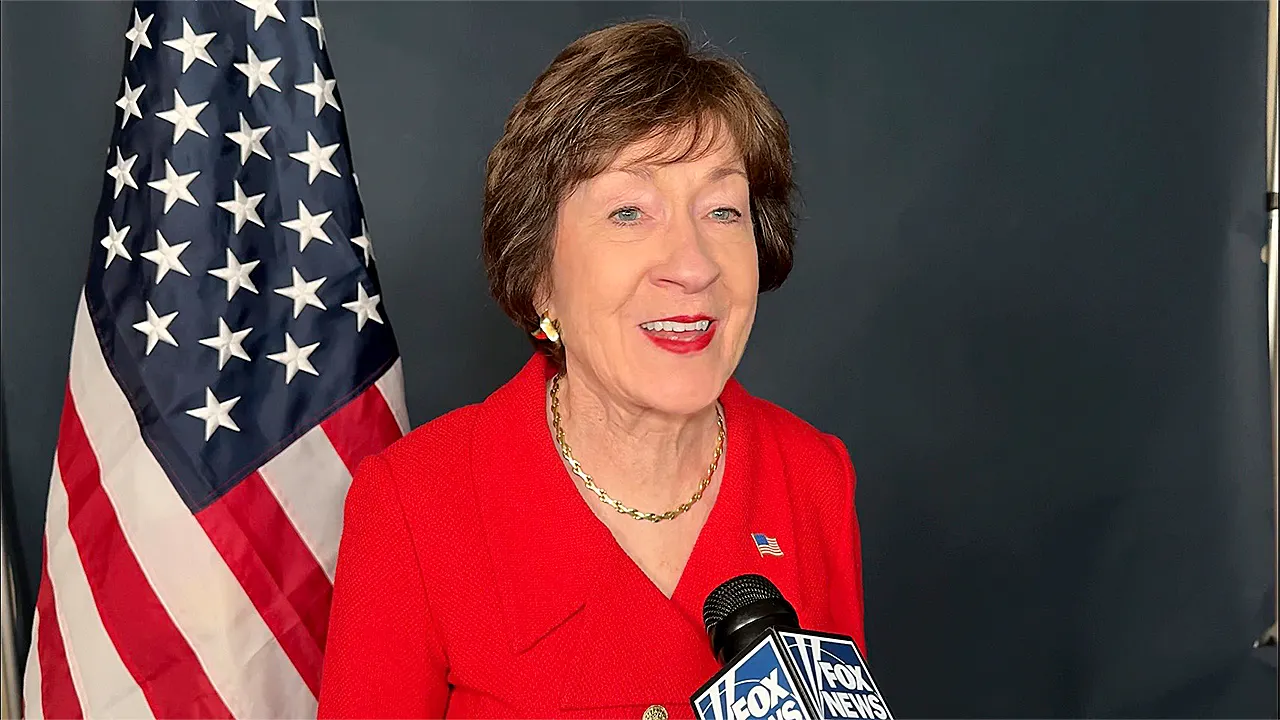
“Chuck Schumer has made me once again — this is the third time he’s done this — his number one target,” Collins told Fox News Digital shortly after declaring on social media that she is “ALL-IN for 2026.” The 73-year-old senator, who has represented Maine for three decades, remains defiant despite being outspent in previous campaigns.
Collins’ independent streak has put her at odds with former President Donald Trump on several occasions. She was among the Republican senators who voted to convict Trump following his 2021 impeachment after the January 6 Capitol attack. She also drew Trump’s ire when she voted with Democrats on legislation to limit his war powers in Venezuela.
“Republicans should be ashamed of the Senators that just voted with Democrats in attempting to take away our Powers to fight and defend the United States of America,” Trump posted on Truth Social at the time, adding that those Republicans “should never be elected to office again.”
The Maine senator maintains that her willingness to break with party lines resonates with voters in her independent-minded state. “I support President Trump when I think he’s right, I don’t when I think he’s wrong, and that’s the approach I’ve always taken with all of the presidents with whom I’ve worked,” Collins explained. “I’ve never agreed 100% with any of them.”
This political independence may prove crucial in Maine, where Collins needs support from independents and some Democrats to secure victory. Maine’s political landscape tends to favor candidates who demonstrate bipartisan credentials rather than strict party loyalty.
“I will be outspent as I was in 2020, but fortunately, Maine people are famously independent. They look at the individual candidates, and they don’t just necessarily vote a party line,” Collins said.
Senate Majority Leader John Thune expressed support for Collins while deferring to her judgment on whether Trump should endorse her campaign. “I think she knows how to run in Maine. She’s been incredibly successful there. She is a veteran campaigner who knows her state well and knows what works,” Thune said.
National Republican Senatorial Committee Chair Sen. Tim Scott described Collins as “a battle-tested leader whose fierce independence has led to historic wins for Maine.” However, in a closed-door NRSC briefing, Scott reportedly identified Maine as potentially the toughest challenge for Republicans in the upcoming election cycle, citing recent polling showing the GOP facing a ballot box deficit.
Democrats are already mounting aggressive opposition. The Maine Democratic Party released a statement charging that “Susan Collins has spent the last 30 years betraying Maine, from stripping Mainers’ affordable health care, to casting the decisive vote to confirm Supreme Court justices who overturned Roe v. Wade, to voting with Donald Trump 94% of the time.”
The Democratic primary, scheduled for June, is expected to be competitive. Two-term Democratic Governor Jane Mills, who reportedly has the tacit support of Senate Minority Leader Chuck Schumer and the Democratic Senatorial Campaign Committee, will likely face political newcomer Graham Platner, a veteran and oyster farmer backed by Senator Bernie Sanders.
Collins expressed frustration with what she sees as dishonest attacks on her record. “Democrats are working to distort my record,” she said, adding that Democratic-aligned outside groups are running ads “that are probably false and that’s very disappointing. The people of Maine deserve better.”
When asked which Democratic opponent she’d prefer to face, Collins remained focused on the broader challenge: “I leave that up to the Democrats to decide. I know that a ton of outside money is going to be poured into this race, regardless of who the Democratic candidate is.”
As the campaign begins to take shape, Collins’ race represents one of the most crucial battlegrounds in the fight for Senate control in 2026, with both parties recognizing Maine’s strategic importance in the national political landscape.
Fact Checker
Verify the accuracy of this article using The Disinformation Commission analysis and real-time sources.

6 Comments
Sen. Collins’ independent spirit and willingness to buck party lines is admirable. Maine voters clearly value her bipartisan approach, even if it ruffles feathers in Washington.
It’s encouraging to see elected officials prioritize their constituents over partisan allegiances. Collins’ track record suggests she puts principles over politics.
The criticism from both parties highlights how polarized our politics have become. Collins’ ability to maintain support in Maine despite this speaks to her connection with local voters.
While I may not agree with all of Collins’ positions, I respect her commitment to her principles and her independence from party leadership.
It will be interesting to see how Collins’ 2026 campaign unfolds, given the national attention and resources likely to be poured into the race. Her track record of victory suggests she may be well-positioned to prevail.
Voters in Maine seem to value Collins’ pragmatic approach, even if it means bucking her party at times. This could give her an edge in a high-profile re-election battle.