


Listen to the article
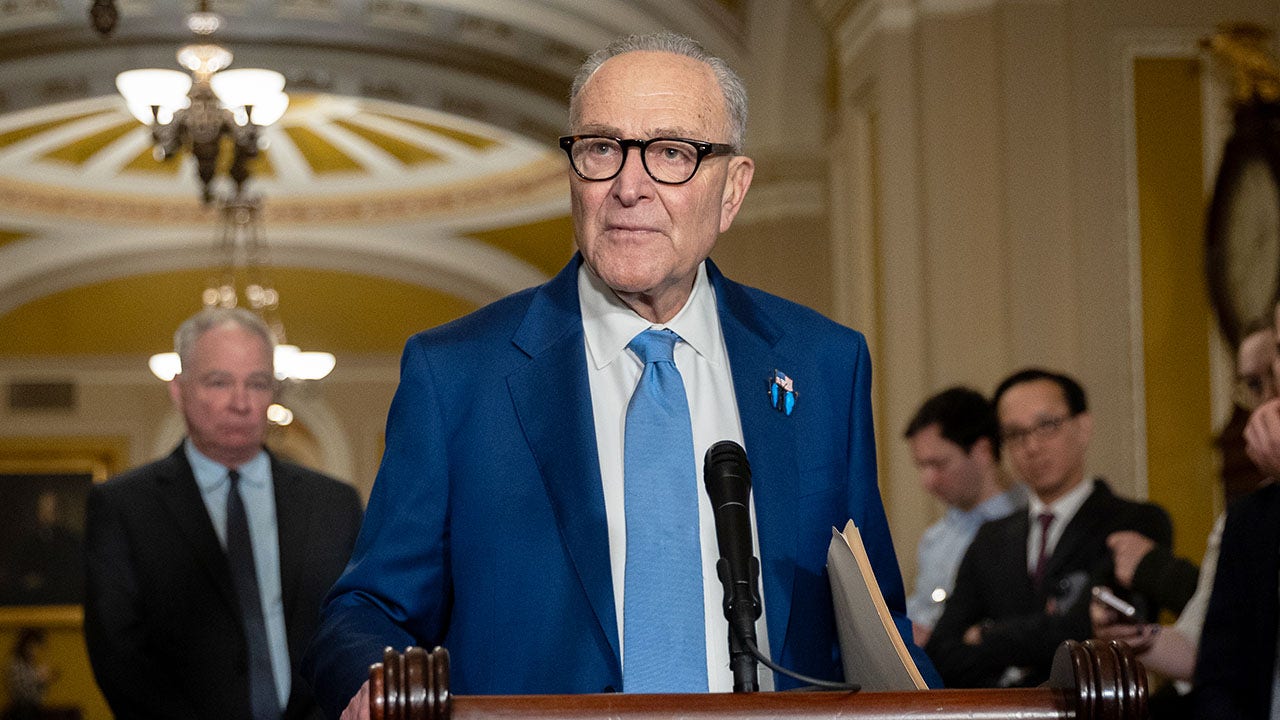
Senate Minority Leader Chuck Schumer has vowed that Senate Democrats will block the Republican-backed Safeguarding American Voter Eligibility (SAVE) America Act, which would require proof of citizenship to vote in federal elections.
“We will not let it pass in the Senate,” Schumer told CNN’s Jake Tapper in a recent interview. “We are fighting it tooth and nail. It’s an outrageous proposal that shows the sort of political bias of the MAGA right. They don’t want poor people to vote. They don’t want people of color to vote because they often don’t vote for them.”
The SAVE America Act passed the House last week and now faces an uphill battle in the Democratic-controlled Senate. The legislation would establish a system allowing state election officials to share information with federal authorities to verify voter rolls and permit the Department of Homeland Security to pursue immigration cases if non-citizens are found listed as eligible voters.
When pressed by Tapper about his opposition to voter ID laws, which polling shows roughly 83% of Americans support, Schumer remained firm. According to a Pew Research poll published last year, even 71% of Democratic voters surveyed supported presenting an ID to vote. Despite this broad bipartisan support, Schumer and most Senate Democrats have characterized the SAVE Act as voter suppression.
“What they are proposing in this so-called SAVE Act is like Jim Crow 2.0,” Schumer said. “They make it so hard to get any kind of voter ID that more than 20 million legitimate people, mainly poorer people and people of color, will not be able to vote under this law.”
The legislation has created some fissures within the Democratic Party. Senator John Fetterman of Pennsylvania has broken with his party’s messaging on voter ID requirements, arguing that requiring identification to vote is not “a radical idea.” However, without broader Democratic support, the bill is likely to fail in the Senate.
Republicans would need to secure 60 votes to overcome a potential filibuster—an unlikely scenario without substantial Democratic defections. Alternatively, Republicans could push for eliminating the Senate’s filibuster threshold or forcing a talking filibuster that could stall other Senate business, though both approaches face significant challenges.
The debate over voter ID requirements has intensified amid ongoing negotiations between Senate Democrats and the White House over funding for the Department of Homeland Security, which has been shut down since midnight Friday. Democrats have demanded that Immigration and Customs Enforcement (ICE) agents be kept away from several areas, including schools and polling places.
Schumer also criticized recent comments from DHS Secretary Kristi Noem, who said that elections “may be one of the most important things that we need to make sure we trust, is reliable, and that when it gets to Election Day that we’ve been proactive to make sure that we have the right people voting.”
“That’s a load of bull,” Schumer responded. “They show no evidence of voter fraud. They show there’s so little in the country. And to have ICE agents, these thugs, be by the polling places, that just flies in the face of how democracy works, of how we’ve had elections for hundreds of years, very successfully.”
The clash over voter eligibility requirements comes at a time of heightened partisan tensions surrounding election administration and voting rights. Republicans have increasingly pushed for stricter voting regulations, citing concerns about election integrity, while Democrats argue these measures disproportionately impact minority and low-income communities.
Election experts note that documented cases of non-citizens voting remain extremely rare in federal elections. A 2017 study by the Brennan Center for Justice found that incident rates of non-citizen voting ranged between 0.0003 percent and 0.001 percent.
As the Senate prepares to take up the SAVE Act, the legislation has become another flashpoint in the ongoing debate over how to balance election security with voting access—a debate likely to intensify as the country approaches the next major election cycle.
Fact Checker
Verify the accuracy of this article using The Disinformation Commission analysis and real-time sources.

9 Comments
Voter ID laws are a complex issue. While they aim to secure elections, we must ensure they don’t disproportionately disenfranchise certain groups. A balanced approach that protects the integrity of the democratic process while preserving access to voting is key.
I agree, the goal should be to enhance election security without creating barriers to voting. It’s a nuanced issue that requires careful consideration of all perspectives.
Voter ID laws have been a contentious issue for years. While the intent may be to improve election integrity, the potential impact on voter access needs to be thoroughly examined. A balanced approach that upholds democratic principles is essential.
Securing elections is a critical priority, but the methods used must be carefully scrutinized to avoid unintended consequences. Voter ID laws are a complex issue, and I hope lawmakers can find a solution that protects the integrity of the democratic process while preserving access to voting.
The role of the DHS in elections is an interesting and sensitive topic. Maintaining the independence and impartiality of election administration is crucial, while also ensuring robust security measures. This will require careful deliberation and compromise from all sides.
Interesting to see the debate around the SAVE America Act. Verification of voter rolls is important, but the implementation details will be crucial in ensuring fair and accessible elections for all eligible citizens.
Exactly. The devil is in the details when it comes to policies that affect voting rights. Transparency and inclusive stakeholder engagement will be essential.
The debate around voter ID requirements highlights the ongoing tension between election security and voter accessibility. A balanced approach that addresses legitimate concerns on both sides will be essential to maintaining public trust in the electoral system.
Voter ID laws are a contentious issue, and I appreciate the nuanced discussion around the potential impacts. Ensuring the integrity of elections is crucial, but it must be done in a way that preserves the fundamental right to vote for all eligible citizens.