


Listen to the article
Senate Democrats to Force Vote on War Powers as Iran Ceasefire Begins
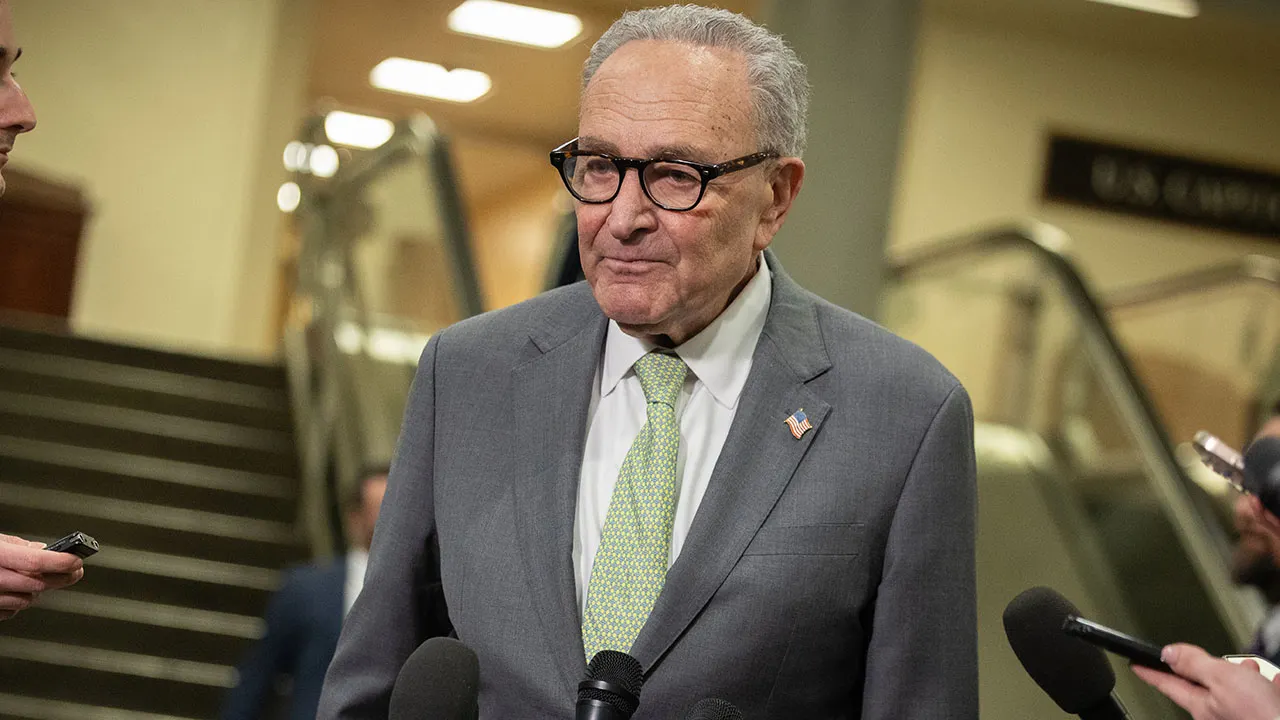
Senate Minority Leader Chuck Schumer announced Wednesday that Democrats will force another vote on a war powers resolution aimed at limiting President Donald Trump’s military actions in Iran when the Senate returns next week. The move comes as a fragile two-week ceasefire takes effect following weeks of escalating conflict.
“Trump must end the war now,” Schumer declared during a press conference in New York City. “The only viable solution is a lasting diplomatic one. A two-week ceasefire, especially one as fragile as this, is not a strategy. It’s not a diplomatic solution. It’s not a plan.”
Schumer characterized the conflict as “one of the very worst military and foreign policy actions that the United States has ever taken,” arguing it has damaged U.S. global credibility, failed to check Iran’s nuclear ambitions, increased gas prices, and compromised control over the strategic Strait of Hormuz.
The ceasefire was brokered just hours before Trump’s self-imposed deadline Tuesday night, which had prompted international concern after the president had warned that “a whole civilization will die tonight” if Iran didn’t agree to terms.
Republicans have largely praised the temporary agreement. Senator Rick Scott of Florida called it “excellent news” on social media, describing it as “a strong first step toward holding Iran accountable” and crediting Trump’s “peace through strength” approach over what he characterized as “chaos and weak appeasement policies.”
As the ceasefire enters its first full day, tensions remain high. Iran has already presented a 10-point proposal for a broader peace agreement that includes demands to maintain control of the Strait of Hormuz and continue its uranium enrichment program—conditions Trump promptly rejected.
“There is only one group of meaningful ‘POINTS’ that are acceptable to the United States, and we will be discussing them behind closed doors during these negotiations,” Trump posted on his Truth Social platform. “These are the POINTS that are the basis on which we agreed to a CEASEFIRE.”
The Strait of Hormuz remains a central focus in the conflict. The narrow waterway between the Persian Gulf and the Gulf of Oman is one of the world’s most crucial maritime chokepoints, with approximately 20% of global oil shipments passing through it daily. Any disruption to shipping in the strait can have immediate impacts on global energy markets and prices.
Next steps in the peace process include in-person negotiations scheduled for this weekend in Islamabad. The U.S. delegation will include Vice President JD Vance, Special Envoy to the Middle East Steve Witkoff, and Jared Kushner.
This will be the fourth attempt by Senate Democrats to pass a war powers resolution since the conflict began in late February. Previous efforts have been blocked by Republicans, though some GOP members have expressed growing unease about Trump’s threats to bomb Iranian power plants and bridges.
“Congress must reassert its authority, especially at this dangerous moment,” Schumer insisted. “No president, Democrat or Republican, should take this country to war alone—not now, not ever. Republicans will once again have the opportunity to join Democrats and end this reckless war of choice.”
The conflict has caused significant damage within Iran, including destroyed infrastructure and civilian casualties. Images of a damaged B1 bridge west of Tehran in Karaj have circulated widely, highlighting the impact of airstrikes on civilian infrastructure.
Senate Democrats had initially proposed five different war powers resolutions in an attempt to compel Secretary of State Marco Rubio and Secretary of War Pete Hegseth to testify about the military operation, dubbed “Epic Fury” by the administration.
With the Senate set to reconvene Monday, the timing of the vote remains uncertain, but Democrats appear determined to force the issue despite the temporary halt in hostilities.
Fact Checker
Verify the accuracy of this article using The Disinformation Commission analysis and real-time sources.

9 Comments
Interesting to see Schumer criticize Trump’s Iran policy. Limiting presidential war powers seems prudent, but a fragile 2-week ceasefire is not a real solution. We need lasting diplomatic efforts to resolve tensions with Iran.
I agree, the ceasefire alone is not a long-term strategy. Congress should work to find a diplomatic path forward that addresses the nuclear issue and regional tensions.
This conflict has clearly damaged US credibility and global standing. Schumer is right to push for a more thoughtful, diplomatic approach rather than reckless escalation. Limiting the president’s war powers seems prudent.
Absolutely. A short-term ceasefire is not enough. Resolving this crisis requires nuanced diplomacy, not military posturing. Congress should assert its role in matters of war and peace.
Limiting presidential war powers is a reasonable goal, but the details matter. Schumer is right that a short ceasefire is not a long-term solution. Congress needs to work toward a diplomatic resolution that addresses the core issues, not just temporary ceasefires.
Schumer makes some valid points. The US needs a coherent, long-term strategy for dealing with Iran, not just temporary ceasefires. Limiting presidential war powers could help prevent rash decisions. But details matter – Congress must act responsibly too.
The conflict with Iran has clearly damaged US standing globally. Schumer’s call for Congress to limit presidential war powers is worth considering, but they must also offer a coherent diplomatic strategy to resolve the underlying tensions. Short-term ceasefires are not enough.
Schumer is right to push for Congress to reassert its role on matters of war and peace. A fragile ceasefire is not enough – we need real diplomacy to resolve this crisis with Iran. Limiting presidential war powers could help, but Congress must also act thoughtfully.
The situation with Iran is complex and delicate. While a ceasefire is welcome, Schumer is right that it’s not a real solution. Congress should work to find a diplomatic path forward that addresses the underlying issues, not just short-term tensions.