


Listen to the article
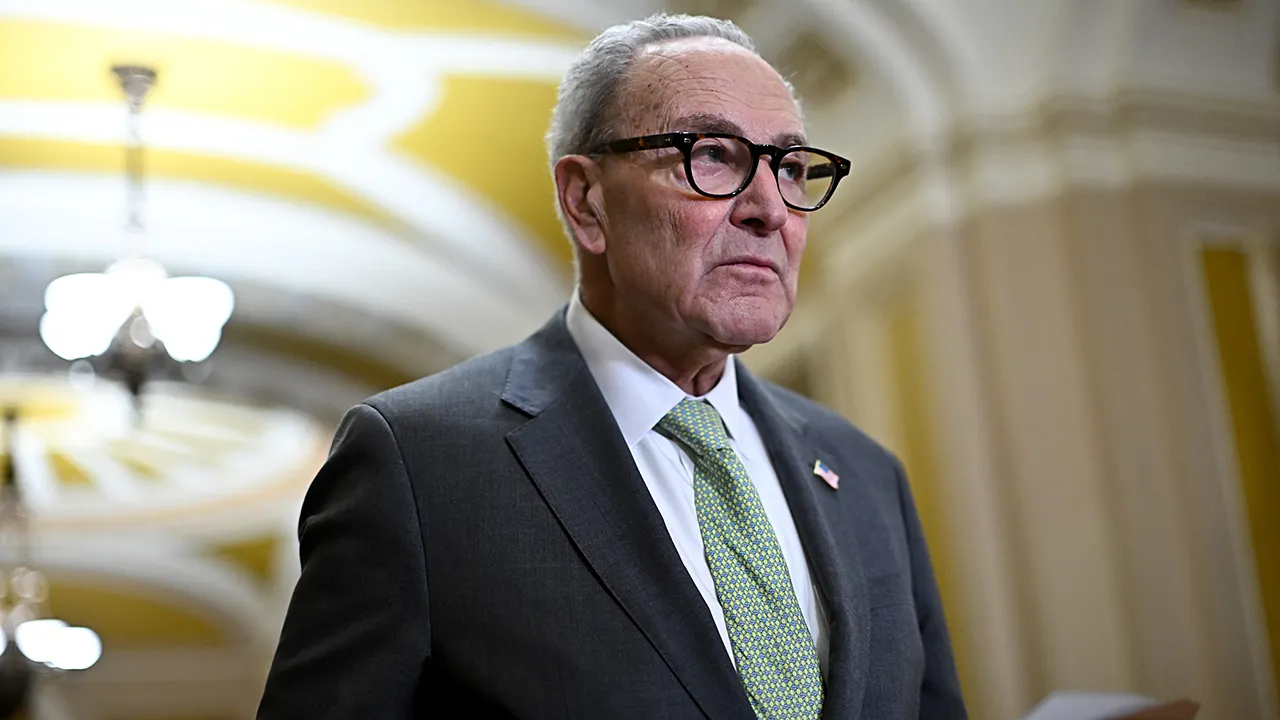
Senate Minority Leader Chuck Schumer is facing significant backlash after criticizing Secretary of War Pete Hegseth over Pentagon spending while ignoring similar expenditures during the Biden administration.
Schumer recently condemned Hegseth for the Pentagon’s $93.4 billion spending in the final month of fiscal year 2025, highlighting millions spent on steak, seafood, and furniture. The New York Democrat suggested these funds could have been better used to extend the Affordable Care Act for three years.
“Hegseth spent $93 billion in one month,” Schumer wrote on social media. “But instead of lowering American’s healthcare costs, Hegseth used millions of taxpayer dollars on fruit baskets, Herman Miller recliners, ice cream machines, Alaskan King Crabs, and a Steinway & Sons grand piano.” He concluded by calling Hegseth “a true grifter in every sense of the word.”
Critics quickly pointed out that former Defense Secretary Lloyd Austin’s spending pattern in 2024 closely mirrored Hegseth’s current expenditures. Analysis by the nonprofit Open the Books revealed that Austin spent $79.1 billion in September 2024, with similar allocations for luxury food items to feed military personnel.
There is no record of Schumer scrutinizing the Pentagon’s spending habits during the Biden administration, leading to accusations of partisan selectivity in his fiscal concerns. Fox News Digital reached out to Schumer’s office for comment but received no response.
The timing of Schumer’s criticism has drawn particular scrutiny as he currently leads Senate Democrats’ resistance to funding the Department of Homeland Security, which has been partially shut down for about a month. Democrats have demanded changes to deportation policies that Republicans consider unacceptable, leaving essential workers at agencies like the Transportation Security Administration unpaid.
Defense spending experts note that September historically sees increased expenditures across administrations as agencies face “use it or lose it” pressure to spend their remaining budgets before the fiscal year ends. Contract and grant payment schedules also frequently include September due dates.
A detailed comparison of the spending patterns shows striking similarities between both administrations. In 2024, under Austin, the military spent $103.7 million on meat, fish, and poultry, including $6.1 million on lobster tail, $16.6 million on ribeye steak, and $407,000 on Alaskan king crab. Under Hegseth in 2025, the Pentagon spent $6.9 million on lobster tail, though less on ribeye steaks than Austin. Hegseth did spend about four times more on Alaskan king crab, while Austin’s administration spent roughly six times more on salmon.
The parallels extend beyond food items. Both administrations spent over $5 million on Apple products and more than $1 million on musical instruments. Hegseth’s Pentagon tripled Austin’s spending on footrests at approximately $111,000.
Rep. Pat Fallon, R-Texas, defended the military expenditures, saying Schumer “thinks it’s bad that U.S. troops get to eat steak & lobster during deployment.” Others accused the Democratic leader of suddenly discovering fiscal responsibility after ignoring similar spending patterns during the Biden years.
Despite the controversy over specific line items, defense spending as a percentage of GDP remains historically modest at 3.7%, significantly lower than levels seen in previous decades, according to analysis by the Federal Reserve Bank of St. Louis.
Neither the Pentagon nor the office of President Biden responded to requests for comment on the spending comparison.
Fact Checker
Verify the accuracy of this article using The Disinformation Commission analysis and real-time sources.

9 Comments
It’s disheartening to see this type of partisan finger-pointing over military spending. Taxpayers deserve a government that is focused on efficient, responsible use of public funds, regardless of which party is in power.
While the expense details are troubling, the partisan nature of the criticism is counterproductive. A more constructive approach would be to push for stricter oversight and spending controls that apply equally to all administrations.
It’s concerning to see such lavish spending on non-essential items, regardless of which party is in power. Taxpayers deserve a government that is prudent and accountable with public funds. I hope this issue leads to meaningful reforms, not just political posturing.
Curious to see if this criticism of military meal expenses will lead to a more thorough review of spending priorities across government agencies and administrations. Selective outrage often obscures the need for comprehensive budget reform.
This seems like a textbook example of political grandstanding rather than genuine concern for fiscal responsibility. If we want to see real change, we need to move beyond partisan rhetoric and focus on data-driven, non-partisan solutions.
Interesting how partisan criticism often overlooks similar spending under different administrations. Oversight of military budgets is important, but selective outrage undermines credibility. Perhaps a more balanced, fact-based approach would be more constructive.
This seems like a classic case of political point-scoring rather than genuine fiscal responsibility. If the goal is to improve how taxpayer money is spent, a nonpartisan, data-driven analysis would be more productive than partisan finger-pointing.
I appreciate the desire to hold the government accountable for wasteful spending, but the selective nature of the criticism undermines its credibility. A more comprehensive, impartial approach would be more likely to lead to meaningful reforms.
While excessive spending on luxury items is concerning, it’s worth examining the full context and comparing across administrations. Consistent application of budget scrutiny, regardless of party, would strengthen accountability.