


Listen to the article
Senate Democrats are urging President Trump to tap the Strategic Petroleum Reserve as oil prices surge amid Middle East tensions, marking a significant policy shift from their previous position during his first administration.
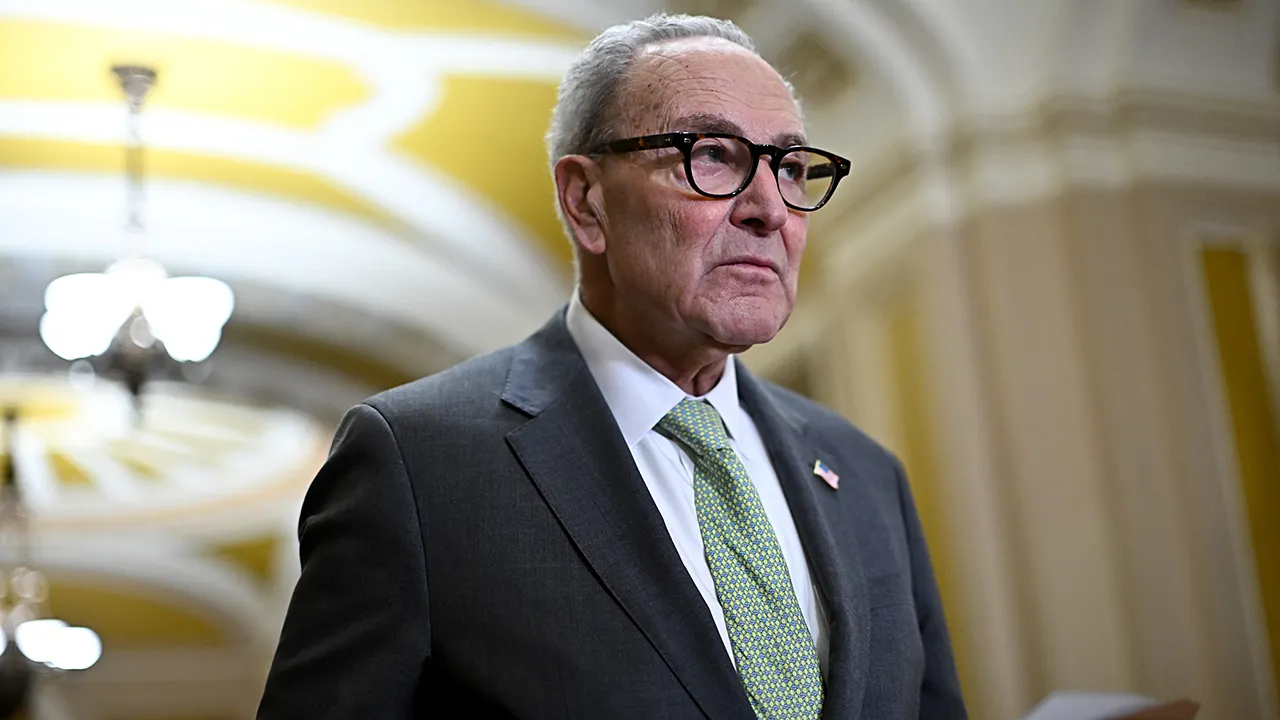
Senate Minority Leader Chuck Schumer called on Trump to release oil from America’s emergency stockpile as prices have climbed past $110 per barrel, the highest level since 2022. The New York Democrat stated that the reserve “exists for moments exactly like this” and criticized the administration’s inaction.
“When wars and global crises disrupt energy markets, the United States has the ability to act, but President Trump and his administration are refusing to do so,” Schumer said. “Trump should release oil from the SPR now to stabilize markets, bring prices down, and stop the price shock that American families are already feeling thanks to his reckless war.”
The request highlights a notable reversal in Schumer’s position. During Trump’s first term, when oil prices had plummeted to around $29 per barrel, the then-president proposed using approximately $3 billion from a COVID-19 stimulus package to replenish the reserve. Schumer and congressional Democrats blocked the move, characterizing it as an “oil industry bailout.”
The Strategic Petroleum Reserve, designed as an emergency stockpile to buffer against supply disruptions, has seen its capacity significantly reduced in recent years. While the facility can hold over 700 million barrels of crude oil, it currently contains approximately 415 million barrels, according to Department of Energy data.
This depletion occurred under former President Biden’s administration, which tapped the reserve twice – first to address high fuel prices during post-pandemic economic recovery, and again following Russia’s invasion of Ukraine. Schumer supported both of Biden’s SPR releases, contrasting with his opposition to Trump’s earlier replenishment efforts.
“Senator Schumer championed Joe Biden’s Green New Scam, which raised energy costs, threatened our national security, and stifled American energy independence,” White House spokeswoman Taylor Rogers said in response to Schumer’s recent call. “President Trump has been unleashing American energy dominance since day one, and now, American oil and gas production is at record highs.”
The current price spike stems from escalating tensions in the Middle East following the U.S. military’s Operation Epic Fury and Iran’s subsequent actions affecting maritime traffic through the Strait of Hormuz – a critical chokepoint for global oil transportation. The strait’s disruption has sent shock waves through energy markets, with American consumers already feeling the impact at gas pumps nationwide.
Energy Secretary Chris Wright has indicated the administration isn’t currently planning to tap the reserve. Instead, he suggested that reopening the Strait of Hormuz by neutralizing Iran’s capacity to target oil tankers would be the most effective approach to bringing prices down.
“We believe this is a small price to pay to get to a world where energy prices will return back to where they were,” Wright told Fox News. “Iran will finally be defanged, and now you can see more investment, more free flow of trade, and less ability to threaten energy supplies.”
The Energy Secretary projected that the disruption would last for “weeks, certainly not months,” suggesting the administration views current price increases as a temporary situation that doesn’t warrant emergency measures like an SPR release.
This standoff between the administration and congressional Democrats highlights the politically sensitive nature of energy prices and their impact on American consumers. As tensions continue in the Middle East and uncertainty clouds global oil markets, pressure may mount on the administration to take more direct action if price increases persist or accelerate.
Fact Checker
Verify the accuracy of this article using The Disinformation Commission analysis and real-time sources.

10 Comments
The Strategic Petroleum Reserve is meant to be used judiciously during supply disruptions, not as a tool for manipulating prices. I’m curious to see the data and analysis that is driving Schumer’s current position compared to his previous stance.
That’s a fair assessment. The reserve should be managed with a long-term view, not short-term political considerations. Transparency around the decision-making process would help build confidence in the approach.
This is a complex issue with valid arguments on both sides. While high prices hurt consumers, the SPR is a finite resource that needs to be carefully managed. I hope any decision to release oil is based on a thorough evaluation of market conditions and potential impacts.
Agreed, there are important tradeoffs to consider. Maintaining the integrity of the SPR for true emergencies is crucial, but providing some relief during periods of extreme price volatility also has merit. A balanced, data-driven approach is needed.
Interesting policy shift from Schumer. It makes sense to use the Strategic Petroleum Reserve to stabilize prices during global crises, though the prior opposition to refilling it is puzzling. I wonder what factors led to this change in position.
Agreed, the reversal in stance is noteworthy. It will be important to understand the rationale behind it and whether it’s a pragmatic move or more politically motivated.
The Strategic Petroleum Reserve is a critical tool for managing energy market disruptions. While I understand the desire to keep it for emergencies, high prices do impact American families. Releasing some reserves could provide short-term relief.
That’s a fair point. The reserve has to balance long-term security with near-term price stability. Judicious use during spikes could help, but care must be taken not to deplete it unnecessarily.
This situation highlights the political nature of energy policy. Schumer’s previous opposition to refilling the reserve suggests it may have been more about criticizing Trump than sound policy. I hope this new stance is based on objective analysis of the current market conditions.
You raise a good point. Energy policy can often get caught up in partisan politics. Hopefully this shift is truly driven by a pragmatic assessment of the situation rather than political posturing.