


Listen to the article
Progressive Candidate Edges Ahead in Tight New Jersey Congressional Primary
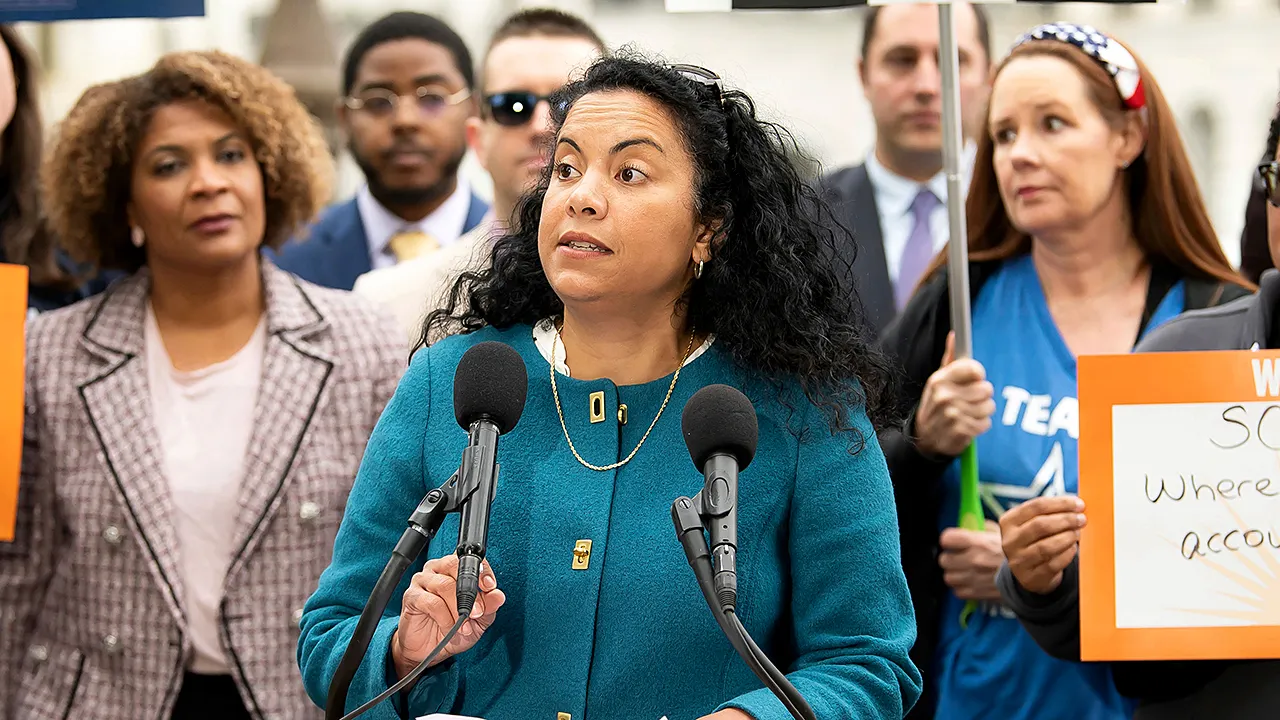
Progressive organizer Analilia Mejia has taken a narrow lead in a hotly contested Democratic primary for New Jersey’s 11th Congressional District, potentially upsetting former Democratic Rep. Tom Malinowski. With votes still being counted, Mejia holds a slim advantage of 486 votes out of more than 61,000 cast.
Mejia, backed by progressive stalwarts Sen. Bernie Sanders and Rep. Alexandria Ocasio-Cortez, has emerged as the frontrunner in a crowded field of 11 Democratic candidates vying to fill the seat vacated by Mikie Sherrill, who stepped down after winning New Jersey’s gubernatorial election last November.
“We have to rebuild our party, we have to rebuild what is happening in our nation. We have to reclaim our democracy. We know that our economy is rigged to suit the billionaires,” Mejia told supporters Thursday night as results continued to trickle in.
The race has defied expectations, as Malinowski—an assistant secretary of state in the Obama administration who represented a neighboring district from 2018 to 2022—was widely considered the favorite heading into primary day. His campaign faced significant headwinds, however, including attack ads from groups affiliated with the American Israel Public Affairs Committee, which opposed him over his stated support for conditions on aid to Israel.
Adding to the drama, the Democratic National Committee prematurely issued a congratulatory press release for Malinowski on Thursday night before votes were fully counted. In response, as her lead solidified, Mejia posted on social media an image of the famous 1948 photo showing President Harry Truman holding up the erroneous “Dewey Defeats Truman” headline.
The Progressive Change Campaign Committee celebrated Mejia’s performance as a sign of changing voter preferences. “Analilia Mejia’s momentous showing proves that voters, when given a choice, want Democrats with an inspiring vision who will boldly challenge powerful interests on behalf of working families,” the organization said in a statement.
Adam Green, co-founder of the PCCC and a New Jersey native who campaigned for Mejia, added: “This is the second big congressional primary in two weeks where voters chose the more progressive candidate and made clear they want Democrats who will shake up a broken political and economic system – not just be anti-Trump.”
The winner will face Republican Randolph Mayor Joe Hathaway in a special general election scheduled for April 16. While Hathaway is considered the underdog in the traditionally Democratic-leaning district, Republicans see potential opportunity. Sherrill won reelection in the district by 15 points in 2024, the same margin by which she carried it in the gubernatorial race. However, then-Vice President Kamala Harris won the district by a narrower eight-point margin in the 2024 presidential election, giving Republicans some hope of flipping the seat.
The special election holds particular significance as Republicans currently maintain a razor-thin 218-214 majority in the House of Representatives. The GOP may gain reinforcement before the New Jersey general election, however, as a special election is scheduled for March 10 in Georgia’s solidly Republican 14th Congressional District to replace former Rep. Marjorie Taylor Greene, who stepped down in January.
The Georgia race features 22 candidates, including 17 Republicans. If no candidate secures more than 50% of the vote, a runoff between the top two finishers will take place on April 7. Former President Donald Trump has endorsed Republican district attorney Clay Fuller in that contest.
One additional House vacancy exists in California’s 1st Congressional District following the unexpected death of Republican Rep. Doug LaMalfa. A primary for that solidly Republican seat will be held on June 2, with a special general election following on August 4.
As these special elections unfold, both parties are watching closely, with control of the House and the ability to advance their legislative agendas hanging in the balance during a politically volatile election year.
Fact Checker
Verify the accuracy of this article using The Disinformation Commission analysis and real-time sources.

12 Comments
This primary race seems to be a microcosm of the broader ideological battle within the Democratic party. It will be interesting to see if the progressive upstart can pull off the upset victory, and what that might mean for the party’s future.
The endorsements from high-profile progressives like Sanders and Ocasio-Cortez appear to have given the challenger a significant boost. This suggests the party’s left flank is increasingly flexing its muscle.
This race highlights the ongoing tension between the moderate and progressive wings of the Democratic party. It will be fascinating to see if the AOC-backed candidate can pull off an upset victory.
The reference to the economy being ‘rigged to suit the billionaires’ suggests the progressive candidate is tapping into broader frustrations with economic inequality. This could resonate with voters.
While the establishment-backed candidate was widely expected to win, the narrow lead of the progressive challenger suggests voters may be hungry for a more transformative political agenda. This will be an interesting one to watch unfold.
The race seems to have defied conventional wisdom, with the underdog progressive candidate emerging as the frontrunner. This could signal a shifting political landscape in the Democratic party.
It’s encouraging to see grassroots progressive candidates making inroads, even in a traditionally more moderate district. This race could be an important bellwether for the direction of the Democratic party.
I’m curious to see how much of a factor the endorsements from Sanders and Ocasio-Cortez played in boosting the progressive challenger’s campaign. Their backing seems to have been impactful.
Interesting to see a progressive challenger taking the lead in this tight Democratic primary. It will be worth following how the vote counting plays out in the coming days.
The race seems to be defying expectations, with the establishment-backed candidate trailing the progressive upstart. This could be a sign of shifting dynamics within the Democratic party.
It’s notable that the progressive candidate is framing the election as a fight to ‘reclaim our democracy’ and take on the influence of billionaires. This populist messaging appears to be resonating with voters.
The fact that the race is still too close to call, with the progressive challenger holding a slim lead, highlights the ongoing tensions within the Democratic party. This could be an important test case for the party’s future direction.