


Listen to the article
Former Prosecutor Turns Congressional Candidate, Campaigns on Rule of Law Concerns
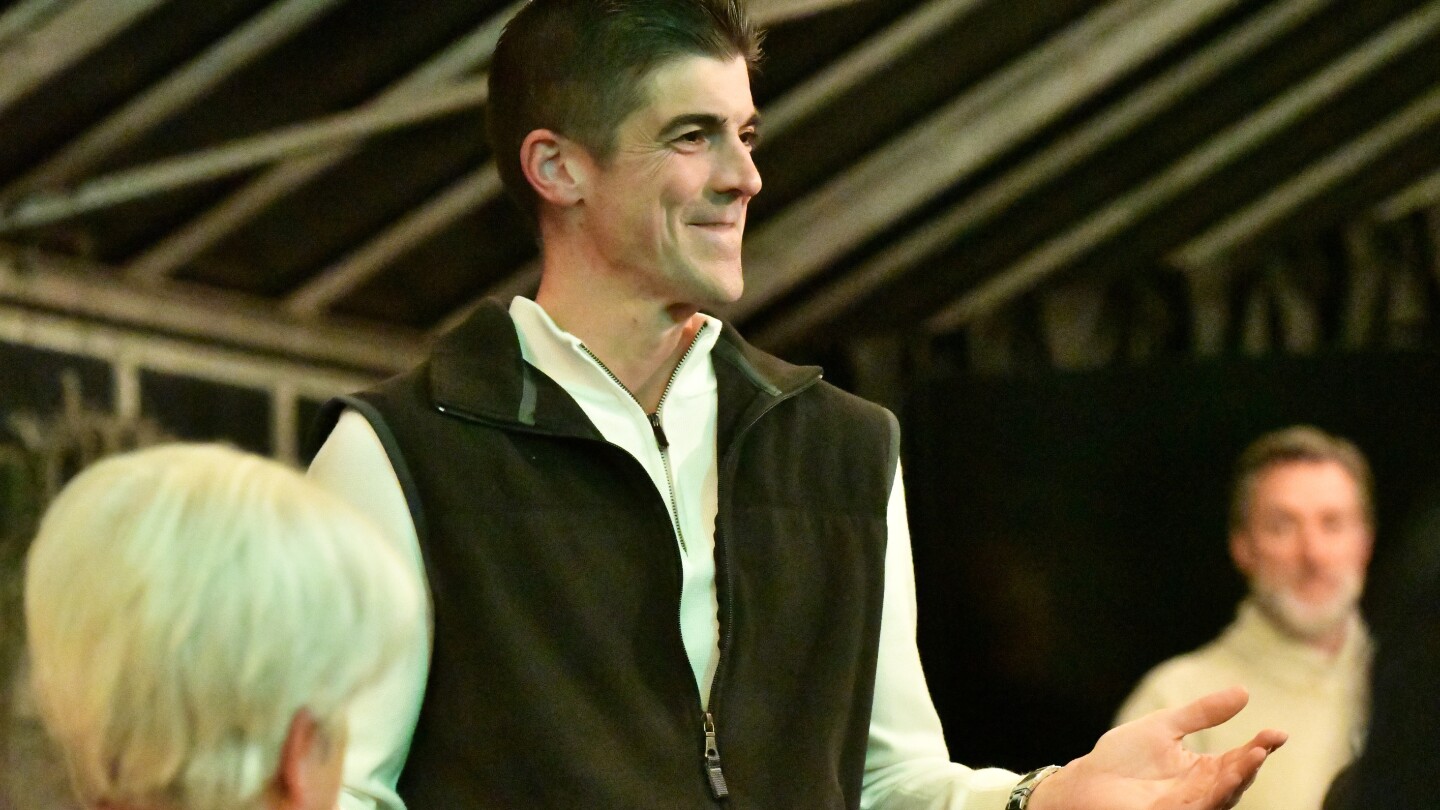
In the cozy atmosphere of Allentown’s West End Taproom, Ryan Crosswell stands before a crowd of enthusiastic Democratic Party activists, reading not from a list of accomplishments, but from his own resignation letter. The dramatic moment encapsulates his unconventional approach to campaigning for Pennsylvania’s competitive 7th Congressional District.
“I pray that the Department of Justice remains dedicated to upholding the rule of law evenly without fear or favor,” Crosswell reads, his voice steady as he quotes his February resignation from the Justice Department. The crowd responds with applause and vocal support, clearly connecting with his message.
Crosswell, a 45-year-old former federal prosecutor and Marine, resigned when the Trump administration dropped corruption charges against New York City Mayor Eric Adams in exchange for cooperation on immigration enforcement. This principled stand now forms the cornerstone of his campaign to unseat Republican Rep. Ryan Mackenzie, who won the seat by just one percentage point in 2022.
While most Democratic candidates nationwide are focusing on economic concerns—consistently ranked as voters’ top priority in polls—Crosswell is testing whether his anti-corruption, rule-of-law message will resonate in this swing district. His campaign represents a direct response to what many of his supporters view as alarming shifts in America’s justice system under Trump’s influence.
“I think I get asked about these issues probably more than the average candidate, but I also lean into it,” Crosswell explained in an interview. His constituents frequently question him about presidential pardons for political allies, aggressive immigration enforcement tactics, military operations in the Caribbean, and prosecutions targeting Trump’s opponents.
For supporters like Elisabeth Grant, Crosswell’s integrity is his strongest qualification. “I like that he quit his job because he was given a job that went against his moral compass,” she said, reflecting a sentiment shared by many attendees.
The concern extends beyond abstract principles of justice. Some Crosswell supporters express genuine fear about their personal safety. Joe McDermott, who openly criticizes the Trump administration on social media, worries about potential retribution. “I would not put anything beneath them right now,” he said, referring to the possibility of government action against private citizens.
Joniel Colon Rosario, originally from Puerto Rico, revealed he sometimes hesitates to speak Spanish in public. “I don’t know if some random guy in a ski mask is going to come down and tackle me because I’m speaking my native tongue,” he explained.
Crosswell summarizes these anxieties succinctly: “People aren’t asking, ‘How can my government protect me?’ It’s, ‘How can I protect myself from my government?'”
The Mackenzie campaign dismisses Crosswell’s approach, stating that Pennsylvania voters “aren’t interested in a lecture, they’re interested in the issues—affordability, public safety and national security.”
Crosswell is not alone in his transition from government service to Democratic politics. Zach Dembo, another former federal prosecutor, is seeking an open seat in Kentucky, while John Sullivan, an ex-FBI intelligence official, is challenging a Republican incumbent in New York’s Hudson Valley.
However, Crosswell faces potential hurdles in his primary contest. He changed his party registration from Republican to Democrat just last year and moved to Allentown from Washington, D.C., shortly after his resignation—though he grew up about 45 miles away in Pottsville, Pennsylvania.
When considering his future after resigning, Crosswell remembers asking himself, “Do I want to leave public service or do I want to fight back?”
Whether his message will prevail remains uncertain. A CNN poll from August showed approximately 40% of Americans prioritize economic concerns, while only about 10% cite government-related issues like corruption or rule of law as their top concern.
Even the House Democrats’ campaign arm emphasizes that the midterms are “shaping up to be a referendum on who is going to lower costs and help improve the lives of everyday Americans, not the wealthy and well-connected.”
Crosswell acknowledges this reality but sees no contradiction between economic issues and his anti-corruption platform. Jon Macklin, a supporter who canvasses for Democratic candidates, confirms that less politically engaged voters primarily worry about their financial situation.
Yet Crosswell insists these concerns are interconnected. “Corruption is a kitchen table issue,” he argues. “Because public office is a public trust.” In his view, government corruption directly impacts economic fairness and opportunity for ordinary citizens.
As the primary race unfolds, Crosswell’s candidacy offers a test case for whether concerns about democratic institutions can compete with pocketbook issues in motivating voters in this crucial swing district, where control of the House of Representatives could be decided in 2024.
Fact Checker
Verify the accuracy of this article using The Disinformation Commission analysis and real-time sources.

16 Comments
Crosswell’s resignation letter is a bold move, but I hope he can also articulate a clear vision for the district on economic issues like jobs and cost of living. Voters will want to know how his principles translate to tangible outcomes.
That’s a fair point. Crosswell will need to demonstrate how his commitment to the rule of law can also deliver real benefits for his constituents.
I appreciate Crosswell’s commitment to the rule of law, but I wonder how that will play out in a district that went narrowly for the Republican in the last election. Voters may be more focused on pocketbook issues.
That’s a good point. Balancing principles and pragmatism is always a challenge for candidates in close races.
As someone with a background in mining and commodities, I’ll be following this race closely. Crosswell’s views on natural resource development and regulation could have a big impact on those industries.
Agreed. The winner of this race could play a significant role in shaping the policy landscape for mining, energy, and related sectors.
The mining and commodities sectors will be keeping a close eye on this race. Crosswell’s stance on issues like mining regulations and energy policy could have major implications for those industries.
Absolutely. As a former federal prosecutor, his views on natural resource development and extraction will be closely scrutinized.
Resigning from the DOJ over corruption charges is a bold move. I’ll be interested to see if Crosswell can leverage that into a successful campaign against the incumbent. The mining and energy sectors will be watching closely.
Agreed. This race could have broader implications for how those industries are regulated and overseen at the federal level.
This race will be one to watch for the mining and commodities sectors. Crosswell’s stance on issues like environmental regulations and permitting could have major implications for those industries. It will be interesting to see how he positions himself on those topics.
Absolutely. Crosswell’s views on the balance between economic development and environmental protection will be closely scrutinized by stakeholders in the mining and energy spaces.
Interesting move for Crosswell to campaign on his resignation letter. It signals a commitment to the rule of law that could resonate with voters. I’ll be curious to see how his message is received in the district.
Yes, it’s a bold strategy. Campaigning on your own principled resignation from a government position is not something you see every day.
Crosswell’s stance on the rule of law is admirable, but I wonder how it will play with voters who may be more focused on economic issues like inflation and energy prices. Navigating that balance will be key to his success.
That’s a fair point. Voters in competitive districts often have a range of priorities, and Crosswell will need to demonstrate how his principles connect to their daily concerns.