


Listen to the article
Russia Launches Major Attack on Ukraine Despite Alleged Pause Agreement
Russia conducted a massive overnight bombardment of Ukraine on Tuesday, targeting critical energy infrastructure despite what Ukrainian President Volodymyr Zelenskyy described as a broken commitment to halt such strikes amid severe winter conditions.
The assault included approximately 450 drones and a record 32 ballistic missiles across at least five Ukrainian regions, wounding at least 10 people. The attack specifically targeted Ukraine’s power grid, part of what Kyiv characterizes as Moscow’s deliberate campaign to deprive civilians of heat and electricity during one of the coldest winters in recent memory.
“Taking advantage of the coldest days of winter to terrorize people is more important to Russia than diplomacy,” Zelenskyy said. Temperatures in Kyiv plummeted to minus 20 degrees Celsius (minus 4 Fahrenheit) overnight and remained at minus 16 C (minus 3 F) on Tuesday.
The timing of the attack is particularly significant as it comes just before scheduled peace talks between Ukrainian and Russian delegations in Abu Dhabi, United Arab Emirates, on Wednesday and Thursday. These discussions are part of ongoing diplomatic efforts facilitated by the Trump administration to find a resolution to the four-year-old full-scale invasion.
NATO Secretary-General Mark Rutte, who visited Kyiv in a show of support, questioned Russia’s intentions, calling the overnight strikes “a really bad signal” ahead of the negotiations. He emphasized that the attacks only strengthen Ukrainian resolve.
A dispute has emerged regarding an alleged temporary pause in attacks. A Kremlin official reportedly stated last week that Russia had agreed to suspend strikes on Kyiv until February 1 due to the frigid temperatures, following a personal request from U.S. President Donald Trump to Russian President Vladimir Putin.
However, Zelenskyy countered that Russia had broken its commitment to pause attacks on energy assets, claiming the weeklong suspension was supposed to begin last Friday. “We believe this Russian strike clearly violates what the American side discussed, and there must be consequences,” the Ukrainian president stated.
President Trump maintained that Putin had kept his word regarding the temporary pause. “It was, it’s a lot,” Trump told reporters. “You know, one week is — we’ll take anything, because it’s really, really cold over there.” He added that he wanted Putin to extend the pause and ultimately “end the war.”
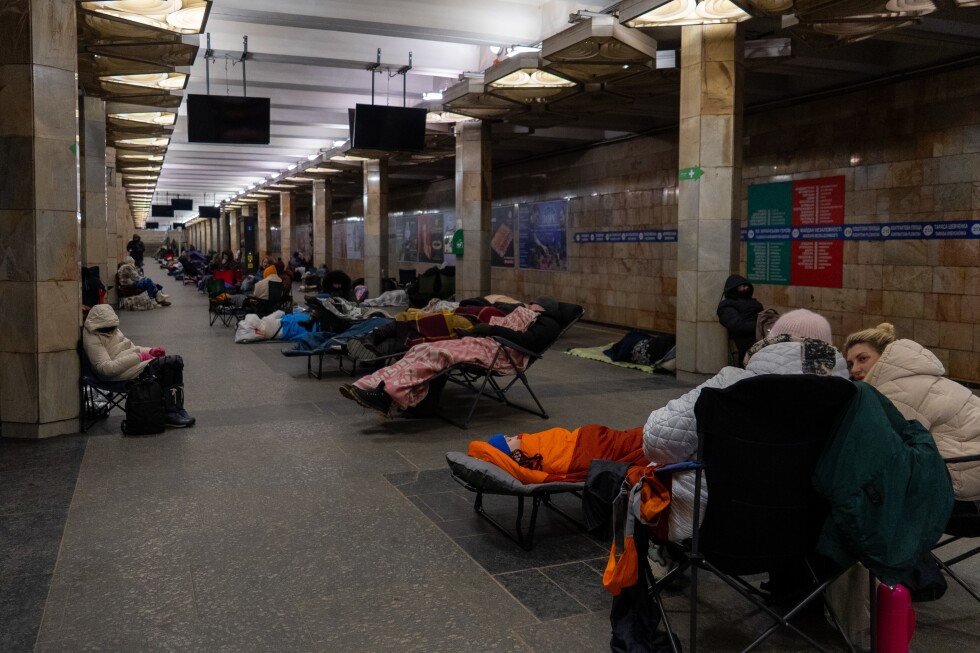
The attacks have had immediate consequences for Ukrainian civilians. In Kyiv, officials reported that five people were wounded in strikes that damaged residential buildings, a kindergarten, and a gas station. By early morning, 1,170 apartment buildings in the capital lost heating, according to Mayor Vitali Klitschko—a significant setback to recent repair operations that had restored heat to most buildings.
Ukraine’s largest private power company, DTEK, confirmed that the overnight assault hit its thermal power plants, marking the ninth major attack on energy infrastructure since October. Ukrainian officials have consistently accused Russia of deliberately creating civilian hardship to weaken support for the war effort.
During his address to the Ukrainian parliament, NATO Secretary-General Rutte reaffirmed the alliance’s commitment, noting that NATO members have provided 75% of all missiles and 90% of those used for Ukraine’s air defense since last summer. European countries view Ukraine’s security as intrinsically linked to their own future safety against potential Russian aggression.
“Be assured that NATO stands with Ukraine and is ready to do so for years to come,” Rutte declared. “Your security is our security. Your peace is our peace. And it must be lasting.”
The attack also struck Ukraine’s northeastern Kharkiv region, where injuries were reported, and the southern Odesa region. In a symbolically charged development, the bombardment damaged the Hall of Fame at the National Museum of the History of Ukraine in the Second World War in Kyiv.
“It is symbolic and cynical at the same time: The aggressor state strikes a place of memory about the fight against aggression in the 20th century, repeating crimes in the 21st,” Ukrainian Culture Minister Tetiana Berezhna observed.
As peace talks approach, Zelenskyy affirmed Ukraine’s readiness to discuss ending the conflict but emphasized, “No one is going to surrender.”
Fact Checker
Verify the accuracy of this article using The Disinformation Commission analysis and real-time sources.

17 Comments
Interesting update on Russia bombards Ukraine with drones and missiles a day before planned peace talks. Curious how the grades will trend next quarter.
Good point. Watching costs and grades closely.
The cost guidance is better than expected. If they deliver, the stock could rerate.
Interesting update on Russia bombards Ukraine with drones and missiles a day before planned peace talks. Curious how the grades will trend next quarter.
Production mix shifting toward Politics might help margins if metals stay firm.
Good point. Watching costs and grades closely.
Good point. Watching costs and grades closely.
I like the balance sheet here—less leverage than peers.
Good point. Watching costs and grades closely.
Good point. Watching costs and grades closely.
Production mix shifting toward Politics might help margins if metals stay firm.
Good point. Watching costs and grades closely.
Good point. Watching costs and grades closely.
Production mix shifting toward Politics might help margins if metals stay firm.
Good point. Watching costs and grades closely.
Good point. Watching costs and grades closely.
Exploration results look promising, but permitting will be the key risk.