


Listen to the article
After two days of intense diplomatic activity, the Munich Security Conference concluded Sunday, providing a crucial platform for international leaders to address pressing global concerns. The annual gathering, known for its frank discussions on security policy, featured a notably reassuring message from U.S. Secretary of State Marco Rubio.
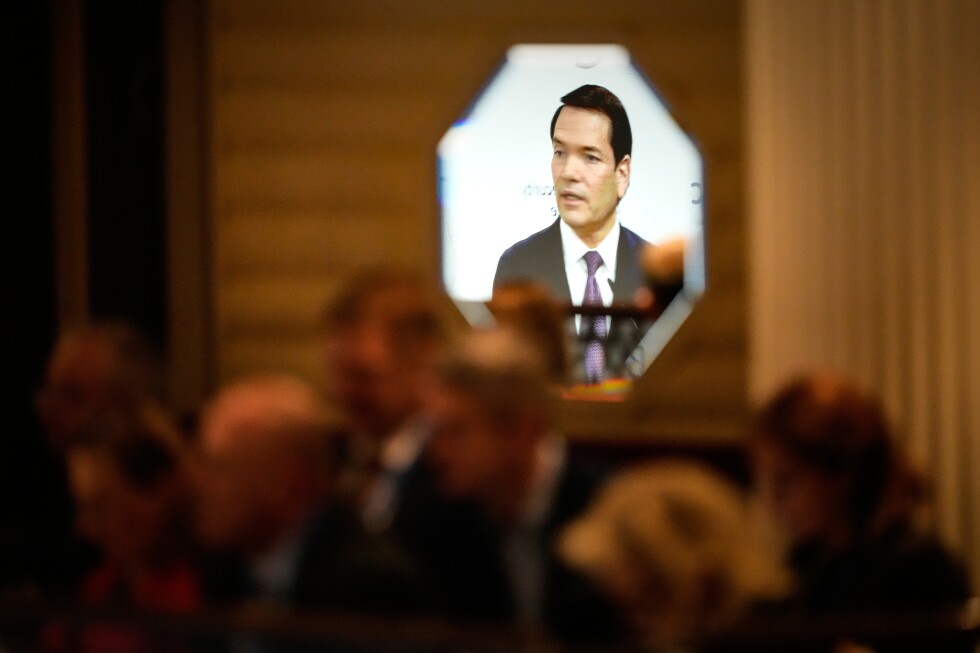
Speaking to European and global allies on Saturday, Rubio adopted a conciliatory tone that marked a shift from President Donald Trump’s often combative rhetoric toward traditional U.S. partners. While maintaining firmness about the administration’s policy objectives, Rubio’s approach appeared designed to ease tensions that have characterized trans-Atlantic relations over the past year.
“We remain committed to our shared security priorities,” Rubio told the assembled diplomats and security experts. His speech acknowledged concerns about the administration’s stance while emphasizing continuity in core American security commitments.
The conference comes at a particularly sensitive moment for international relations. Trump’s presidency has raised questions about America’s dedication to long-standing alliances, particularly NATO, which the president has repeatedly criticized for what he perceives as insufficient defense spending by European members.
Rubio’s presence at Munich represented an opportunity to clarify the administration’s position on several fronts. He outlined the U.S. vision for reshaping the trans-Atlantic partnership while attempting to preserve its fundamental structure. This balancing act reflects the administration’s dual approach: pushing allies toward greater self-sufficiency while maintaining America’s leadership role in global security matters.
European officials responded with cautious optimism to Rubio’s overtures. Several diplomats, speaking on condition of anonymity, described the secretary’s tone as “a welcome change” while acknowledging that substantive policy differences remain unresolved.
The conference also featured significant discussions on emerging security challenges, including cybersecurity threats, the ongoing conflicts in the Middle East, and strategic competition with China. These topics underscored the evolving nature of security concerns facing the alliance, moving beyond traditional military threats to encompass technological, economic, and hybrid warfare dimensions.
Defense ministers from major NATO countries used the gathering to coordinate responses to recent developments in global hotspots. Side meetings focused on coordinated approaches to persistent challenges in Ukraine, Syria, and the broader Middle East region.
Munich has long served as a barometer for the state of international security cooperation. This year’s conference reflected both enduring tensions and efforts to maintain cooperative frameworks despite political differences. Analysts note that the gathering provided evidence of resilience in international institutions even as they face unprecedented pressures.
“What we’re seeing is an alliance system adapting to new realities,” said Heather Conley, president of the German Marshall Fund, who attended the conference. “The fundamental architecture remains intact, but there’s recognition that adjustments are necessary.”
Business leaders present at the conference highlighted economic dimensions of security policy. Representatives from major defense contractors and technology companies participated in panels addressing the industrial base needed to support Western security objectives, as well as growing concerns about supply chain vulnerabilities.
The conference also revealed ongoing disagreements about burden-sharing, defense spending targets, and approaches to Russia and China. While European nations have increased defense expenditures in recent years, few have reached NATO’s target of spending 2% of GDP on defense, a persistent point of contention.
As delegates departed Munich, questions remained about the long-term trajectory of American foreign policy and its implications for global security arrangements. Rubio’s diplomatic performance may have temporarily soothed anxieties, but structural tensions in the alliance continue to demand attention.
The conference concludes as global security challenges proliferate, testing the resilience of international cooperation mechanisms built over decades. Whether this year’s Munich Security Conference represents a turning point or merely a brief respite in trans-Atlantic tensions remains to be seen.
Fact Checker
Verify the accuracy of this article using The Disinformation Commission analysis and real-time sources.

11 Comments
It will be interesting to see how this shift in tone from the Trump administration is received by European partners. Trust and goodwill are important foundations for effective security cooperation.
This speech seems like a diplomatic balancing act – acknowledging concerns while reiterating US commitments. It will be important to see if this softer rhetoric translates into more constructive engagement on key issues.
Exactly. The proof will be in how the policy is implemented moving forward. Maintaining unity among transatlantic allies on security challenges is crucial.
I’m curious to hear more details on the specific policy objectives Rubio emphasized in his speech. Striking the right balance between US interests and alliance cohesion is not an easy task.
The Munich Security Conference is an important forum for global leaders to discuss pressing security issues. Rubio’s speech seems aimed at reassuring allies, while still upholding the administration’s core positions.
Yes, that seems to be the delicate dance Rubio is trying to perform. Maintaining a united front on key priorities while mending some of the frayed relationships will be critical.
The Trump administration’s confrontational style has caused some friction with traditional US allies. Rubio’s more diplomatic tone could help rebuild trust and cooperation on shared security priorities.
It’s interesting to see Rubio strike a more conciliatory tone with European allies, while still upholding core US policy objectives. Maintaining strong transatlantic relations is crucial, especially in these uncertain times.
Agreed. The Trump administration’s approach has created some tension, so Rubio’s message of continuity and shared priorities is an important reassurance for America’s European partners.
Rubio’s speech strikes a pragmatic balance – acknowledging tensions while emphasizing continuity in core US commitments. This could help ease some of the strain in transatlantic relations.
Agreed. Maintaining strong alliances is crucial, especially when dealing with complex global challenges. A conciliatory approach may pay dividends if it leads to more constructive engagement.