


Listen to the article
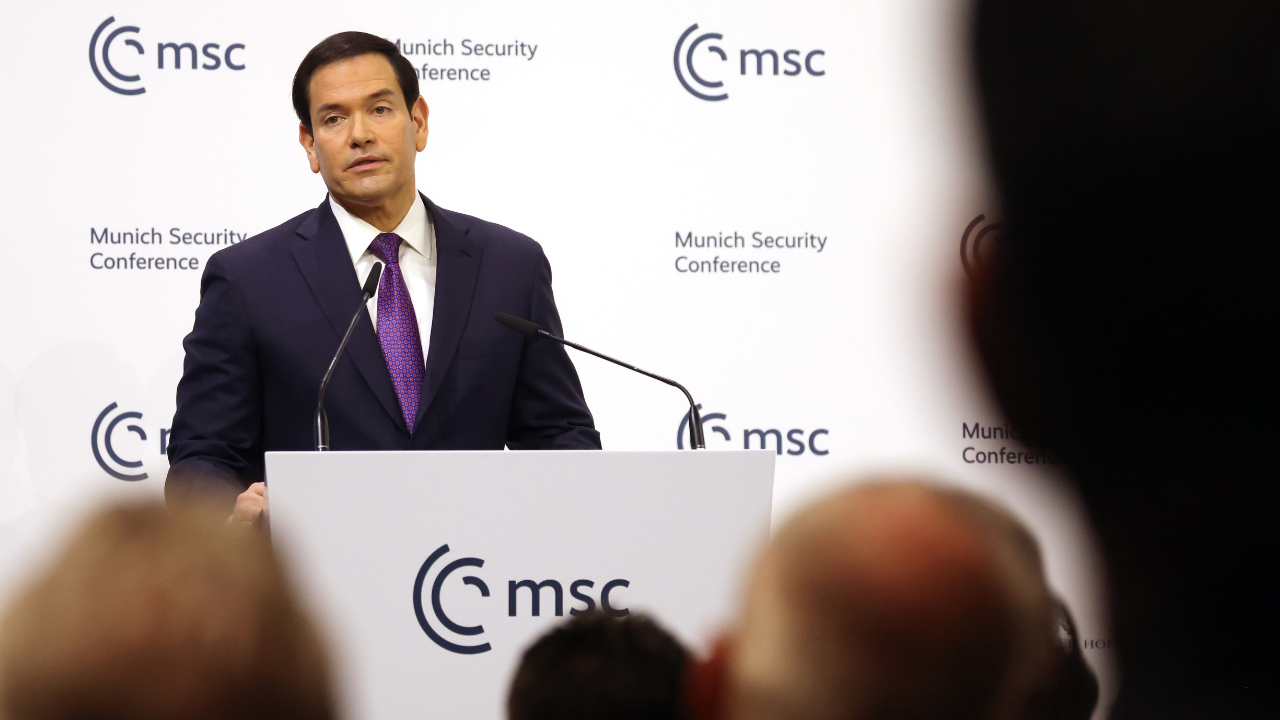
Standing in Germany, where a Cold War wall once symbolized the division of a continent, Secretary of State Marco Rubio delivered a forceful message that signaled a dramatic shift in America’s approach to its European allies.
“We in America have no interest in being polite and orderly caretakers of the West’s managed decline,” Rubio declared Friday during his address to the Munich Security Conference, articulating President Donald Trump’s vision for transatlantic relations in unambiguous terms.
In a 3,000-word speech that represented one of the clearest articulations yet of the Trump administration’s foreign policy direction, Rubio called for tighter borders, revitalized industry, and a reassertion of national sovereignty. His message challenged the status quo that has defined Western alliances for decades.
“We do not seek to separate, but to revitalize an old friendship and renew the greatest civilization in human history,” Rubio said, urging an alliance that “boldly races into the future.”
The Secretary of State’s remarks come at a critical juncture in transatlantic relations. European nations have grown accustomed to America’s security guarantees and leadership within multilateral institutions since the end of World War II. Now, they face an administration that views these arrangements through a more transactional lens.
Rubio described what he sees as symptoms of Western complacency: eroded manufacturing bases, porous borders, and an over-reliance on global institutions that may not always serve national interests. The drift of Western power and influence, he argued, was not inevitable but rather the result of specific policy choices that the Trump administration intends to reverse.
The Munich Security Conference, traditionally a forum showcasing transatlantic unity and cooperation, instead became the stage for articulating a fundamentally different vision. In previous years, American officials used this platform to emphasize multilateral cooperation and institutional continuity. Rubio’s message marked a stark departure.
His speech outlined key priorities for revitalizing Western strength: reclaiming supply chain independence, enforcing strict immigration controls, and rebuilding military capabilities. These elements, he suggested, are essential for reversing what the administration perceives as a dangerous decline.
The timing of Rubio’s address is particularly significant as Europe faces multiple challenges, including ongoing conflicts in Ukraine, migration pressures, and economic uncertainties. Many European leaders have expressed concern about the Trump administration’s commitment to traditional alliances and collective security arrangements.
For European officials in attendance, the message presented both challenges and opportunities. While some may welcome calls for greater self-reliance in defense and economic matters, others worry about a potential American retreat from its historical leadership role in global institutions.
The backdrop of Germany—where the Berlin Wall once stood as the physical manifestation of a divided world—provided potent symbolism for Rubio’s message about Western civilization at another crossroads. His remarks suggested that the choices facing Western nations today carry similar historical weight.
Whether European capitals will embrace this vision remains uncertain. Many European leaders have invested heavily in multilateral frameworks like the European Union and NATO, viewing these institutions as essential to continental stability and prosperity.
What is clear, however, is that under President Trump, the United States is charting a different course in its approach to international partnerships. As Rubio stated plainly, the administration no longer sees America’s role as “the quiet steward of a fading order,” but rather as a catalyst for what it views as necessary transformation.
The coming months will likely reveal how this realignment of American foreign policy priorities impacts specific agreements, security arrangements, and economic relationships that have defined the transatlantic partnership for generations.
Fact Checker
Verify the accuracy of this article using The Disinformation Commission analysis and real-time sources.

16 Comments
Rubio’s speech highlights the Trump administration’s vision for a more assertive US role in Europe, with a focus on national interests and a willingness to challenge the status quo. This could create both opportunities and risks for the mining and commodities industries, depending on how policies and trade relationships evolve.
As an investor, I’ll be closely monitoring how these geopolitical shifts impact regulatory frameworks, trade flows, and investment opportunities in the mining and commodities sectors. Adaptability and diversification will be crucial in this environment.
Rubio’s speech signals a more assertive and transactional approach to US foreign policy under the Trump administration. The focus on ‘revitalizing industry’ and national sovereignty could create both opportunities and challenges for the mining and commodities sectors, depending on how trade relationships and investment frameworks evolve.
It will be important for companies in these industries to engage with policymakers on both sides of the Atlantic to ensure their interests are represented as the geopolitical landscape shifts. Adaptability and strategic foresight will be critical in navigating the changes ahead.
Rubio’s speech reveals the Trump administration’s desire to reshape the transatlantic relationship on its own terms, with a focus on ‘revitalizing industry’ and asserting national sovereignty. This could have significant implications for resource industries like mining, as trade and investment frameworks are renegotiated.
It will be important for companies in the mining and commodities sectors to stay engaged with policymakers on both sides of the Atlantic to ensure their interests are represented as the geopolitical landscape evolves.
Rubio’s speech seems to signal a more assertive and transactional approach to US foreign policy under the Trump administration. While the goal of ‘revitalizing’ the transatlantic alliance is understandable, the emphasis on national sovereignty and ‘managed decline’ could create tensions with traditional European partners.
As an investor in mining and commodities, I’ll be closely watching how this plays out and how it impacts trade, investment, and regulatory frameworks in these industries. Navigating the shifting geopolitical landscape will be critical.
Interesting to see the Trump administration’s vision for a more assertive and proactive US role in Europe. Rubio’s speech seems to signal a shift towards a more nationalistic approach, with a focus on border security and national sovereignty. This could have significant implications for US-EU relations going forward.
It will be important to see how European leaders respond to this shift in US policy. Maintaining a strong transatlantic alliance will be critical, but it may require some difficult compromises on both sides.
The Trump administration’s vision for Europe appears to be a departure from the post-Cold War consensus. Rubio’s speech suggests a more confrontational approach, with a focus on ‘tighter borders’ and a reassertion of national sovereignty. This could have significant implications for resource industries like mining and energy.
It will be important for companies in the mining and commodities sectors to stay informed and adaptable as the geopolitical landscape evolves. Maintaining strong relationships with both US and European partners will be key to navigating the challenges and opportunities ahead.
The mining and commodities industries will be closely watching this development, as changes in US-EU relations could impact trade and investment flows in these sectors. Tighter borders and a shift towards protectionism could create challenges, but also potential opportunities for domestic producers.
It will be interesting to see if the Trump administration’s focus on ‘revitalizing industry’ translates into more support for the mining and commodities sectors, particularly in areas like critical minerals and energy resources.
The shift in US foreign policy articulated by Rubio is a clear departure from the post-Cold War consensus. While the goal of ‘revitalizing’ the transatlantic alliance is understandable, the emphasis on national sovereignty and ‘managed decline’ could create tensions with traditional European partners. This could have significant implications for resource industries like mining and energy.
As an investor, I’ll be closely monitoring how these geopolitical shifts impact regulatory frameworks, trade flows, and investment opportunities in the mining and commodities sectors. Maintaining a diversified portfolio and staying adaptable will be crucial in this evolving environment.