


Listen to the article
U.S. Not Planning Additional Military Action in Venezuela, Rubio Tells Senate
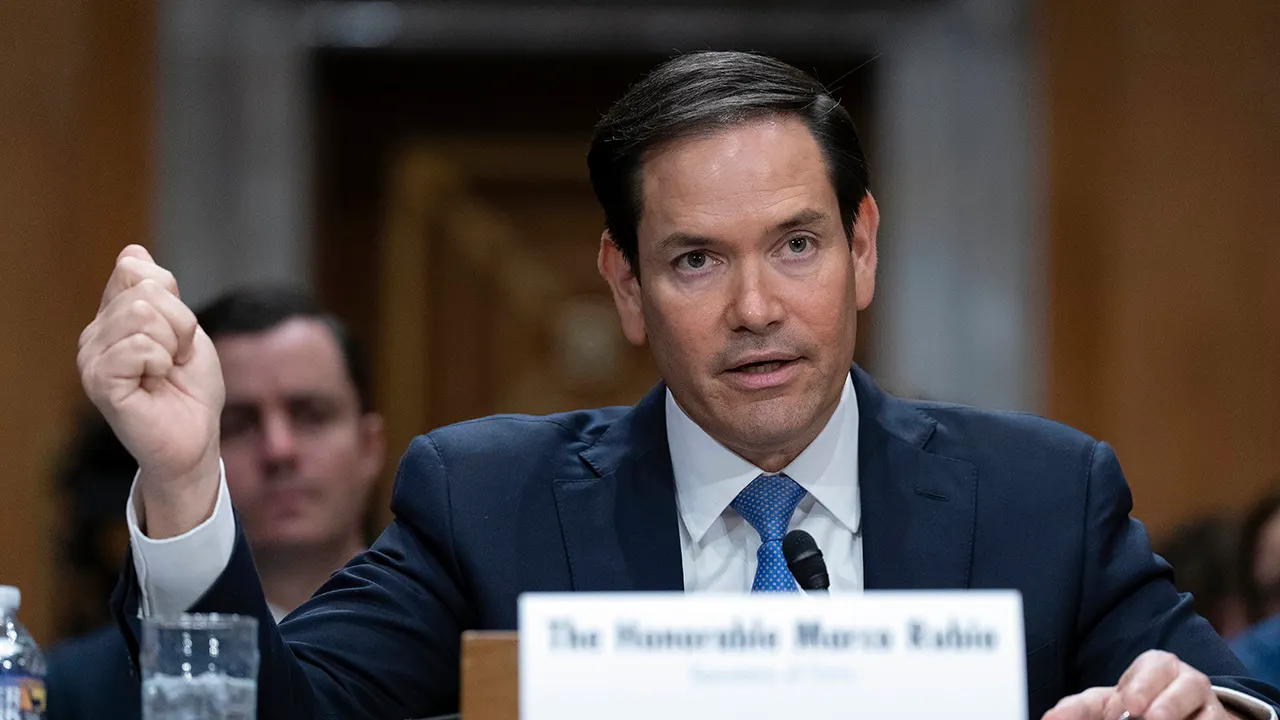
The United States has no immediate plans to deploy additional military force in Venezuela but reserves the right to act if faced with an “imminent threat,” Secretary of State Marco Rubio told lawmakers Wednesday during a Senate Foreign Relations Committee hearing.
“The president never rules out his options as commander-in-chief to protect the national interest of the United States,” Rubio said. “I can tell you right now with full certainty, we are not postured to, nor do we intend or expect to have to take any military action in Venezuela at any time. The only military presence you will see in Venezuela is our Marine guards at an embassy.”
Rubio’s comments came amid scrutiny of the Trump administration’s January 3 operation that resulted in the capture of Venezuelan dictator Nicolás Maduro and his wife, Cilia Flores. The couple was transported to New York and appeared in Manhattan federal court on January 5, where they pleaded not guilty to drug trafficking charges.
The Secretary clarified that while no additional military action is planned, certain scenarios could warrant intervention – such as if an Iranian drone factory were established in the region and posed a threat to U.S. interests or allies.
“The president does reserve the option in self-defense to eliminate that threat,” Rubio explained. “We don’t see that, we don’t anticipate that, but it could happen. We hope not… But I think it would require the emergence of an imminent threat of the kind that we do not anticipate at this time.”
Questions arose during the hearing about Rubio’s prepared statement, which initially suggested the U.S. was “prepared to use force to ensure maximum cooperation if other methods fail” from Venezuela’s interim government. Rubio ultimately did not use this prepared testimony during his remarks.
The Secretary emphasized that the recent operation in Venezuela “was not a war” and that no U.S. troops remain on Venezuelan soil. “There is no war against Venezuela, and we did not occupy a country. There are no U.S. troops on the ground. This was an operation to aid law enforcement,” his prepared remarks stated.
The operation has faced criticism, primarily from Democrats, who have questioned its legality since it was conducted without Congressional approval. Earlier in January, efforts in Congress to pass a war powers resolution that would limit further military action in Venezuela failed to pass.
When pressed on the issue of Congressional oversight, Rubio stated that should U.S. military forces be involved in Venezuela in a “sustained” way, Congress would receive notification 48 hours after the fact and would need to approve any engagement lasting longer than 60 days.
He also explained why Congress wasn’t consulted before the operation, citing concerns about potential leaks from the Department of War and the uncertain nature of the mission itself.
“It was also a trigger-based operation. It may never have happened,” Rubio said. “It required a number of factors to all align at the right place, at the right time, in a very limited window, and it wasn’t even clear if it was ever going to be possible.”
The raid followed months of pressure on Venezuela to remove Maduro and coincided with more than two dozen strikes against alleged drug traffickers in Latin American waters. The Trump administration has maintained that these actions align with the president’s efforts to curb drug trafficking into the United States.
Since Maduro’s capture, the U.S. has conducted at least one additional strike against suspected drug trafficking vessels in the region. The Trump administration has long refused to recognize Maduro as a legitimate head of state, instead characterizing him as the leader of a drug cartel.
The U.S. has backed Maduro’s vice president, Delcy Rodríguez, to lead Venezuela’s interim government, though Rodríguez has reportedly expressed resistance to U.S. influence in the country’s affairs.
Regional experts note that the situation remains fluid, with questions about Venezuela’s political stability and the long-term implications of U.S. intervention continuing to concern both lawmakers and international observers.
Fact Checker
Verify the accuracy of this article using The Disinformation Commission analysis and real-time sources.

6 Comments
The capture of Maduro and his wife is certainly a significant development. I’m curious to learn more about the legal proceedings and any potential impacts on the political and economic situation in Venezuela.
Agreed, the legal ramifications will be critical to watch. Venezuela’s recovery and stability hinge on a peaceful resolution of the leadership crisis.
While I understand the reluctance to use force, the US may need to be prepared to intervene if the situation in Venezuela deteriorates further and poses a serious threat to regional stability. This is a complex issue without easy solutions.
The US’s stance of not planning additional military action unless faced with an imminent threat seems reasonable, though the definition of ‘imminent’ could still be up for interpretation. I’ll be following this story closely.
Interesting to hear Rubio’s stance on further military action in Venezuela. Maintaining the embassy presence while reserving the right to intervene if there’s an imminent threat seems like a prudent approach. It will be important to monitor the situation closely going forward.
As an investor in mining and energy equities, I’m hoping the uncertainty in Venezuela doesn’t disrupt global commodity markets too significantly. Stability and predictability are important for the industry.