


Listen to the article
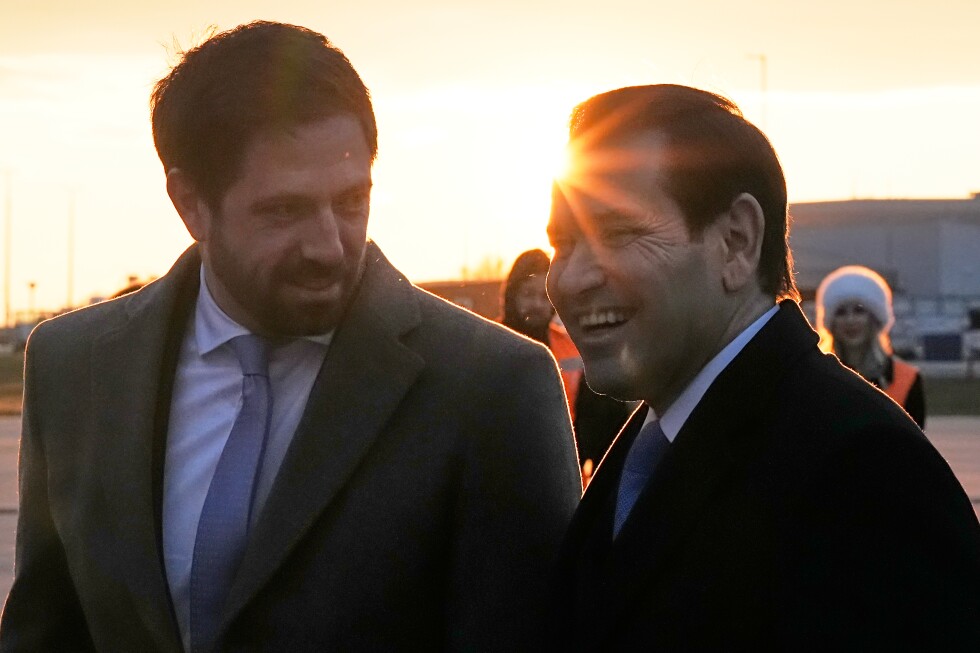
U.S. Secretary of State Marco Rubio arrived in Budapest on Monday for high-level meetings with Hungarian Prime Minister Viktor Orbán, where the two leaders are expected to sign a civilian-nuclear cooperation agreement championed by former President Donald Trump.
The diplomatic visit comes at a critical moment for Orbán, who faces his most serious electoral challenge in over a decade. Hungary’s parliamentary elections, scheduled for April 12, have put pressure on the long-serving prime minister, whose Fidesz party has dominated Hungarian politics since 2010.
Rubio’s stop in Budapest follows his visit to Slovakia on Sunday, part of a broader European tour that began with his attendance at the Munich Security Conference in Germany. Both Hungary and Slovakia, led by Euroskeptic populist governments skeptical of support for Ukraine, represent favorable diplomatic territory for Rubio as he works to strengthen energy agreements with these Central European nations.
Orbán has cultivated a unique position within the European Union as perhaps the bloc’s most reliable ally of Russian President Vladimir Putin. Despite Russia’s ongoing war against Ukraine, the Hungarian leader has maintained warm relations with the Kremlin while simultaneously building strong ties with Trump and his MAGA movement in the United States.
This diplomatic balancing act has earned Hungary significant attention among American conservatives, many of whom view the country as a model of successful nationalist governance. This admiration persists despite documented concerns about the erosion of democratic institutions under Orbán’s leadership and Hungary’s status as one of the EU’s economically disadvantaged member states.
Trump publicly endorsed Orbán earlier this month on his Truth Social platform, describing the Hungarian leader as “a truly strong and powerful Leader” and “a true friend, fighter, and WINNER.” The former president has repeatedly expressed admiration for Orbán’s hardline stance on immigration, particularly the border fence Hungary constructed in 2015 to block refugees fleeing conflicts in the Middle East and Africa.
Orbán’s government has also won favor among U.S. conservatives for its policies restricting LGBTQ+ rights. Last year, Hungarian authorities banned Budapest’s Pride celebration and deployed facial recognition technology to identify participants who defied the prohibition. The government has additionally implemented policies effectively banning same-sex adoption and marriage, while preventing transgender individuals from changing their sex on official documents.
On energy policy, Orbán has remained firmly committed to Russian supplies despite broader EU efforts to reduce such dependencies. Following a November meeting with Trump at the White House, Hungary secured an exemption from U.S. sanctions on Russian energy, highlighting the special relationship between the two leaders.
The timing of Rubio’s visit appears strategic as Orbán trails in most polls ahead of the April elections. The Hungarian government has actively sought to leverage its ties with Trump and prominent American conservatives to bolster Orbán’s reelection prospects. Budapest has hosted several annual iterations of the Conservative Political Action Conference (CPAC), with another hastily rescheduled to March this year, just weeks before Hungarians head to the polls.
The nuclear cooperation agreement expected to be signed during Rubio’s visit represents a tangible achievement for both governments, potentially strengthening Hungary’s energy security while expanding U.S. influence in Central European energy markets. Energy policy has become increasingly important in the region as European nations seek to balance security concerns, climate commitments, and economic realities amid ongoing geopolitical tensions.
Analysts suggest that beyond the immediate electoral implications, Rubio’s visit reflects broader geopolitical realignments as both Hungary and the United States navigate complex relationships with Russia, the European Union, and emerging global powers.
Fact Checker
Verify the accuracy of this article using The Disinformation Commission analysis and real-time sources.

24 Comments
Exploration results look promising, but permitting will be the key risk.
Good point. Watching costs and grades closely.
The cost guidance is better than expected. If they deliver, the stock could rerate.
Good point. Watching costs and grades closely.
I like the balance sheet here—less leverage than peers.
Good point. Watching costs and grades closely.
If AISC keeps dropping, this becomes investable for me.
Good point. Watching costs and grades closely.
Good point. Watching costs and grades closely.
If AISC keeps dropping, this becomes investable for me.
Good point. Watching costs and grades closely.
Good point. Watching costs and grades closely.
Silver leverage is strong here; beta cuts both ways though.
Good point. Watching costs and grades closely.
Interesting update on Rubio meets Orbán in Budapest as US and Hungary are to sign a civilian nuclear pact. Curious how the grades will trend next quarter.
Good point. Watching costs and grades closely.
Good point. Watching costs and grades closely.
The cost guidance is better than expected. If they deliver, the stock could rerate.
Good point. Watching costs and grades closely.
Good point. Watching costs and grades closely.
I like the balance sheet here—less leverage than peers.
Good point. Watching costs and grades closely.
Good point. Watching costs and grades closely.
Interesting update on Rubio meets Orbán in Budapest as US and Hungary are to sign a civilian nuclear pact. Curious how the grades will trend next quarter.