


Listen to the article
In a display of political positioning and international diplomacy, several prominent Democrats with potential 2028 presidential ambitions gathered at the Munich Security Conference this weekend, using the global platform to criticize President Donald Trump’s policies while attempting to bolster their foreign policy credentials.
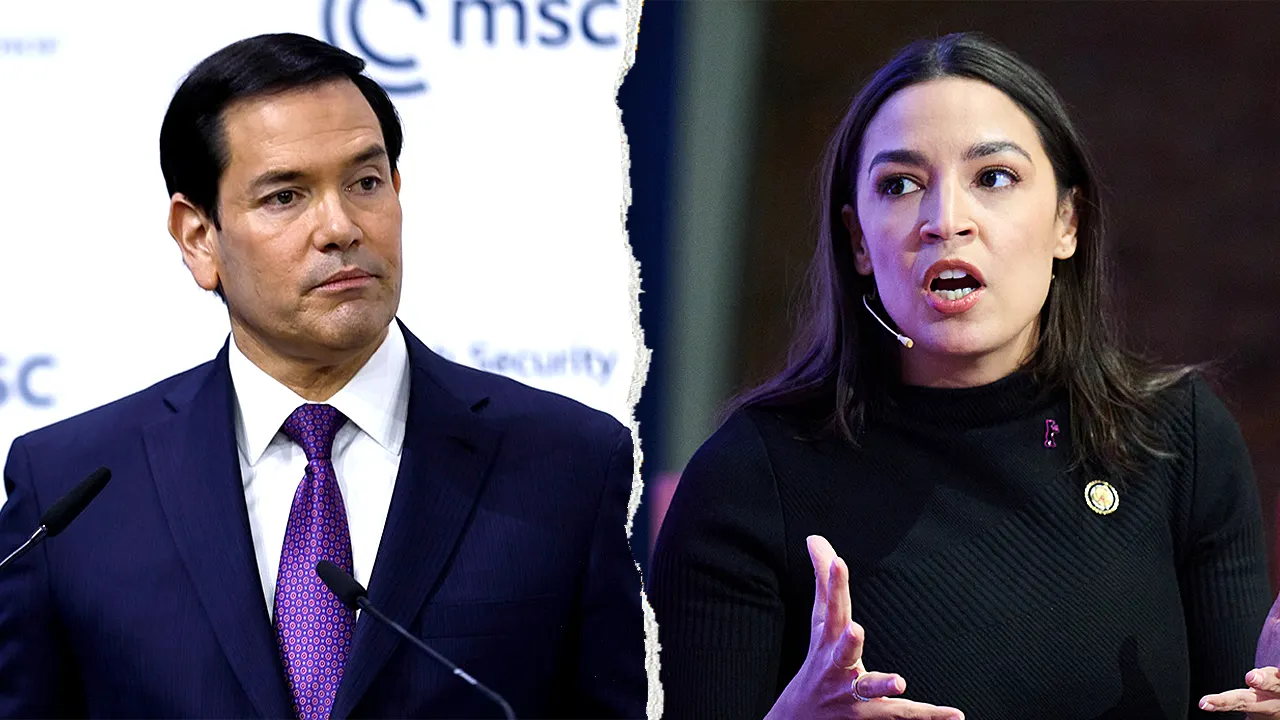
The high-profile European forum, traditionally a venue for transatlantic alliance-building, instead became a stage for domestic political maneuvering as eight Democrats considered potential 2028 contenders made appearances. Rep. Alexandria Ocasio-Cortez, Governors Gavin Newsom and Gretchen Whitmer, Senators Ruben Gallego, Mark Kelly, Chris Murphy, Elissa Slotkin, and former Commerce Secretary Gina Raimondo all descended on the prestigious conference.
Their performances, however, received mixed reviews, with some critics suggesting the international appearances may have backfired for certain Democratic hopefuls. Conservative commentators were particularly harsh in their assessments, with radio host Hugh Hewitt claiming on Fox News that “they hurt themselves badly.”
Ocasio-Cortez, the progressive congresswoman from New York, faced the sharpest criticism after struggling to answer a question about whether the U.S. should deploy troops to defend Taiwan from a potential Chinese invasion. Her nearly 20-second pause before suggesting America should try to avoid a clash with China over Taiwan sparked widespread ridicule on social media.
“AOC is like a parade of clichés. A Model U.N. student that didn’t get enough sleep,” Hewitt remarked. Even an anonymous Democratic strategist acknowledged to reporters that “it is abundantly clear that AOC is not ready for prime time given her remarks in Europe.”
Michigan Governor Gretchen Whitmer also faced scrutiny when, asked about what victory would look like for Ukraine, she deferred to Ocasio-Cortez and U.S. Ambassador to NATO Matthew Whitaker, stating they were “much more steeped in foreign policy than a governor is.” She then offered a brief response about Ukraine’s independence and maintaining its territory with allied support.
California Governor Gavin Newsom took a more aggressive stance, repeatedly targeting President Trump during his appearances. “Donald Trump is temporary,” Newsom declared during a climate change discussion. “He’ll be gone in three years.” The California governor further characterized Trump as “doubling down on stupid” regarding climate policy and called him “the most destructive president” in American history.
In contrast to the Democrats’ mixed performances, Secretary of State Marco Rubio’s address received generally positive reviews for its diplomatic tone while still advancing the administration’s foreign policy agenda. Rubio, potentially positioning himself for a 2028 presidential run, struck a conciliatory note toward European allies who have been rattled by Trump’s aggressive stance toward traditional partnerships.
“In a time of headlines heralding the end of the trans-Atlantic era, let it be known and clear to all that this is neither our goal nor our wish,” Rubio stated to applause. “For us Americans, our home may be in the Western Hemisphere, but we will always be a child of Europe.”
Rubio’s softer approach marked a notable contrast to Vice President JD Vance’s scathing critique of European nations during last year’s conference. Yet behind Rubio’s more diplomatic language was a firm message that Europe needed to adapt to America’s new vision for international relations. The Secretary of State also criticized European immigration and climate policies, while questioning the United Nations’ effectiveness in global conflict resolution.
Matt Mowers, a Republican strategist and State Department veteran during Trump’s first term, described the contrasting approaches of Vance and Rubio as complementary, saying, “You needed more of a wrecking ball last year to wake everyone up” and that this year Rubio brought “more unity based upon a shared framework.”
Democratic strategist Joe Caiazzo offered a different perspective, suggesting that regardless of the immediate reviews, the Democrats’ appearances at Munich served an important purpose in “bolstering their foreign affairs credentials, especially under the backdrop of the looming 2028 presidential campaign.”
As the jockeying for position ahead of the 2028 presidential race continues, these international appearances offer early indications of how potential candidates are attempting to establish their foreign policy credentials and distinguish themselves on the global stage.
Fact Checker
Verify the accuracy of this article using The Disinformation Commission analysis and real-time sources.

10 Comments
Interesting to see Democratic leaders trying to bolster their foreign policy credentials on the global stage. Curious to see how their performances are received by both domestic and international audiences.
Diplomacy can certainly be a double-edged sword for ambitious politicians. It will be telling to see if these appearances help or hurt their 2028 aspirations.
The Munich Security Conference seems like an unusual venue for domestic political maneuvering. I wonder if the Democrats’ appearances there will resonate more broadly or if they’ll be seen as overly partisan.
That’s a good point. Striking the right balance between partisan messaging and statesmanship will be critical for these potential candidates.
The international platform provides an opportunity for potential 2028 contenders to showcase their foreign policy chops, but it also opens them up to criticism from conservative commentators. Careful navigation will be key.
Certainly a delicate balance they’ll have to strike between appealing to domestic and global audiences. Their success or failure could impact their electoral chances down the line.
I’m curious to see how Rubio’s international impact compares to the perceived missteps of the Democratic hopefuls. Foreign policy is a critical issue, so their performances will be heavily scrutinized.
Agreed. Effective international diplomacy is a crucial skill for any aspiring presidential candidate. These events could make or break some of their 2028 ambitions.
It’s interesting to see the dynamics at play as Democratic hopefuls try to boost their foreign policy credentials. The critiques from conservative commentators will certainly shape the narrative around their performances.
Absolutely. How they respond to those critiques could also be telling about their political savvy and ability to navigate tough media environments.