


Listen to the article
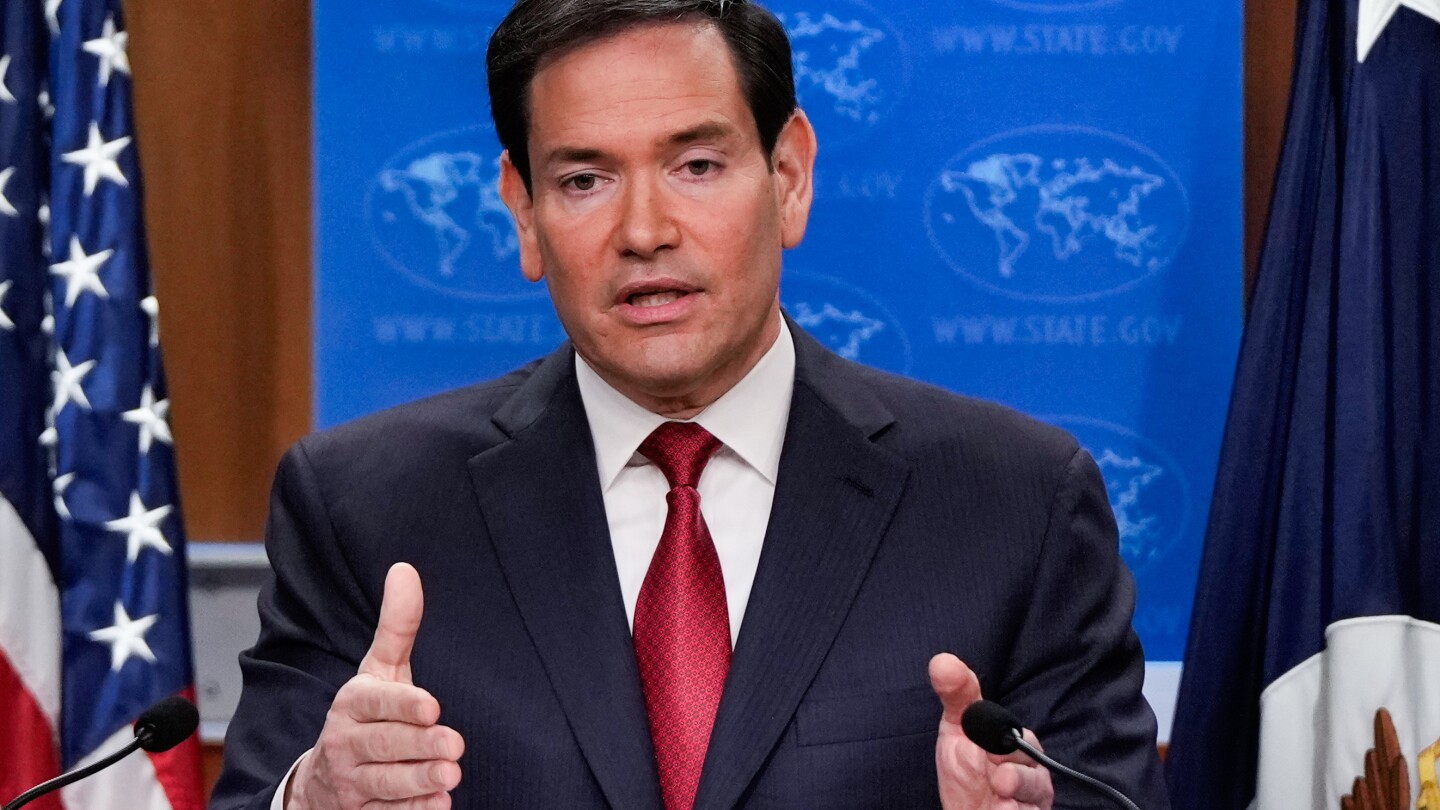
Secretary of State Marco Rubio addressed multiple global challenges facing the Trump administration during an extensive end-of-year news conference Friday, offering a measured assessment of ongoing peace efforts while defending controversial foreign policy decisions.
Speaking for more than two hours in the State Department briefing room, Rubio acknowledged the complex nature of current diplomatic initiatives regarding Russia-Ukraine and Israel-Hamas conflicts, while also justifying increased U.S. military operations against Venezuela.
The Secretary’s rare appearance came amid critical diplomatic meetings in Miami, where national security officials from Britain, France and Germany joined Ukraine’s lead negotiator Rustem Umerov and Trump envoys Steve Witkoff and Jared Kushner to discuss the administration’s latest Ukraine-Russia peace proposal.
“We understand that you’re not going to have a deal unless both sides have to give, and both sides have to get,” Rubio said regarding Ukraine-Russia negotiations. “Both sides will have to make concessions if you’re going to have a deal. You may not have a deal. We may not have a deal. It’s unfortunate.”
The U.S. proposal has undergone numerous revisions, with President Trump alternating between supporting Ukraine and appearing to sympathize with Russian positions, including suggestions that Ukraine make territorial concessions—something Kyiv has firmly rejected.
On a separate diplomatic front, Witkoff and Kushner, who is Trump’s son-in-law, also met with officials from Egypt, Qatar, and Turkey to discuss advancing Trump’s Gaza ceasefire plan. The initiative, announced in October, has progressed slowly. It includes establishing a “Board of Peace” to oversee Gaza and creating an international stabilization force.
“I think we owe them a few more answers before we get there,” Rubio said when questioned about contributions to the proposed stabilization force. He explained that after establishing the Board of Peace and a Palestinian technocratic governance group, “that will allow us to firm up the stabilization force, including how it’s going to be paid for, what the rules of engagement are, what their role will be in demilitarization.”
The diplomatic activity continues Saturday when Witkoff and Kushner are scheduled to meet with Russian President Vladimir Putin’s adviser Kirill Dmitriev in Miami. Rubio indicated he would likely attend that meeting while in Florida for the holidays.
On Venezuela, Rubio defended the administration’s aggressive approach, including military operations against suspected drug-running vessels in the Caribbean Sea and eastern Pacific Ocean that began in September. These actions have intensified pressure on Venezuelan President Nicolás Maduro, who faces narco-terrorism charges in the United States.
“We have a regime that’s illegitimate, that cooperates with Iran, that cooperates with Hezbollah, that cooperates with narco-trafficking and narco-terrorist organizations,” Rubio stated, avoiding direct questions about whether the U.S. seeks regime change.
The Secretary maintained that current operations do not require congressional approval, saying, “Nothing has happened that requires us to notify Congress or get congressional approval or cross the threshold into war. We have very strong legal opinions.”
Rubio also addressed Trump’s substantial restructuring of foreign assistance programs, including the dismantling of the U.S. Agency for International Development (USAID) and reducing the diplomatic corps. Critics argue these changes have cost lives overseas, but Rubio countered by highlighting ongoing disaster relief operations and new global health initiatives.
“We have a limited amount of money that can be dedicated to foreign aid and humanitarian assistance,” Rubio explained. “And that has to be applied in a way that furthers our national interest.”
The Secretary noted that ceasefires the administration previously helped broker between Cambodia and Thailand, as well as Rwanda and Congo, are now at risk due to renewed military actions. However, he expressed optimism that the established frameworks could provide a path back to peace negotiations.
Throughout the lengthy press conference, Rubio answered questions from nearly every reporter present, including several in Spanish, marking a departure from his predecessors who typically limited their availability. The briefing room had not been used since August when the State Department ended its twice-weekly press briefings.
Fact Checker
Verify the accuracy of this article using The Disinformation Commission analysis and real-time sources.

8 Comments
It’s good to see Rubio addressing these complex global challenges with nuance and realism. Achieving lasting peace requires compromise from all parties, even if the path forward is unclear.
It’s encouraging to see Rubio and other global leaders coming together to discuss the administration’s Ukraine-Russia peace proposal. Collaborative diplomacy will be key to finding a workable solution.
Increased U.S. military operations against Venezuela are concerning. I hope Rubio can provide more details on the rationale and intended outcomes of these actions.
While I appreciate Rubio’s transparency, the lack of a clear path forward on these major conflicts is concerning. I hope the administration can provide more specifics on their strategy and timeline.
Rubio’s appearance and extensive remarks suggest a heightened focus on these critical global issues. I’m curious to see how the administration’s diplomacy evolves in the coming months.
Rubio’s comments on the need for concessions from both sides in Ukraine-Russia negotiations reflect a pragmatic understanding of the realities on the ground. Striking the right balance will be crucial.
Rubio’s acknowledgement of the difficulties in reaching a Russia-Ukraine deal is refreshingly honest. Diplomacy is rarely straightforward, especially in high-stakes geopolitical conflicts.
Agreed. Recognizing the challenges upfront is important to managing expectations and setting the stage for realistic negotiations.