


Listen to the article
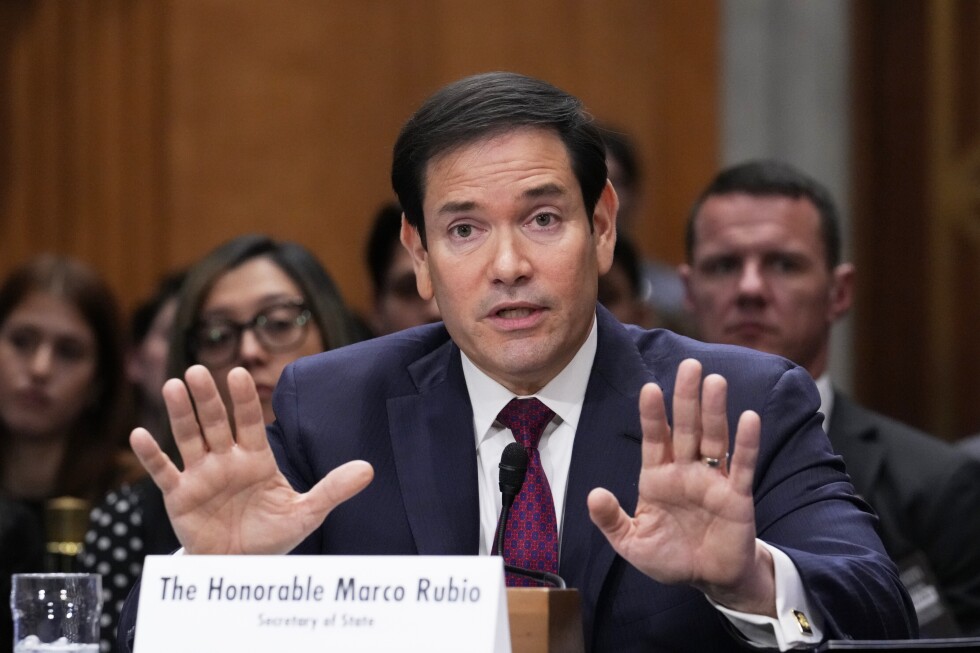
Secretary of State Marco Rubio vigorously defended President Donald Trump’s military operation to capture former Venezuelan President Nicolás Maduro during a Senate Foreign Relations Committee hearing on Wednesday, calling the action necessary to eliminate a major national security threat in the Western Hemisphere.
In the first public hearing since the January 3 raid to depose Maduro, Rubio assured lawmakers that America is safer as a result of the operation and that the administration is working with interim Venezuelan authorities to stabilize the South American nation.
“We’re not going to have this thing turn around overnight, but I think we’re making good and decent progress,” Rubio said. “We are certainly better off today in Venezuela than we were four weeks ago, and I think and hope and expect that we’ll be better off in three months and six months and nine months than we would have been had Maduro still been there.”
Despite prepared remarks suggesting the possibility of further military action, Rubio explicitly backed away from that position during the hearing. “I can tell you right now with full certainty, we are not postured to nor do we intend or expect to have to take any military action in Venezuela at any time,” he stated, adding that such action would require “an imminent threat of the kind that we do not anticipate.”
The Secretary outlined economic relief measures for Venezuela, explaining that the country would soon be permitted to sell oil currently subject to U.S. sanctions. Revenue would be placed in a U.S. Treasury-controlled account and released after the U.S. approves monthly budgets submitted by Venezuelan authorities, intended to fund basic government services including healthcare and policing.
Republican committee chairman Senator Jim Risch of Idaho provided additional details about the Venezuelan operation, describing it as “incredibly brief, targeted and successful” with “only about 200 troops” involved in a “firefight that lasted less than 27 minutes.”
While Republican senators largely praised the administration’s actions in Venezuela, Democrats expressed significant skepticism. Senator Jeanne Shaheen of New Hampshire, the committee’s top Democrat, questioned the operation’s value, noting that most of Maduro’s top lieutenants remain in power and economic conditions in Venezuela remain dire.
“We’ve traded one dictator for another, so it’s no wonder that so many of my constituents are asking, why is the president spending so much time focused on Venezuela instead of the cost of living and their kitchen table economic concerns?” Shaheen asked.
The hearing also addressed other contentious foreign policy matters, including Trump’s approach toward Greenland, NATO, Iran, and China. Rubio downplayed concerns about the president’s rhetoric and demands regarding Greenland, a territory of NATO ally Denmark. Trump has insisted the U.S. needs Greenland to counter Russian and Chinese threats but recently backed away from threats to impose tariffs on European countries that sent troops to the territory in solidarity with Denmark.
“I think we’re going to get something positive done,” Rubio said regarding the Greenland situation, while dismissing criticism that Trump was undermining NATO. “NATO needs to be reimagined. I just think this president complains about it louder than other presidents.”
Regarding Iran, Rubio said there was no current plan for military action despite Trump’s renewed threats. He noted that the increased U.S. military presence in the Middle East, including a recently arrived aircraft carrier and accompanying warships, is “to defend against what could be an Iranian threat against our personnel.”
Rubio faced pointed questions from Senator Cory Booker about U.S. cooperation with interim leaders who had been part of Maduro’s government, including acting President Delcy Rodríguez, formerly Maduro’s vice president. The U.S. has reportedly demanded that Rodríguez open Venezuela’s energy sector to American companies, provide preferential access to production, use oil revenue to purchase American goods, and end subsidized oil exports to Cuba.
During the hearing, Rubio delivered his strongest statement of support for Venezuelan democracy to date, answering concerns that the administration’s efforts are narrowly focused on oil and security interests. “What’s the end state? We want a Venezuela that has legitimate democratic elections,” Rubio said.
Following the hearing, Rubio met with Venezuelan opposition leader María Corina Machado at the State Department. Machado later reiterated her intention to return to Venezuela, posting on social media: “Dear Venezuelans, we are moving forward with firm steps. I will return to Venezuela very soon to work together on the transition and the building of an exceptional country.”
In a significant development toward normalizing relations, the State Department announced plans to send additional diplomatic personnel to Caracas to prepare for the possible reopening of the U.S. Embassy, which closed in 2019.
Fact Checker
Verify the accuracy of this article using The Disinformation Commission analysis and real-time sources.

9 Comments
While I’m skeptical of the administration’s Venezuela policy, I’m glad to see Rubio taking a more measured approach and acknowledging the challenges ahead.
Curious to see how the administration’s Venezuela policy plays out. Removing Maduro was a bold move, but stabilizing the country long-term will require nuanced engagement with all stakeholders.
The situation in Venezuela remains highly volatile. I hope the administration continues to closely coordinate with international partners to find a peaceful, democratic resolution.
Rubio’s comments highlight the delicate balance the US must strike between asserting its interests and maintaining productive relationships with allies like Denmark and NATO.
While I’m glad to hear Rubio is backing away from further military action in Venezuela, I hope the administration continues to pursue a diplomatic solution that respects Venezuelan sovereignty.
Interesting to see Rubio defend the administration’s actions in Venezuela. Stabilizing the region is critical, but it’s a complex situation that requires careful diplomacy and a long-term approach.
It’s reassuring to hear Rubio emphasize the need for progress over a quick fix in Venezuela. Complex geopolitical challenges rarely have simple solutions.
Agreed. Patience and a comprehensive strategy will be essential to achieving lasting stability in the region.
Rubio’s comments on Greenland and NATO are also noteworthy. Managing relations with allies like Denmark and NATO partners will be key for US foreign policy going forward.