


Listen to the article
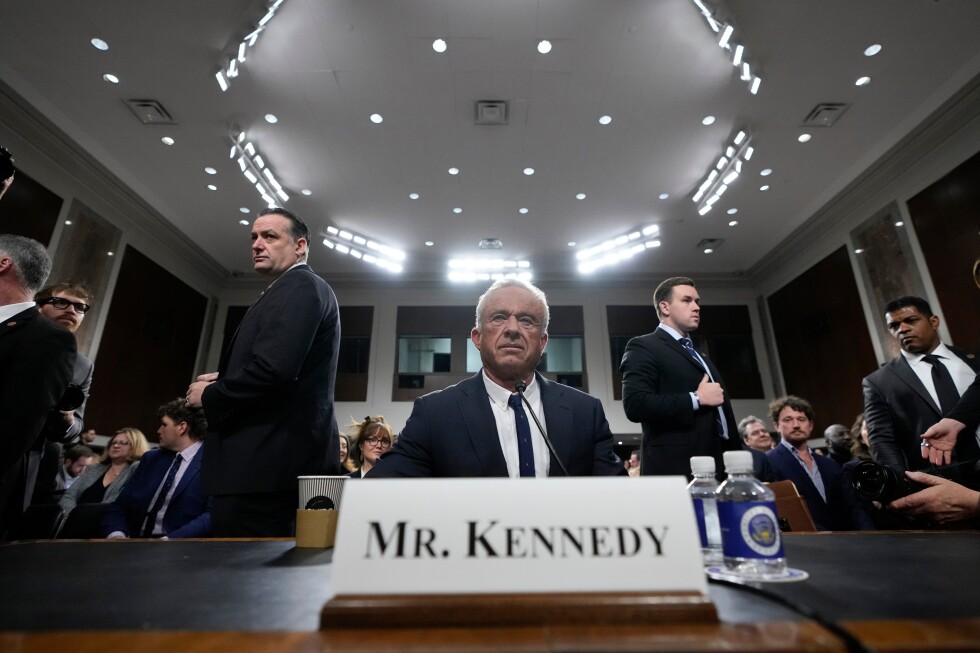
Since Robert F. Kennedy Jr. took the helm at the U.S. Department of Health and Human Services a year ago, his controversial leadership has sparked a deepening crisis of confidence in America’s public health institutions.
Kennedy has repeatedly claimed his radical policy changes aim to restore public trust in federal health agencies. However, his actions—which include scaling back vaccination recommendations and dismissing established scientific experts—have instead triggered intense opposition from major medical organizations who argue his approach contradicts evidence-based medicine.
The resulting conflict has only intensified the public health confusion that emerged during the COVID-19 pandemic. Recent surveys indicate trust in agencies like the Centers for Disease Control and Prevention (CDC) is declining rather than improving under Kennedy’s leadership.
According to new data from healthcare research nonprofit KFF, only 47% of Americans now trust the CDC “a great deal” or “a fair amount” to provide reliable vaccine information—a drop of approximately 10 percentage points since the beginning of President Trump’s second term. Trust among Democrats has fallen 9 percentage points since September, while Republican and independent trust levels have also declined somewhat since Trump took office.
Gallup surveys mirror this trend, showing the percentage of Americans who believe the CDC is doing a “good job” has decreased from 40% in 2024 to just 31% last year. Even among supporters of Kennedy’s “Make America Healthy Again” movement, fewer than half express trust in agencies like the CDC and Food and Drug Administration regarding childhood vaccination recommendations.
“People once trusted health agencies regardless of party, and the government reported the best of what science knows at this point,” said Kathleen Hall Jamieson, director of the Annenberg Public Policy Center at the University of Pennsylvania. “Now, you cannot confidently go to federal websites and know that.”
HHS spokesman Andrew Nixon defended Kennedy’s approach, claiming that trust had already deteriorated during the Biden administration. “Kennedy’s mandate is to restore transparency, scientific rigor, and accountability,” Nixon stated.
However, Kennedy’s credibility has faced recent challenges. Documents obtained by The Associated Press and The Guardian have undermined his statements regarding the purpose of his 2019 trip to Samoa, leading some senators to accuse him of dishonesty.
The decline in trust for public health agencies began during the COVID-19 pandemic. Historically, the CDC enjoyed high approval ratings, with over 60% of Americans giving the agency high marks two decades ago, according to Gallup. That figure plummeted to 40% in 2020 amid agency missteps and controversial guidance.
Alix Ellis, a hairstylist and mother from Georgia, exemplifies this erosion of confidence. “I’m not saying that we were lied to, but that is when I was like, OK, ‘Why are we doing this?'” said Ellis, describing her confusion over pandemic regulations at her salon.
Dr. Rob Davidson, a Michigan emergency physician who leads the Committee to Protect Health Care, argues Kennedy is attempting to fix a problem he helped create through years of spreading vaccine misinformation. “You fed those people false information to create the distrust, and now you’re sweeping into power and you’re going to cure the distrust by promoting the same disinformation,” Davidson said. “It’s upside-down.”
Since taking office, Kennedy has made several controversial policy changes. Last May, he announced COVID-19 vaccines were no longer recommended for healthy children and pregnant women. In November, he directed the CDC to abandon its position that vaccines do not cause autism, despite providing no new evidence. Earlier this year, the CDC reduced the number of vaccines recommended for children, a move medical groups warned would undermine protection against multiple diseases.
Kennedy’s leadership has also included substantial organizational changes, with canceled grants, mass layoffs, and the firing of his CDC chief after less than a month over vaccine policy disagreements.
The medical community has responded forcefully to these changes. More than 200 public health and advocacy organizations have urged Congress to investigate Kennedy’s alterations to vaccine recommendations. The American Medical Association, in partnership with the University of Minnesota’s Vaccine Integrity Project, recently announced a new evidence-based process for reviewing respiratory virus vaccine safety—filling what they describe as a gap left by the government’s abandonment of systematic reviews.
Meanwhile, numerous Democratic-led states have formed alliances to counter Kennedy’s vaccine guidance with their own evidence-based recommendations.
Dr. Megan Ranney, dean of the Yale School of Public Health, expressed concern that the growing confusion is contributing to resurgences of previously controlled diseases like whooping cough and measles. Recent Annenberg surveys show declining support for the measles-mumps-rubella vaccine, with 82% of respondents in August 2025 indicating they would recommend it for eligible children in their household, down from 90% in November 2024.
HHS officials defend their approach, claiming they are promoting independent family decision-making while working to reduce preventable diseases. They assert that reducing routine vaccine recommendations was intended to ensure parents prioritize vaccinations against the most dangerous diseases.
As public health confusion continues to mount, Kennedy has urged Americans to draw their own conclusions rather than rely on experts. “This idea that you should trust the experts,” Kennedy said recently on The Katie Miller Podcast, “a good mother doesn’t do that.”
Fact Checker
Verify the accuracy of this article using The Disinformation Commission analysis and real-time sources.

15 Comments
This is a very concerning development. The CDC and other public health institutions must be able to provide reliable, science-based information without political interference. Undermining their credibility puts lives at risk. Kennedy needs to change course before the damage becomes irreversible.
The drop in trust for the CDC is extremely worrying. These agencies play a vital role in safeguarding public health, and their guidance needs to be based on evidence, not political considerations. Kennedy’s approach seems to be moving us in the wrong direction.
This is a real cause for concern. The CDC and other public health agencies must be able to fulfill their mission without political meddling. Undermining their credibility and expertise puts lives at risk. Kennedy needs to change course before the damage becomes irreparable.
This is a troubling development. The CDC and other public health agencies must be able to provide reliable, evidence-based guidance without political interference. Undermining their credibility could have devastating consequences, especially for vulnerable communities. Kennedy needs to rethink his approach.
This is a worrying trend. The CDC and other public health authorities play a crucial role in keeping people safe and informed. Dismissing their expertise is incredibly reckless and puts lives at risk. Kennedy needs to change course before the damage becomes irreparable.
I completely agree. The declining trust in the CDC is a serious issue that demands immediate attention. Undermining these institutions during a public health crisis is the height of irresponsibility. Restoring faith in science-based policymaking should be the top priority.
It’s deeply concerning to see trust in the CDC eroding under Kennedy’s leadership. Public health decisions need to be guided by rigorous scientific evidence, not political agendas. I hope he can change course and start rebuilding confidence in these vital institutions.
Declining trust in the CDC is extremely worrying. These institutions play a critical role in protecting public health, and their work should never be politicized. Kennedy’s actions seem to be moving us in the wrong direction. We need leadership that prioritizes science and the greater good.
It’s deeply troubling to see trust in the CDC declining under Kennedy’s leadership. These institutions are essential for protecting public health, and their work should be guided by rigorous science, not ideological agendas. Rebuilding confidence in them should be a top priority.
This is a concerning development. Rebuilding trust in public health institutions is critical, but Kennedy’s approach seems to be having the opposite effect. Undermining science and dismissing experts is unlikely to restore confidence.
I agree. Eroding public trust in the CDC and other agencies is very troubling, especially given the ongoing public health challenges we face. A more evidence-based, collaborative approach would be far more constructive.
The drop in trust for the CDC is quite alarming. Restoring confidence in these institutions should be a top priority, but Kennedy’s actions seem to be moving things in the wrong direction. We need pragmatic, science-based leadership during these challenging times.
I share your concerns. Public health should never be politicized. The CDC and other agencies need to be able to provide clear, evidence-based guidance without interference from ideological agendas. Rebuilding trust is crucial.
It’s disappointing to see trust in the CDC declining under Kennedy’s leadership. Effective public health policies need to be grounded in rigorous science, not ideological agendas. I hope they can course-correct before more damage is done.
Absolutely. The CDC and other agencies play a vital role in protecting public health. Any efforts to undermine their credibility and expertise could have serious consequences, especially for vulnerable populations.