


Listen to the article
House Republicans Pressure Johnson to Confront Senate Over Election Security Bill
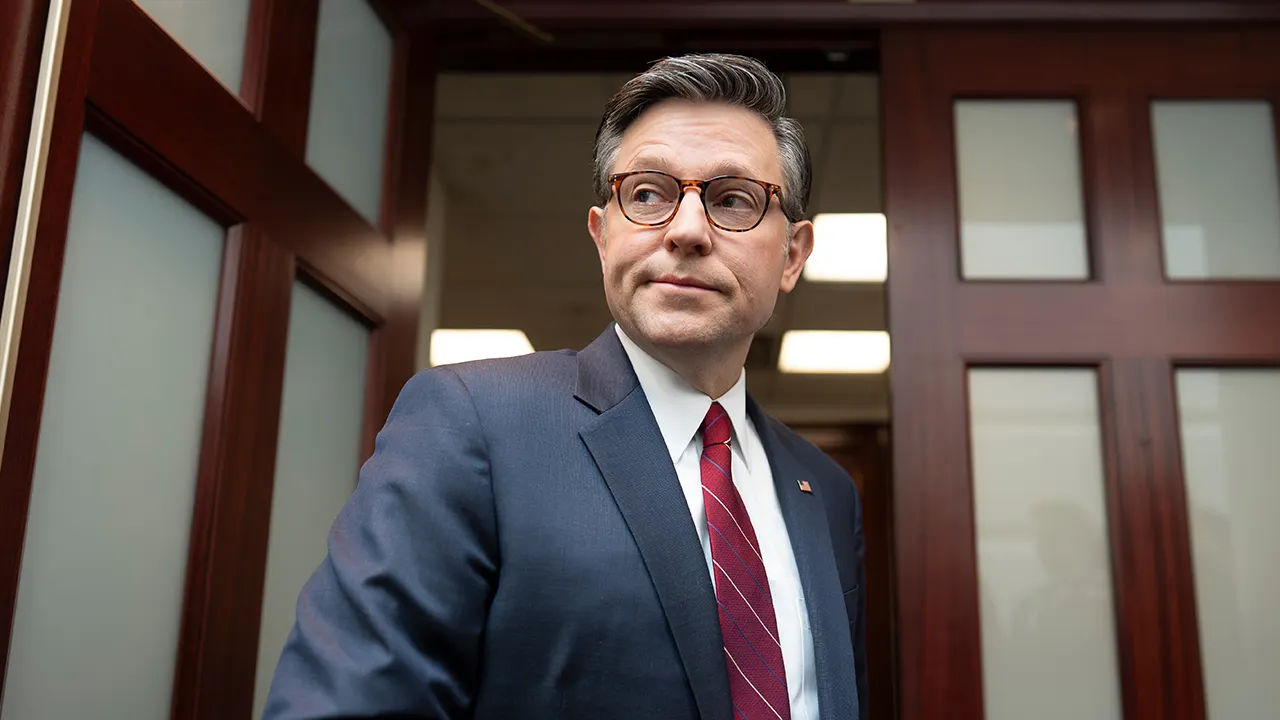
Several House Republicans are urging Speaker Mike Johnson to take a confrontational stance against the Senate GOP leadership over an election security bill that faces significant hurdles in the upper chamber. The push came during a lawmaker-only call on Sunday, which was primarily convened to discuss the U.S. and Israeli military operations against Iran.
After House GOP leaders briefed members on their planned response to the ongoing Middle East conflict—including a vote to end Democrats’ weeks-long partial government shutdown affecting the Department of Homeland Security—multiple lawmakers voiced frustration about the Senate’s inaction on the Safeguarding American Voter Eligibility (SAVE America) Act.
The legislation, which passed the House last month with support from all Republicans and just one Democrat (Rep. Henry Cuellar of Texas), would require voters in federal elections to produce valid identification and proof of citizenship. Despite polling data suggesting bipartisan public support for voter ID measures, Democratic lawmakers have largely dismissed the bill as an attempt at voter suppression ahead of the 2026 midterms.
Rep. Derrick Van Orden of Wisconsin emerged as one of the most vocal advocates for a hardline approach, reportedly telling Speaker Johnson during the call, “If we don’t get this done, or at least show that we’ve got some backbone, we’re done. The midterms are over.”
At least three other House Republicans expressed similar sentiments. Rep. Brandon Gill of Texas argued that Republican voters were “not enthused” about the upcoming November elections and that forcing Senate action on the SAVE America Act would be “the single biggest thing” to change that dynamic.
The legislation faces significant procedural challenges in the Senate, where it would require 60 votes to overcome a filibuster—an unlikely scenario given Democrats’ near-unanimous opposition. House Republicans have been pressuring Senate Majority Leader John Thune to employ a rarely-used mechanism known as a standing filibuster to bypass the 60-vote threshold.
Speaker Johnson reportedly told members that he was privately pressing Thune on the matter but expressed caution about creating a public rift with his Senate counterpart. “If we’re going to go to war against our own party in the Senate, there may be implications to that,” Johnson said, according to sources on the call. “So we want to be thoughtful and careful.”
Thune has signaled reluctance to pursue the standing filibuster strategy, citing concerns about the extensive time it would consume in the Senate and potential unintended consequences during the amendment process.
The internal GOP debate over election security legislation comes at a particularly sensitive moment for Congress, which is simultaneously grappling with the fallout from military strikes on Iran and the need to ensure domestic security and protection for U.S. service members abroad—priorities that require close coordination between the two chambers.
During the call, Rep. Andrew Clyde of Georgia suggested pairing an upcoming vote on DHS funding with the SAVE America Act to force Senate action. However, both Speaker Johnson and House Homeland Security Committee Chairman Andrew Garbarino expressed reservations about this approach, given the heightened threat environment following U.S. operations in Iran.
While voicing support for the election security legislation, Johnson and Garbarino emphasized that the current national security situation warranted keeping the DHS funding bill separate to end the partial shutdown quickly and ensure the department can fully function as a national security shield.
The debate highlights the tensions within the Republican Party as it balances competing priorities—advancing election security measures popular with its base while also addressing immediate national security concerns and maintaining a unified front across both chambers of Congress ahead of the critical midterm elections.
Fact Checker
Verify the accuracy of this article using The Disinformation Commission analysis and real-time sources.

11 Comments
Interesting that this is coming up now, given the ongoing debates around election security. I wonder how the public is reacting to the Republican pressure on the Senate regarding the SAVE Act.
Based on the polling data mentioned, it seems there may be some bipartisan support for certain voter ID measures. But the details and potential impacts will be heavily scrutinized.
The push by House Republicans to get the SAVE Act through the Senate is an interesting development. I wonder what the strategic considerations are and how this issue might play out politically.
This is a contentious issue with valid arguments on both sides. I’m curious to hear more about the specifics of the SAVE Act and the rationale behind the Republican push to get it through the Senate.
From what I understand, the key provisions relate to voter ID and citizenship verification. Supporters say it enhances election integrity, while critics argue it’s a form of voter suppression. It’s a complex topic without easy answers.
This is an important issue that deserves careful, fact-based consideration. I hope the lawmakers on both sides can approach it objectively and find common ground to strengthen electoral integrity while protecting voting rights.
The SAVE Act seems to be a controversial proposal with valid concerns on both sides. I’d be curious to learn more about the specific provisions and the arguments for and against them.
Agreed, this is a complex and sensitive topic. It will be important for all stakeholders to engage in good faith and consider the potential impacts, both intended and unintended.
The SAVE Act seems to be a controversial piece of legislation that touches on fundamental issues of voting rights and election security. I’ll be following this story closely to see how it unfolds in the Senate.
Voter ID and citizenship verification are thorny issues that often split along partisan lines. It will be important for lawmakers to carefully weigh the evidence and find a balanced approach that protects electoral integrity without disenfranchising legitimate voters.
Absolutely. This is a delicate balance that requires nuance and good-faith dialogue. I hope the Senate can find a way forward that garners broad support.